
How To Set Up a Tool Tracking Software System | GigaTrak

Quick Takeaways
- What is Tool Tracking Software? It is a barcode-based system that monitors the location, assignment, and condition of your physical assets.
- Why Move Away from Spreadsheets? Manual tracking leads to data entry errors, lost gear, and hours wasted searching for equipment.
- The Five-Step Setup: Establish your system by auditing tools, choosing durable barcode tags, setting up a database, defining workflows, and training your staff.
- The GigaTrak Advantage: GigaTrak has provided tool tracking software since 1995. We offer flexible hosting, perpetual licensing, and US-based support. Request a Consultation to secure your inventory today.
The Hidden Cost of “Where Is It?”
Every business relying on physical gear eventually faces the same costly question: “Where did that tool go?”
Missing equipment is a direct hit to your bottom line. When a $500 rotary hammer or a $2,000 diagnostic analyzer disappears, you face compounding losses:
- Wasted Labor Hours: Technicians search job sites, dig through service vans, or drive to a supplier to buy a duplicate tool.
- Project Delays: Crew productivity stops when critical machinery is missing. This leads to missed deadlines and damaged client relationships.
- Frequent Replacements: Businesses repurchase items they already own because finding the lost tool takes too long.
Dedicated tool tracking software solves these issues. By replacing manual tracking with an organized, scan-based system, you protect your investment and hold employees accountable.
GigaTrak has delivered practical, barcode-based tracking solutions since 1995. Trusted by organizations like the FDNY, Lockheed Martin, the US Army, and Virginia Public Schools, we help companies eliminate tool loss.
What is Tool Tracking Software?
Tool tracking software is a specialized platform that monitors the assignment, location, usage history, and maintenance of your physical assets.
Inventory systems track consumable goods that get used up, like nuts and bolts. Tool tracking software tracks rotational assets. These are items that leave the tool crib, go to a job site, and return to your warehouse.
How Tool Tracking Software Protects Your Inventory
This software acts as the single source of truth for your physical operations. It uses barcode scanning and mobile apps to deliver clear operational benefits:
- Establish Absolute Accountability: You know exactly who checked out a tool, which job site it is on, and when it must return.
- Monitor Tool Health and Calibration: You can schedule preventative maintenance and track calibration cycles to keep tools safe.
- Track Costs: You can assign tool usage costs to specific job codes, which helps you calculate precise project margins.
- Accelerate Warehouse Operations: Tool crib managers can scan and assign dozens of tools to field workers in seconds.
Step-by-Step: How to Set Up a Tool Tracking System
Transitioning to a barcode-driven system is straightforward. Breaking the project into clear phases ensures a smooth rollout with no operational downtime.
Step 1: Audit and Classify Your Assets
You must understand exactly what you are tracking before you buy software or print labels. Conduct a physical audit of all equipment to build your database.
Categorize Your Assets
Group your inventory into three categories to keep your system organized:
- High-Value Assets (Tier 1): Large, expensive equipment like generators and calibration rigs. These require unique serial number tracking and strict maintenance schedules.
- Standard Fleet Tools (Tier 2): Everyday drills, saws, and ladders shared across crews. You track these individually by barcode to maintain a daily chain of custody.
- Consumables (Tier 3): Low-cost items like drill bits and safety glasses that do not return to the warehouse. Keeping a basic record ensures you never run out of supplies.
Define Key Data Fields
Decide what information to store for each tool. Standard databases include the tool name, manufacturer, serial number, unique tool ID, purchase date, and current location.
Step 2: Choose the Right Barcode Tags and Hardware
A software system is only as reliable as the physical barcode labels you use. You must choose hardware that survives tough field conditions.
Selecting Barcode Labels
Paper stickers will not survive a construction site or a damp warehouse. You need durable, industrial-grade labels:
- Anodized Aluminum Metal Tags: These are best for heavy equipment. They resist extreme temperatures, UV exposure, and physical abuse.
- Polyester and Vinyl Labels: These work well for hand tools. They use strong adhesives that stick to plastic and metal tool bodies.
- Pre-Printed vs. On-Demand Labels: Pre-printed tags offer extreme durability and verified barcode sequences. On-demand printers are useful for tagging new tools immediately as they arrive.
Choosing Scanning Hardware
Determine how your team will scan tools daily:
- Rugged Mobile Terminals: Hand-held scanners built for dusty warehouses. They read damaged labels from several feet away.
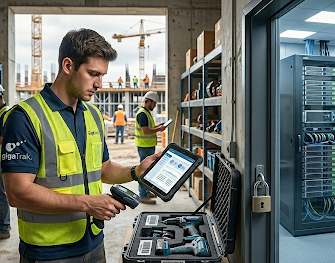
- Smartphones and Tablets: Ideal for field employees. Mobile apps use device cameras to scan barcodes and transfer tool possession on-site.
- USB and Bluetooth Scanners: Simple scanners connected to a desktop computer in your main tool crib for quick check-out.
Step 3: Establish Your Centralized Database
Configure the logic of your software to match your business infrastructure.
Choose Your Hosting: Cloud vs. On-Premise
Decide where your data will live:
- Cloud-Based Hosting: Your data is stored on secure, remote servers. This syncs information across multiple offices and mobile field crews.
- On-Premise Deployment: Your software is installed locally on your own servers. This is ideal for government contractors and companies in remote locations who require absolute data control without recurring fees.
Import Your Data
Do not type hundreds of tools manually. Use standardized CSV or Excel templates to upload your entire tool fleet in a single click.
Step 4: Define Clear Check-In and Check-Out Workflows
A tracking system only works if your team uses it consistently. Create simple, fast workflows:
- Scan Out Assets: The warehouse manager scans the employee ID badge, then scans the barcodes on the tools.
- Assign to Job: The software pairs the assets to that employee and logs the active job code. This creates an unalterable audit trail.
- Perform Field Operations: The employee remains responsible for the tools. Field workers can transfer possession using a mobile app.
- Return and Inspect: Tools return to the warehouse. The manager inspects each item and scans it back into the system as available.
Step 5: Train Your Team and Roll Out the System
The technical setup is only half the battle. Human adoption makes the project successful.
- Explain the Benefits: Explain that tracking software makes their jobs easier. It ensures they have working tools, prevents arguments over lost gear, and saves them from searching for equipment.
- Start with a Pilot Program: Do not tag thousands of tools on day one. Start with a single crew or your highest-value assets. Refine your process, then scale.
- Set Clear Expectations: Establish a firm policy that no tool leaves the warehouse without a scan. Consistent accountability makes tracking an effortless habit.
Why Specialized Tool Tracking Software Beats Spreadsheets
Many businesses start tracking tools with basic spreadsheets. Spreadsheets quickly become a bottleneck as your business grows.
Why shouldn’t we use Microsoft Excel or Google Sheets to track our tools?
Spreadsheets are built for static data, not active tracking. Excel cannot handle rapid barcode scanning, cannot alert you when a tool is overdue, and does not maintain a secure history of user ownership.
Spreadsheets are also prone to manual data errors. A single accidental keystroke can delete serial numbers or corrupt your entire list. Specialized software uses database locking and barcode validation to prevent data loss.
How does tool tracking software handle tool maintenance and calibration?
Spreadsheets require you to check dates manually to see if a tool needs servicing. Dedicated software tracks maintenance proactively. You can set automatic alerts based on calendar dates or cumulative usage hours.
The software can block a tool from being checked out if it is overdue for calibration, ensuring your team never uses unsafe gear.
Can tool tracking software integrate with our existing business systems?
Yes. Professional tracking databases sync with your accounting software to pull active job codes. They can also link with human resource databases to import employee records. This connectivity eliminates double data entry and keeps project costs accurate.
Why GigaTrak is the Practical Choice for Your Business
Many tool tracking companies tie you to recurring monthly contracts. They charge you more as your tool inventory grows, forcing your data onto their servers with no local backup options.
GigaTrak operates differently. We believe you should own your software.
GigaTrak vs. Typical SaaS Platforms
| Feature | GigaTrak | Typical SaaS Platforms |
|---|---|---|
| Hosting Model | On-Premise or Secure Cloud | Cloud-Only |
| Pricing Structure | One-Time Perpetual License Available | Perpetual Monthly Subscription |
| Data Ownership | Complete Local Database Control | Dependent on Vendor Servers |
| Asset Limits | Unlimited Tools, Users, and Locations | Tiered Pricing per Asset or User |
| Data Import | Simple Spreadsheet Template | Complex, Manual Entry |
The GigaTrak Advantage
- Flexible Hosting Options: Whether you want secure cloud hosting or local database installation, GigaTrak supports your infrastructure. Our on-premise option is ideal for clients requiring offline reliability.
- One-Time Licensing: GigaTrak offers perpetual software licenses. You buy your software once and own it forever, keeping your operating costs predictable.
- Designed for Real-World Workflows: Built around barcode scanning, GigaTrak simplifies check-in and check-out processes so your field crew can adopt the system easily.
- US-Based Support: Our support team is based in the United States, providing direct help when you need it.
Take Control of Your Tools Today
Do not let missing equipment and wasted labor hours eat your profit margins. Implementing a barcode tracking system improves operational efficiency, boosts accountability, and protects your bottom line.
Ready to see how GigaTrak can secure your inventory? Contact our team today to Request a Free Demo.
Contacting GigaTrak:
- 262-657-5500
- sales@gigatrak.com