
Call us: 262-657-5500
GigaTrak
  • Solutions
    • Tool Tracking System
    • Asset Tracking System
    • Package Tracking System
    • Document Tracking System
    • Hardware
      • Scanners
      • Printers
      • Barcodes
  • Industries
    • Contractors
    • Manufacturing
    • Business
    • Healthcare
    • Government
    • Aerospace
    • Education
  • Resources
    • Client Center
    • Videos
    • Blog
  • About
  • Cloud Login
  • Contact Us
    • Sales
    • Training
    • Support
  • Book  a  Demo
  • Menu Menu
Call us: 262-657-5500

Tag Archive for: Barcode Asset Tracking

Government Asset Management Software: How FDNY Tracks Equipment
in Blog

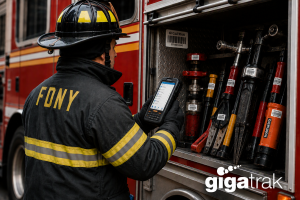
An FDNY firefighter holding a handheld mobile scanner to inspect GigaTrak barcode-tagged emergency equipment inside a fire truck compartment. GigaTrak's reliable Government Asset Tracking Software gives the firefighter and all other users full visibility of their tools and assets. In doing so, you save money by not having to replace lost equipment. GigaTrak's Government Asset Management Software in full display and use.

How FDNY Tracks Critical Gear with GigaTrak’s Government Asset Management Software

In emergency response, every second matters, and every piece of gear must perform without failure. For the Fire Department of the City of New York (FDNY)—the largest municipal fire department in the United States—managing thousands of life-saving assets across hundreds of firehouses, emergency medical stations, and specialized units is an immense logistical operational challenge.

When an emergency crew responds to a five-alarm structure fire or a complex rescue operation, firefighters cannot afford to discover that a thermal imaging camera is missing, an SCBA (Self-Contained Breathing Apparatus) air tank is past its inspection date, or a hydraulic rescue tool is sitting in a repair shop three boroughs away.

To maintain peak operational readiness, enforce accountability, and pass rigorous municipal audits, high-stakes public safety agencies like the FDNY, the U.S. Army, and municipal public works departments rely on government asset tracking software from GigaTrak.

Here is how modern government asset management software solves complex equipment challenges for first responders—and why GigaTrak remains the trusted standard for public sector asset accountability.

The High-Stakes Reality of First Responder Asset Management

Public safety agencies operate under conditions drastically different from private corporations:

  • Extreme Environment Wear & Tear: Firefighting gear, defibrillators, radios, and specialized saws are subjected to heat, water, and heavy impact daily.

  • Decentralized Operations: Equipment moves rapidly between apparatus (engines, ladders, rescue trucks), firehouses, maintenance depots, and active scene perimeters.

  • Strict Regulatory Compliance: Life-safety equipment requires mandatory inspection schedules, routine calibration, and detailed chain-of-custody documentation.

  • 24/7 Shift Rotations: High-value gear passes through dozens of hands every week as crews rotate shifts.

When emergency services rely on outdated tracking methods—such as manual spreadsheets, paper logbooks, or whiteboards—gaps inevitably appear. Tools go missing, maintenance dates pass unnoticed, and ghost assets inflate replacement budgets.

How GigaTrak Transforms Municipal Equipment Tracking

GigaTrak provides specialized government asset tracking software engineered specifically to eliminate administrative friction and establish total asset visibility. By replacing manual data entry with durable barcode scanning technology, GigaTrak streamlines how agencies log, check out, inspect, and audit critical gear.

The GigaTrak Asset Journey

  1. Procurement & Barcoding: Assign a unique ID tag or heavy-duty barcode to every piece of equipment upon arrival.

  2. Check-Out & Field Assignment: Instantly scan gear to specific firefighters, emergency crews, or apparatus rigs.

  3. Scheduled Maintenance: Automated alerts trigger regular inspections, safety tests, and calibrations before gear fails.

  4. Audits & Retirement: Maintain a complete digital audit trail from initial deployment to final asset decommission.

1. Rapid Check-In and Check-Out

With thousands of tools in circulation across dozens of stations, logging items manually creates bottlenecks. GigaTrak simplifies custody transfers down to a simple “point, shoot, and click” workflow.

First responders scan item barcodes alongside employee badges or vehicle IDs using rugged handheld terminals or mobile smartphones. The software instantly registers:

  • Who checked out the item.

  • Which rig, station, or team received it.

  • When it was checked out and when it is due back.

A process that previously took minutes per item is completed in seconds, ensuring rigs leave the station fully equipped and on time.

2. Proactive Maintenance & Compliance Tracking

In emergency services, tool failure isn’t an inconvenience—it’s a critical safety hazard. Gear like gas detectors, hydraulic rescue cutters, saws, and medical kits require regular servicing, testing, and battery replacements.

GigaTrak’s government asset management software features built-in maintenance scheduling. Fleet and quartermaster managers set automated maintenance alerts based on time intervals or usage cycles. If a piece of equipment requires calibration or safety testing, the software flags the item before deployment, preventing unserviced gear from being assigned to active duty.

3. Digital Chain of Custody

High-value assets—such as tactical radios, specialized thermal cameras, hazardous materials sensors, and narcotics boxes in EMS vehicles—require strict accountability.

When gear changes hands, GigaTrak creates an unchangeable digital paper trail. Personnel sign for equipment directly on mobile touchscreen scanners, linking each item to a specific officer or firefighter. If an item is misplaced, quartermasters can view its complete historical movement to pinpoint exactly where and when it was last scanned.

Comparison: Spreadsheets vs. Dedicated Government Software

Feature Excel / Paper Logbooks GigaTrak Government Asset Software
Data Entry Speed Slow, manual typing (high error rate) Instant barcode scanning
Accountability Unverified names on paper Digital signatures & badge-scan signatures
Maintenance Manual calendar reminders (easily missed) Automated safety & calibration alerts
Audit Preparation Weeks of physical search & record reconciliation Rapid mobile audits completed in hours
Off-line Function Unsynced local copies create data conflicts Guaranteed function during network outages

Security and Deployment Options for Municipal Agencies

Government agencies operate under strict IT security mandates and data sovereignty requirements. GigaTrak offers versatile deployment architectures designed to fit specific municipal security protocols.

Complete Data Sovereignty via On-Premise Deployment

For high-security operations, defense agencies, and public safety organizations that prefer or mandate local data control, GigaTrak offers complete on-premise installation.

  • Network Isolation: Runs entirely behind your agency’s firewall or within air-gapped internal networks.

  • Zero External Exposure: Asset databases remain strictly on internal agency servers, protecting sensitive facility layouts and high-value gear lists from third-party cloud vulnerabilities.

  • Guaranteed Reliability: Operations continue uninterrupted during internet outages or emergency power scenarios.

Flexible Cloud Hosting

For agencies seeking lower internal IT overhead, GigaTrak also provides cloud-hosted solutions. Cloud deployments offer secure, web-based accessibility across multiple facilities, enabling real-time asset synchronization across distant stations and mobile field units without local server maintenance.

Ensuring Fiscal Accountability and Audit Readiness

Public safety organizations manage public funds, state grants, and federal funding (such as FEMA or Urban Areas Security Initiative grants). Receiving public funding requires strict compliance with capitalization thresholds, annual financial reporting, and equipment audits.

Traditional Audits vs. GigaTrak Barcode Audits

Audit Metric Traditional Manual Audits GigaTrak Barcode Audits
Methodology Physical clipboard counts & manual entry Rapid scanning of room & asset barcodes
Completion Time Days to weeks of searching Completed in hours across entire stations
Accuracy & Reconciliation High rate of “ghost assets” & data errors Instant reconciliation against database records
Compliance Risk Increased risk of audit flags or grant issues Complete, verified digital audit trails
  1. Eliminating Ghost Assets: Missing or stolen gear left on financial registers (“ghost assets”) leads to inaccurate budget planning and failed audits. Regular barcode-based audits reconcile physical inventory against ledger data in real time.

  2. Accelerated Inventory Audits: Using portable handheld scanners, quartermasters can audit an entire tool room, armory, or supply station in a fraction of the time required by paper counts. Staff simply scan room location tags and sweep items, automatically identifying missing or out-of-place equipment.

  3. Depreciation and Lifecycle Reporting: GigaTrak tracks purchase dates, vendor details, warranty terms, and depreciation schedules, helping finance managers forecast capital equipment replacement cycles accurately before tools reach end-of-life.

Why Major Public Sector Organizations Choose GigaTrak

GigaTrak has provided barcode-based tracking software since 1995. From municipal fire departments and police agencies to the U.S. Army, Lockheed Martin, and public school districts nationwide, organizations choose GigaTrak for three primary reasons:

  1. Purpose-Built Simplicity: The platform eliminates clutter, prioritizing fast navigation, clear button layouts, and straightforward scanning workflows that require minimal training for active-duty personnel.

  2. Comprehensive Hardware & Tag Bundles: GigaTrak acts as a complete solution provider, offering pre-configured handheld scanners, mobile barcode apps, rugged pre-printed metal asset tags, labels, and barcode printers.

  3. Dedicated U.S.-Based Support: GigaTrak’s engineering and customer support teams are based entirely in the United States, offering direct access to knowledgeable technical support whenever assistance is needed.

Protect Your Agency’s Equipment with GigaTrak

Whether managing equipment for a metropolitan fire department like the FDNY, overseeing public works fleets, or securing municipal IT assets, effective inventory control requires software built for reliability, security, and speed.

GigaTrak’s government asset management software gives your organization full operational visibility, protects taxpayer investments, and ensures your critical gear is ready whenever an emergency strikes.

Ready to modernize your public agency’s asset management?

Contact GigaTrak today at 262-657-5500 or visit GigaTrak.com to request a live demo and discover how simple government asset tracking can be.


Contacting GigaTrak:

  • 262-657-5500
  • sales@gigatrak.com
  • gigatrak.com

Request Information

Construction Asset Management Software: Field Tool Guide

in Blog

With GigaTrak’s asset tracking for contractors, your valuable inventory stays secure and fully accounted for across every work truck.

Construction Asset Management Software: A Field Guide to Tools and Equipment

Every morning across active job sites, contractors lose billable hours to missing equipment. A three-person crew stands waiting because nobody knows who took the core drill from the job trailer. A supervisor orders a second generator because the shop cannot find the one purchased three months ago. A truck leaves for a project site without the right crimper, turning a quick repair into a three-hour delay.

Unmanaged tools cause project delays, inflated purchasing budgets, and lost profits. For growing contractors, asset tracking for construction solves these field bottlenecks. Establishing clear chain of custody turns tool room inventory into a predictable asset control system.

GigaTrak has provided barcode tool tracking systems for construction firms, facilities, and government agencies since 1995. Organizations like FDNY, Lockheed Martin, and the US Army rely on GigaTrak software to manage physical inventory. Whether your team needs cloud software or an on-premise installation, tracking equipment across sites protects your bottom line.

Definition: Asset tracking for construction is an operational process that uses barcode tags, mobile scanners, and central software to monitor tool locations, track equipment usage, assign individual employee accountability, and schedule preventive maintenance across active job sites.

The Financial Impact of Unmanaged Equipment

Tool loss is not an inevitable expense. When you calculate the direct hardware replacements and indirect labor losses, missing equipment drains project profits.

1. Ghost Assets on the Balance Sheet

Ghost assets are tools listed in your ledger that are broken, lost, or stolen. Project managers plan jobs assuming those tools exist in the warehouse. When crews discover the missing gear on workdays, schedules stall immediately.

2. Duplicate Purchases and Short-Term Rentals

Field teams default to buying or renting new items when they cannot locate gear. A firm might buy three identical transit lasers over two years simply because the central shop lost track of existing inventory across job trailers.

3. Idle Labor and Lost Billable Hours

When workers spend 30 minutes looking through gang boxes or driving across town to find gear, that labor gets billed directly to your project budget. Multiply those missing minutes across five crews over a full year, and labor inefficiency scales rapidly.

4. Premature Wear and Sudden Tool Breakdowns

Tools run until failure when teams lack maintenance tracking. Unmaintained tools pose safety risks and cost far more to replace than to service routinely.

Grouping Construction Inventory for Control

Different types of job site equipment require specific tracking approaches. Categorize your inventory into clear tiers to simplify field management.

Inventory Category Typical Equipment Primary Goal Recommended Tracking Method
Heavy Fleet & Machinery Excavators, skid steers, service trucks Monitor hours, location, and service intervals GPS combined with barcode tags
Capital Power Tools Rotary hammers, fusion welders, generators Track employee custody and job site assignment Anodized aluminum barcode tags
Containers & Vans Job trailers, gang boxes, utility trucks Group multiple tools for fast site transfers Container barcoding and mobile app
Consumables & Hardware Drill bits, safety gear, fasteners, blades Maintain stock thresholds and reorder points Min/max inventory counts

Capital Assets and Machinery

High-cost assets require full lifecycle records. You need to record original purchase prices, serial numbers, warranty dates, depreciation schedules, and engine service intervals alongside physical location data.

High-Value Power Tools

Small power tools represent the majority of job site theft and field loss. They move constantly between service vans, workers, and storage containers. Effective tracking focuses on worker accountability. The system must log who checked out the item, when it left, and which job cost code pays for it.

Containers, Gang Boxes, and Mobile Units

Instead of scanning fifty hand tools individually every morning, modern software lets you link items to a master container. Assign tools to a specific job trailer or service van. Moving the trailer to a new job site updates the location of all enclosed tools automatically in a single scan.

Consumables and Expendable Items

Fasteners, safety glasses, and saw blades get used up on site. Tracking software monitors minimum stock limits, alerting shop staff to reorder supplies before crews run out during a critical build phase.

Comparing Tool and Asset Tracking Methods: Paper vs. Barcodes vs. GPS

Selecting the correct inventory management framework requires balancing your hardware budget, environment durability, and daily operational speed.

Paper Logs and Spreadsheets

Paper sign-out sheets and manual spreadsheets require zero initial software investment. However, paper records suffer from high human error rates, lack real-time updates, and offer no worker accountability. Manual logs quickly become outdated and fail to control loss on busy sites.

Barcode Scanning Systems

Barcode scanning represents the practical industry standard for construction tools. These barcode asset tags cost very little per unit and provide accurate scanning speed. Workers scan tags using industrial handheld readers or mobile smartphones. This method provides unambiguous serial number verification and clear worker custody records at an affordable cost.

Active GPS Units

GPS devices deliver continuous satellite location data without manual scans. However, active GPS tags require internal batteries or external power connections, carry high monthly cellular subscription fees, and cost significantly more per unit. Use GPS selectively for heavy machinery, fleet trucks, and high-value mobile generators.

Essential Features for Tool & Asset Tracking for Construction

Commercial job sites require rugged tracking software designed specifically for field conditions. Avoid office inventory software that lacks site-transfer workflows.

WORKFLOW STAGES

1. Check-Out to Employee
2. Site or Trailer Transfer
3. Inspection & Repair Flag
4. Return to Central Shop

Rapid Barcode Check-In and Check-Out

Checking out equipment must take seconds. Warehouse managers should be able to scan a worker badge, scan three tool tags, select a job number, and finish the transfer immediately.

Flexible Assignment Options

Your tracking system should support multi-level assignments:

  • Assign gear to an employee for individual accountability.
  • Assign gear to a job site number for accurate cost accounting.
  • Assign gear to a job trailer or utility van for grouped transport.

Mobile App with Camera Scanning

Field foremen need mobile access on standard mobile devices. A native mobile app transforms iOS and Android smartphones into barcode scanners. Supervisors can conduct trailer audits, view tool histories, and process field transfers directly on site.

Preventive Maintenance and Safety Locks

Unplanned equipment failures halt project timelines. Software should track maintenance schedules, store service receipts, log repair costs, and lock out safety-restricted tools automatically until inspections occur.

Offline Data Collection

Remote job sites often lack cellular coverage or network access. Modern tracking applications save offline transactions to local device storage, uploading data automatically when the device reconnects to a cellular or network signal.

Step-by-Step Implementation Guide

Transitioning your operations from inventory chaos to structured tool control requires a methodical step-by-step approach.

Step 1: Conduct a Complete Tool Audit

Collect all company tools from shop bays, utility trucks, gang boxes, and active job sites. Record every piece of equipment in a central database:

  • Make, model, and physical serial number
  • Original purchase price and condition
  • Current physical location and assigned user

Step 2: Apply Industrial Barcode Tags

Standard paper labels fail on construction sites. Use durable anodized aluminum asset tags or heavy-duty poly-blend labels with industrial adhesive. Place barcode tags in consistent, low-abrasion areas on each tool body to make scanning simple.

Step 3: Establish Clear Operational Rules

Software relies on disciplined field habits. Enforce standard operational protocols across all project teams:

  • No tool leaves the warehouse without a digital checkout scan.
  • Field-to-field tool transfers must be logged in the mobile app immediately by the foremen involved.
  • Broken or unsafe gear must be checked in under a repair hold tag to prevent redeployment.

Step 4: Train Tool Crib Operators and Field Staff

Hold short training sessions for warehouse staff, field superintendents, and site foremen. Frame asset tracking as a supportive system that ensures workers have operational tools available when needed.

Step 5: Perform Periodic Field Audits

Conduct regular spot-checks using mobile scanning devices. Compare physical trailer contents against digital software records to catch missing items early and maintain operational accountability.

Frequently Asked Questions About Asset Tracking for Construction

What is asset tracking for construction?

Asset tracking for construction is the practice of using barcode tags, mobile scanners, and software to monitor tool locations, manage check-outs, track maintenance schedules, and control physical equipment loss across job sites.

How does barcode tracking work on job sites without internet?

Modern mobile tracking applications feature offline data storage. Field staff perform scans, transfers, and audits without cell service. The application stores transactions locally and syncs updates automatically once the device reconnects to a network.

What type of asset tag works best on heavy power tools?

Anodized aluminum barcode tags backed with high-tack industrial adhesive work best. Metallic tags resist heat, chemical exposure, abrasion, and harsh weather conditions on commercial construction sites.

How fast do contractors see a return on investment?

Most contracting firms recover their full software and hardware investment within 90 days. Eliminating duplicate tool buys, cutting short-term rental costs, and reducing idle labor hours provides immediate financial returns.

Can software track equipment maintenance alongside location?

Yes. Purpose-built tracking software logs usage hours, records preventive maintenance schedules, tracks repair costs, and locks out faulty tools from checkout until technicians complete required safety inspections.

Typical Operational Results After Implementation

Contractors who replace manual tracking with digital barcode systems achieve measurable performance improvements:

  • Reduces unaccounted-for tool loss by 80 to 90 percent.
  • Cuts annual tool replacement spending by 20 to 30 percent.
  • Eliminates wasted crew hours spent searching for missing items.
  • Delivers complete software investment payback within 90 days.

Stopping inventory loss keeps job bids competitive and keeps field projects running on schedule.

Stop Tool Loss on Your Job Sites Today

Unmanaged tools and equipment drain contractor margins. Combining durable barcode tags, mobile smartphone scanning, and clear chain of custody protocols eliminates tool loss and protects project schedules.

GigaTrak brings 30 years of field-tested inventory experience to your business. Our team provides turnkey tracking systems, complete with software, industrial barcode labels, mobile hardware, and US-based customer support.

Ready to improve job site tool control and protect your bottom line? Request a Consultation with a GigaTrak tracking specialist today!

Request a Consultation

Contacting GigaTrak

  • 262-657-5500
  • sales@gigatrak.com
  • gigatrak.com

Request Information

Barcode Asset Tracking Software: How It Works, Tag Types, & Best Systems

in Blog

GigaTrak's Barcode asset tracking software being used to track thousands of assets and tools with ease. GigaTrak.

Barcode Asset Tracking Software: How It Works, Tag Types & Best Systems

Published by GigaTrak | 30 Years of Tool & Asset Tracking Expertise

A utility truck pulls away from a job site, leaving a $3,500 fusion welder lying in the brush. By the time anyone realizes the tool is missing, the crew is forty miles away, and nobody knows who took it out of the shop.

Unplanned tool replacements, duplicate equipment purchases, and unaccounted downtime slice directly into operating margins. Implementing systematic barcode asset tracking software solves this accountability gap by creating an unbroken, auditable chain of custody for every piece of gear your team takes into the field.

What Is Barcode Asset Tracking Software?
Barcode asset tracking software is an operational solution that pairs physical scannable labels—such as 1D linear codes or 2D QR codes—with optical scanning hardware and a centralized database to record asset check-outs, returns, location transfers, maintenance histories, and audits in real time.

Since 1995, GigaTrak has designed physical tracking architecture for commercial enterprises, government bodies, and educational institutions. High-volume operations like the Fire Department of the City of New York (FDNY), Lockheed Martin, the US Army, and Virginia Public Schools rely on GigaTrak solutions to manage mission-critical equipment. Whether you manage a central warehouse crib or disperse equipment across dozens of job sites, effective barcode asset tracking software forms the foundation of operational control.

Why Shift Away from Manual Asset Tracking?

Many businesses begin tracking gear with pen-and-paper clipboards or manual spreadsheets. While these methods seem cost-effective initially, they break down rapidly as operations scale.

Manual entries introduce human error. Industry research demonstrates that manual data entry yields an average error rate of 1 mistake per 300 keystrokes. In contrast, optical barcode scanning slashes data entry errors to virtually zero—fewer than 1 error per 36 trillion character scans.

Relying on manual logs creates additional operational risks:

  • Ghost Assets: Items stay listed on active inventory records long after they have been lost, stolen, or scrapped, distorting corporate asset valuations.
  • Hoarding in the Field: Subcontractors and field crews hold onto specialized tools in their service vans “just in case,” forcing management to purchase duplicate equipment needlessly.
  • Failed Compliance Audits: Regulated industries requiring routine tool calibration or safety certifications face steep fines when paper inspection records go missing.

How Does Barcode Asset Tracking Software Work?

Modern barcode asset tracking software requires minimal technical infrastructure while establishing complete accountability. The process follows four straightforward steps:

  1. Tagging the Physical Asset: A unique identification number or string is assigned to an asset in your system. A durable barcode tag containing this encoded identifier is attached directly to the tool, meter, or machine.
  2. Optical Scanning: A worker scans the physical tag using a handheld laser reader, tablet camera, or smartphone. The device reads the light and dark spaces of the code and translates them into digital data.
  3. Database Match: The system matches the scanned code against its database record, instantly pulling up item records such as model number, serial code, current location, and assigned owner.
  4. Transaction Logging: The operator selects an action (such as Check-Out, Transfer, Service Completed, or Audit Pass). The database updates instantly with a precise timestamp, worker ID, and new location.

Essential Hardware for Barcode Asset Tracking Software

1. Durable Barcode Tags and Labels

Retail consumer packaging uses paper labels, but equipment tracking requires durable tag materials engineered for severe industrial conditions:

  • Anodized Aluminum Tags: Ideal for outdoor power equipment, heavy machinery, and metal housing. High-contrast codes are sealed inside the metal layer to withstand extreme heat, chemicals, and intense UV exposure.
  • Metalized Polyester Labels: Flexible, cost-effective options with strong acrylic adhesives designed for power hand tools, diagnostic meters, and IT assets.
  • Destructible Vinyl Labels: Tamper-evident tags that fracture if someone attempts to peel them off, preventing unauthorized tag swapping between assets.

2. Scanning Hardware Options

Selecting hardware depends on where your personnel interacts with equipment:

  • Dedicated USB Laser Scanners: Inexpensive desktop units ideal for high-speed counter check-outs inside clean warehouse cribs.
  • Rugged Mobile Terminals: Handheld industrial computers built with integrated scanning engines, rubberized drop protection, and long battery life for busy distribution centers.
  • Smartphones and Mobile Tablets: Using mobile apps on iOS or Android devices lets field workers scan tags using built-in cameras, reducing upfront hardware investments.

1D Barcodes vs. 2D QR Codes: Which Should You Deploy?

1D Linear Barcode
┌───────────────────────┐
│ ║▌║█║▌│║▌║▌█║ ║▌║▌█║ │
│ 123456789012 │
└───────────────────────┘
  • Format: Horizontal scan line
  • Capacity: 20 to 25 characters
  • Hardware: Laser or CCD scanner
2D QR Code
┌───────────────────┐
│ █▀▀▀▀▀█ ▄ █ █▀▀▀▀▀█ │
│ █ ███ █ █ ▀ █ ███ █ │
└───────────────────┘
  • Format: Matrix grid scan
  • Capacity: 7,000+ characters
  • Hardware: Smartphone or 2D imager

1D Barcodes (Linear)

Linear barcodes store data horizontally using alternating vertical black bars and white spaces (such as Code 39 or Code 128).

  • Data capacity: Holds up to 20 to 25 characters, acting as a simple asset key to look up full data in your database.
  • Scanning speed: Provides near-instant processing when aimed straight on with traditional laser readers.
  • Best application: Structured indoor tool cribs with fixed checkout counters and high transaction volume.

2D QR Codes (Quick Response)

QR codes encode information across both horizontal and vertical axes within a square matrix grid.

  • Data capacity: Holds over 7,000 numeric or 4,000 alphanumeric characters, allowing you to encode direct web links, operating manuals, or safety documents on the tag.
  • Scanning versatility: Reads in 360 degrees using mobile devices, tablets, or dedicated 2D imagers.
  • Best application: Field service, job site audits, and remote equipment management where technicians rely on smart devices.

Head-to-Head Feature Comparison

Capability 1D Linear Barcodes 2D QR Codes
Primary Data Encoded Asset ID number only Asset ID, web links, specs, manuals
Data Storage Limit Low (20–25 characters) High (Up to 7,000+ characters)
Scanning Hardware Dedicated laser or CCD scanner Smartphones, tablets, 2D imagers
Scan Angle Required Must align horizontally 360-degree multidirectional alignment
Damage Resistance Fails if a single bar scratches off Scans even with 30% surface damage
Print Footprint Wide horizontal rectangle Compact square footprint

Key Factors When Choosing Your Tag Format

1. Job Site Environment and Hardware Wear

Equipment deployed on construction sites, utility corridors, and industrial floors encounters dirt, water, oil, and rough handling.

  • 1D Barcodes: Scratches or tears across vertical lines ruin the light-and-dark ratio, preventing laser beams from reading the label.
  • QR Codes: Built-in Reed-Solomon error correction keeps labels readable. Even if grease or scrapes obscure 30% of the grid, smartphone cameras read the data accurately.

2. Fixed Tool Cribs vs. Mobile Remote Crews

Your daily workflow dictates the most efficient scanning hardware.

  • Central tool cribs: Mounted laser scanners at crib windows handle hundreds of rapid check-outs per hour with point-and-click speed.
  • Field service crews: Outfitting every service vehicle with specialized laser readers adds substantial hardware costs. QR codes let field technicians audit tools using smartphones they already carry.

3. Physical Tagging Surface Area

Small power tools, test meters, and specialized instruments offer limited flat surface space for tagging.

  • 1D Barcodes: Long ID numbers require wider linear labels. Shrinking a 1D barcode squeezes bars together, causing print bleeding that prevents clear reads.
  • QR Codes: Store dense information in a small square, making them ideal for small hand tools or narrow handles.

Top Operational Benefits of Barcode Asset Tracking Software

Implementing **barcode asset tracking software** transforms reactive asset accounting into an organized operational workflow.

1. Dramatic Reduction in Lost Tool Expenses

When workers know every tool checked out to them is logged against their employee ID, gear returns reliably at the end of every shift. Organizations regularly cut annual tool replacement costs by over 40% in their first year of deployment.

2. Accelerated Check-Out and Audit Speed

Handwriting item descriptions and serial numbers during morning check-outs creates long lines at the crib window. Optical scanning completes check-outs in seconds, getting crews on the road faster.

3. Improved Preventive Maintenance and Safety Compliance

Ladders, rigging gear, high-voltage test meters, and torque wrenches require regular safety inspections. **Barcode asset tracking software** lets managers schedule routine service intervals. Scanning an item during checkout alerts crib operators instantly if an item is overdue for calibration or safety testing.

4. Balanced Inventory Across Multiple Locations

Centralized asset tracking gives managers full visibility over tool distribution across all job sites and service trucks. Instead of buying new equipment for a new project, managers can locate underutilized tools on nearby sites and transfer them directly.

Alternative Tracking Technologies

Depending on your operational footprint, complementary tracking options can serve specific asset categories:

  • GPS Asset Tracking: Best suited for long-haul fleet vehicles, heavy trailers, and large mobile generators requiring continuous real-time satellite position monitoring on open roads.
  • NFC (Near Field Communication): Useful for short-range mobile interactions, though tag costs run significantly higher than standard adhesive barcodes.

Selecting the Ideal Tagging System

Deploy 1D Barcodes if:

  • You operate dedicated laser scanning hardware at central crib checkout counters.
  • Your priority is ultra-fast checkout inside clean warehouse facilities.
  • You only need to cross-reference a short asset tag number against a local desktop database.

Deploy QR Codes if:

  • Your field personnel manage and audit tools using smart devices out on job sites.
  • Your tags face rain, abrasion, oil, or direct sunlight on active work sites.
  • You need to place compact labels on small hand tools, calibrated meters, or delicate devices.

Unify Your Equipment Management with GigaTrak

Whether you select 1D linear barcodes or 2D QR codes, your tracking architecture relies on the underlying system behind it.

GigaTrak provides comprehensive systems that support both 1D and 2D formats within a single environment. You can deploy 1D laser tags for internal warehouse operations while placing durable 2D QR codes on mobile field gear without splitting your inventory database.

  • Flexible Hardware Integration: Full compatibility with USB laser scanners, rugged handheld terminals, and mobile apps.
  • Complete Chain of Custody: Detailed records show who checked out each item, where it was transferred, and when it is due back.
  • Audit Functions: Streamlined audit features cut tool loss by over 40% within the first year of operation.
  • Deployment Flexibility: Choose between secure local on-premise servers or cloud hosting.
  • 100% US-Based Support: Direct access to technical support specialists with decades of hands-on experience.

Frequently Asked Questions

How much does a complete barcode asset tracking software system cost?

Total system costs depend on asset volume, facility count, and user licenses. Entry-level systems start around $200 to $500 annually, while enterprise implementations scale based on specific workflow needs. Leveraging existing smartphones for scanning helps minimize initial hardware costs.

Can one system manage both 1D barcodes and 2D QR codes at the same time?

Yes. GigaTrak handles both 1D barcodes and 2D QR codes in a single database. You can scan linear labels in your central warehouse while field workers scan QR codes on job sites using mobile devices.

What tags work best for heavy construction equipment used outdoors?

For severe environments, use anodized aluminum tags or metallic polyester barcode labels with heavy-duty acrylic adhesive. These resist water, UV rays, chemical exposure, and physical scraping far better than standard paper labels.

Is cloud or on-premise deployment better for barcode asset tracking software?

Cloud deployment suits multi-site companies that need instant mobile updates from remote field workers. On-premise deployment suits government agencies, defense contractors, or facilities with strict data security mandates or restricted internet connectivity.

Take Control of Your Asset Tracking Today

Relying on paper logs or unreadable tags leads to lost tools, unaccounted inventory, and unnecessary replacement costs. Know where every asset is before your trucks leave the yard.

GigaTrak provides the hardware, durable tags, and proven systems needed to keep your organization accountable.

Request a Consultation

Contacting GigaTrak:

  • 262-657-5500
  • sales@gigatrak.com
  • gigatrak.com

Request Information

Why Barcode Hardware is The Backbone of Tool Tracking

in Blog

Picture shows GigaTrak's barcode hardware and tool tracking software being used to track the assets of a school. Barcode hardware is essential for reliable tracking. GigaTrak’s integrated software is the most reliable way to protect your physical assets.

Why Barcode Hardware is The Backbone of Tool Tracking

Reading Time: 15 Minutes

Every morning at 6:45 AM, contracting and field service companies across the country lose money to a single, frustrating question:

“Who has the rotary hammer?”

While employees search through truck beds, call coworkers who are still asleep, or make unplanned trips to local supply stores to buy duplicates, jobsites sit idle. If you run an operation in construction, mechanical contracting, utilities, or warehousing, tracking physical inventory is an ongoing struggle. You fight against human error, chaotic field environments, and rapid equipment turnover every day.

In response, many organizations look for digital solutions. They search online for terms like barcode hardware and tool tracking software. They immediately meet slick software platforms promising that a simple mobile app and basic QR code stickers can eliminate tool loss entirely.

However, in industrial environments, software-only tracking systems fail.

A software-based tracking application is only as reliable as the physical data entered into it. In the real world, the true point of failure is not the cloud database. It is the physical interaction between the worker, the tool, and the reading device.

GigaTrak has spent over 30 years helping organizations solve this exact problem. Since 1995, high-profile clients like the FDNY, Lockheed Martin, the US Army, and Virginia Public Schools have trusted us to secure their physical assets. This guide explains why physical barcode hardware is essential for reliable tracking, evaluates how major competitors stack up, and details why GigaTrak’s integrated software, high-durability labels, and professional barcode scanning hardware provide the most reliable tracking system for your business.

The Critical Link: Why Rugged Barcode Hardware is the True Backbone of Asset Management

To understand why tool tracking programs fail, we must look at where data capture actually happens. Field personnel work in demanding environments. They handle tools in dust, mud, rain, and snow. They wear heavy gloves, rush to meet deadlines, and focus on physical labor rather than digital data entry.

When a tracking system relies entirely on consumer-grade smartphones, several physical limitations emerge.

Camera and Lens Vulnerability

Smartphone camera lenses scratch easily. In environments with fine drywall dust, concrete particulate, or metal filings, micro-scratches quickly cover the camera lens. This prevents the camera from focusing on a barcode or QR code, which renders mobile scanning useless.

Environmental Obstacles

Standard smartphone capacitive touchscreens do not function properly in heavy rain or sub-zero temperatures. In cold weather, lithium-ion phone batteries drain rapidly. This often leaves workers without a functional device mid-shift.

High-Friction Workflows

Using a personal phone requires a worker to pull out their device, unlock it, open an app, wait for the camera to focus on the code, and manually click a button to confirm. If a worker must check out 15 separate items every morning, this multi-step process creates friction. When processes are slow, field compliance drops, data becomes inaccurate, and tool tracking fails.

To overcome these challenges, a reliable asset system requires dedicated, industrial-grade barcode hardware designed for abuse. Dedicated barcode scanners and rugged mobile terminals feature integrated scan engines that utilize high-speed imagers or lasers. These devices read barcodes in milliseconds, even through layers of grease, dirt, plastic wrap, or physical damage.

By turning data capture into a single physical button click, dedicated hardware eliminates workflow friction. This ensures high employee compliance and clean data.

The Paper Label Trap: Why App-Only Competitors Fail in the Field

A popular segment of the tracking market includes software-only apps like Sortly and ShareMyToolbox. These platforms provide clean user interfaces, subscription-based pricing, and the ability to print basic QR codes from any office printer.

While these platforms work well in stationary, climate-controlled spaces like offices or retail storage, they struggle in active field operations.

The Problem of the Personal Work Van Black Hole

In construction and field service, the vast majority of tool loss does not happen inside a secure warehouse or central tool crib. Instead, items disappear from personal work vans and trucks. Tools move from one service truck to another on-site, get left in cabs, or end up buried beneath heavy materials in truck beds.

Under a software-only system, tracking these field transfers relies entirely on manual compliance. If a supervisor wants to audit 50 tools rolling around in a work van, they must climb into the van, pull out every tool, and use a smartphone camera to scan each individual QR sticker one by one. Because this process is tedious and time-consuming, audits get skipped. Work vans become digital black holes, and accountability disappears.

The Rapid Degradation of Print-Your-Own Labels

Software-only competitors often instruct users to print QR codes on standard desktop printers or purchase cheap adhesive stickers.

Within days of being dragged across concrete, exposed to motor oil, or tossed into metal gang boxes, these standard paper or light plastic labels smudge, tear, or peel off. Once a barcode is unreadable, the digital tracking chain breaks. Workers will not manually type a 12-digit serial number in the field. Instead, they bypass the system entirely, leading to untracked inventory and lost assets.

Over-Engineered or Over-Priced: The Flaws of Alternative Hardware Competitors

Recognizing the limits of software-only applications, some providers offer hardware compatibility. However, these solutions feature significant drawbacks. These include proprietary hardware lock-in, restrictive subscription pricing, or overly complex enterprise software.

1. Proprietary, Brand-Locked Tool Ecosystems

Many major tool manufacturers offer proprietary Bluetooth and smart tracking hardware built directly into their high-end tools, such as Milwaukee ONE-KEY or Hilti ON! Track.

  • The Issue of Brand Lock-In: While these tools work well within their own brand, they limit your purchasing options. A business rarely utilizes a single brand.

  • Asset Disconnect: If your fleet includes Milwaukee drills, Bosch rotary hammers, DeWalt saws, and Honda generators, tracking them on a brand-locked platform is difficult. You must buy expensive specialty adapters or manage multiple disjointed tracking systems, which defeats the purpose of unified inventory management.

2. High Subscription Costs and Scale Penalties

Several asset tracking companies, like GoCodes or Asset Panda, provide physical tracking materials such as metal tags with pre-printed QR codes. However, their software business models penalize organizational growth.

  • Tiered Asset Limits: These platforms utilize tiered pricing plans capped at a specific number of tracked assets, such as up to 500 or 1,000 items.

  • The Scale Penalty: As soon as you begin tracking smaller accessories, safety equipment, consumables, or extension cords, you quickly exceed your limit. You must upgrade to more expensive tiers, resulting in higher annual software costs simply because you are tracking your gear more thoroughly.

3. Legacy Enterprise Systems

On the other end of the spectrum are legacy enterprise platforms like ToolWatch or ToolHound. These systems are capable but carry significant operational burdens.

  • Complex Implementations: These programs target massive, multinational corporations. They require expensive upfront consulting, weeks of specialized staff training, and complex configurations that are difficult for average users to navigate.

  • High Cost of Entry: Between setup fees, mandatory support contracts, and proprietary hardware replacement costs, legacy systems are financially out of reach for small to mid-sized businesses.

The GigaTrak Advantage: Complete Software Control and Physical Durability

GigaTrak takes a practical, highly rugged approach. Instead of choosing between a fragile mobile app and an expensive legacy system, businesses get a professional software platform paired with battle-tested barcode scanning and printing hardware. We support our clients with a dedicated, US-based support team.

Flexible Hosting Options: Cloud vs. Self-Hosted

Unlike platforms that force you into a perpetual subscription model, GigaTrak offers two distinct structures.

  1. The Cloud Option: A secure, annual subscription hosted on GigaTrak’s cloud infrastructure. This option allows your office, warehouse, and field teams to access real-time tool data from any internet-connected device or mobile application.

  2. The Self-Hosted Option: A one-time software purchase that you host locally on your company’s own server or network. This model eliminates recurring monthly or annual software fees, allowing you to own your tracking system outright.

Track Unlimited Assets Without Extra Fees

GigaTrak does not charge a penalty fee for scaling your business. Regardless of the version you choose, GigaTrak allows you to track an unlimited number of assets, tools, consumables, and materials without raising your base software cost. You can track high-value machinery and cheap consumables side-by-side in the same database.

Professional-Grade Industrial Labels and Tags

To ensure your barcodes survive under real-world conditions, GigaTrak provides high-durability labeling options that perform better than standard print-at-home stickers.

  • Polypropylene Labels: Flexible, water-resistant synthetic labels designed for indoor storage and light-duty field assets.

  • Premium Polyester Labels: High-strength, chemical-resistant labels that withstand heavy abrasion, UV exposure, and extreme jobsite temperatures.

  • Aluminum Foil Tags: Heavy-duty metallic tags that mold directly to irregular surfaces. These tags utilize high-tack adhesives that chemically cure to metal or plastic tools, making them virtually impossible to tear or peel off.

Picture shows GigaTrak's barcode hardware and tool tracking software being used to track equipment, tools, and assets. Barcode hardware is essential for reliable tracking. GigaTrak’s integrated software is the most reliable way to protect your physical assets.

Battle-Tested Barcode Hardware: Supported GigaTrak Scanner and Printer Models

GigaTrak does not rely on third-party hardware workarounds. We source, test, and support industrial scanners, mobile terminals, and thermal printers designed to work with our software platforms.

Our clients choose from several specialized hardware models tailored to their operating environments.

Handheld Mobile Computers for Field and Warehouse Audits

These rugged handhelds combine the processing power of an Android device with a physical, dedicated laser scan engine. They allow users to check tools in and out, perform cycle counts, and audit inventory in the field without relying on personal smartphones.

  • Datalogic Memor 11: A versatile, rugged mobile computer built with an Android operating system and a high-performance 2D scan engine. It features strong wireless connectivity, making it ideal for real-time data entry in large warehouses or active job sites.

  • Honeywell CT45: An ultra-rugged mobile computer designed for extreme environments. Built on a durable architecture, it features superior drop resistance, long battery life, and an advanced scan engine capable of reading damaged or dirty barcodes from varying distances.

  • Zebra ET40: A rugged enterprise tablet perfect for field supervisors who need a larger display screen for viewing complex inventory lists, blueprints, or asset histories, while retaining industrial-grade durability and scanning capabilities.

Desktop and USB Barcode Scanners

For central tool cribs, office check-out stations, or warehouse intake desks, wired and wireless USB scanners provide rapid, reliable scanning.

  • Datalogic QD2590: A highly durable, corded 2D area imager. It is built to handle constant, high-volume scanning at warehouse desks. It reads barcodes instantly regardless of orientation.

  • Zebra DS2278: A cordless, Bluetooth-enabled 2D scanner. It is never tethered by a cable, which gives warehouse workers the freedom to move around their workstations to scan bulky, heavy equipment.

  • Unitech MS912: An ultra-compact, pocket-sized wireless scanner. This device easily pairs with mobile phones or tablets via Bluetooth, giving field workers a lightweight scanning option that is much faster and more accurate than a smartphone camera.

Industrial Barcode Label Printers

Instead of relying on standard desktop office printers, GigaTrak supports specialized thermal transfer printers designed to output high-resolution, long-lasting asset labels.

  • GoDEX GE300: A compact, cost-effective desktop thermal transfer printer. It is perfect for light- to medium-volume printing of polypropylene and polyester asset labels.

  • Zebra ZD220: A reliable, industry-standard desktop thermal printer. It features a simple design and durable construction, and it is built to deliver sharp, smear-proof barcodes day after day.

Calculating the True ROI of Barcode Tool Tracking

To understand the financial benefits of deploying a unified tracking system, let us look at a practical ROI model based on a mid-sized electrical or mechanical contractor.

The Standard Scenario: 15 Field Service Vans (Before GigaTrak)

Consider a contractor running 15 active service vans with a total inventory of 600 tracked assets, such as press tools, rotary hammers, pipe benders, and expensive test kits.

  • Average Annual Tool Loss: Without a secure check-out or audit system, each van averages a loss of 5 tools per year. These are left on job sites, misplaced, or stolen.

  • Average Cost per Asset: Let us assume an average replacement cost of $350 per tool.

  • Direct Replacement Cost:

15 vans  X  5 tools lost/year  X  $350 average cost = $26,250 lost annually
  • Indirect Labor Waste: When a tool is missing, work stops. Crew members spend an average of 45 minutes searching for the tool, calling coworkers, or driving to a local distributor to purchase a replacement. At a burdened labor rate of $50/hour across multiple delayed workers, this downtime costs an additional $15,000 per year in lost productivity.
  • Total Annual Loss: Over $41,250 in unnecessary overhead waste.

The Impact of GigaTrak Barcode Hardware Implementation

By equipping your tool crib with a GigaTrak system, including GigaTrak Contractor Edition software, a Zebra ZD220 printer, durable polyester labels, and rugged Honeywell CT45 handhelds, you establish control.

  • Absolute Accountability: You assign every tool directly to an employee or a specific service truck before it leaves the warehouse.

  • Rapid, High-Frequency Audits: Truck audits that previously took 45 minutes of manual sorting are reduced to a rapid-fire scan with a rugged, dedicated mobile computer.

  • 90% Loss Reduction: Establishing immediate, clear accountability and regular field audits typically reduces tool loss by 90% or more.

The Financial Recovery

Direct Tool Replacement Savings: $26,250  X  90% = $23,625

Productivity & Downtime Savings: $15,000  X  80% = $12,000 saved

Total Annual Savings: $35,625

Because GigaTrak offers a Self-Hosted option alongside highly competitive hardware pricing, the entire system typically pays for itself within the first 3 to 6 months. Following that initial payback period, those operational savings go directly back to your company’s bottom-line profitability.

Frequently Asked Questions About Tool Tracking Hardware

What is the difference between a smartphone scanner and dedicated barcode hardware?

Smartphone cameras use software to process images, which is slow and fails in low light or dusty conditions. Dedicated barcode hardware uses physical laser or imaging engines to read codes instantly, even if the label is dirty, greased, or damaged.

Can I use my existing tools with GigaTrak barcode hardware?

Yes. Unlike brand-locked systems that require you to buy specific smart tools, GigaTrak works with any brand. You simply apply our high-durability labels to your existing fleet of tools, from drills to generators, and scan them into the system.

Do I need an active internet connection to scan tools in the field?

No. GigaTrak offers self-hosted and offline-compatible options. Rugged mobile terminals can store scan data locally in the field and sync the records back to the database once the device connects to Wi-Fi or a cellular network.

Secure Your Operations with GigaTrak

A tool and asset tracking system is only as reliable as the physical hardware used to capture the data. Software-only applications are built on manual input, fragile mobile phone cameras, and low-durability labels that degrade quickly on actual job sites.

GigaTrak solves this operational gap by pairing database software with rugged, physical barcode scanning and printing hardware designed to handle industrial work environments. With a cost-effective barcode labeling setup and a mobile computer network, GigaTrak provides the visibility, durability, and hosting flexibility your business needs to protect its investments.

Stop wasting valuable labor hours searching for lost equipment and paying to replace tools you have already purchased multiple times. Take control of your inventory, secure your physical assets, and keep your field crews working efficiently.

Ready to protect your inventory?

Contact the GigaTrak team at 262-657-5500 today to speak with an experienced specialist, or sign up for a 15-day risk-free trial of our complete Tool Tracking Solution!

Purchasing barcode hardware: https://www.gigatrak.com/hardware/

How To Set Up a Tool Tracking Software System | GigaTrak

in Blog

GigaTrak tool tracking software in both Cloud-hosted or on-premise.

Quick Takeaways

  • What is Tool Tracking Software? It is a barcode-based system that monitors the location, assignment, and condition of your physical assets.
  • Why Move Away from Spreadsheets? Manual tracking leads to data entry errors, lost gear, and hours wasted searching for equipment.
  • The Five-Step Setup: Establish your system by auditing tools, choosing durable barcode tags, setting up a database, defining workflows, and training your staff.
  • The GigaTrak Advantage: GigaTrak has provided tool tracking software since 1995. We offer flexible hosting, perpetual licensing, and US-based support. Request a Consultation to secure your inventory today.

The Hidden Cost of “Where Is It?”

Every business relying on physical gear eventually faces the same costly question: “Where did that tool go?”

Missing equipment is a direct hit to your bottom line. When a $500 rotary hammer or a $2,000 diagnostic analyzer disappears, you face compounding losses:

  • Wasted Labor Hours: Technicians search job sites, dig through service vans, or drive to a supplier to buy a duplicate tool.
  • Project Delays: Crew productivity stops when critical machinery is missing. This leads to missed deadlines and damaged client relationships.
  • Frequent Replacements: Businesses repurchase items they already own because finding the lost tool takes too long.

Dedicated tool tracking software solves these issues. By replacing manual tracking with an organized, scan-based system, you protect your investment and hold employees accountable.

GigaTrak has delivered practical, barcode-based tracking solutions since 1995. Trusted by organizations like the FDNY, Lockheed Martin, the US Army, and Virginia Public Schools, we help companies eliminate tool loss.

What is Tool Tracking Software?

Tool tracking software is a specialized platform that monitors the assignment, location, usage history, and maintenance of your physical assets.

Inventory systems track consumable goods that get used up, like nuts and bolts. Tool tracking software tracks rotational assets. These are items that leave the tool crib, go to a job site, and return to your warehouse.

How Tool Tracking Software Protects Your Inventory

This software acts as the single source of truth for your physical operations. It uses barcode scanning and mobile apps to deliver clear operational benefits:

  • Establish Absolute Accountability: You know exactly who checked out a tool, which job site it is on, and when it must return.
  • Monitor Tool Health and Calibration: You can schedule preventative maintenance and track calibration cycles to keep tools safe.
  • Track Costs: You can assign tool usage costs to specific job codes, which helps you calculate precise project margins.
  • Accelerate Warehouse Operations: Tool crib managers can scan and assign dozens of tools to field workers in seconds.

Step-by-Step: How to Set Up a Tool Tracking System

Transitioning to a barcode-driven system is straightforward. Breaking the project into clear phases ensures a smooth rollout with no operational downtime.

Step 1: Audit and Classify Your Assets

You must understand exactly what you are tracking before you buy software or print labels. Conduct a physical audit of all equipment to build your database.

Categorize Your Assets

Group your inventory into three categories to keep your system organized:

  • High-Value Assets (Tier 1): Large, expensive equipment like generators and calibration rigs. These require unique serial number tracking and strict maintenance schedules.
  • Standard Fleet Tools (Tier 2): Everyday drills, saws, and ladders shared across crews. You track these individually by barcode to maintain a daily chain of custody.
  • Consumables (Tier 3): Low-cost items like drill bits and safety glasses that do not return to the warehouse. Keeping a basic record ensures you never run out of supplies.

Define Key Data Fields

Decide what information to store for each tool. Standard databases include the tool name, manufacturer, serial number, unique tool ID, purchase date, and current location.

Step 2: Choose the Right Barcode Tags and Hardware

A software system is only as reliable as the physical barcode labels you use. You must choose hardware that survives tough field conditions.

Selecting Barcode Labels

Paper stickers will not survive a construction site or a damp warehouse. You need durable, industrial-grade labels:

  • Anodized Aluminum Metal Tags: These are best for heavy equipment. They resist extreme temperatures, UV exposure, and physical abuse.
  • Polyester and Vinyl Labels: These work well for hand tools. They use strong adhesives that stick to plastic and metal tool bodies.
  • Pre-Printed vs. On-Demand Labels: Pre-printed tags offer extreme durability and verified barcode sequences. On-demand printers are useful for tagging new tools immediately as they arrive.

Choosing Scanning Hardware

Determine how your team will scan tools daily:

  • Rugged Mobile Terminals: Hand-held scanners built for dusty warehouses. They read damaged labels from several feet away.
  • Smartphones and Tablets: Ideal for field employees. Mobile apps use device cameras to scan barcodes and transfer tool possession on-site.
  • USB and Bluetooth Scanners: Simple scanners connected to a desktop computer in your main tool crib for quick check-out.

Step 3: Establish Your Centralized Database

Configure the logic of your software to match your business infrastructure.

Choose Your Hosting: Cloud vs. On-Premise

Decide where your data will live:

  • Cloud-Based Hosting: Your data is stored on secure, remote servers. This syncs information across multiple offices and mobile field crews.
  • On-Premise Deployment: Your software is installed locally on your own servers. This is ideal for government contractors and companies in remote locations who require absolute data control without recurring fees.

Import Your Data

Do not type hundreds of tools manually. Use standardized CSV or Excel templates to upload your entire tool fleet in a single click.

Step 4: Define Clear Check-In and Check-Out Workflows

A tracking system only works if your team uses it consistently. Create simple, fast workflows:

  1. Scan Out Assets: The warehouse manager scans the employee ID badge, then scans the barcodes on the tools.
  2. Assign to Job: The software pairs the assets to that employee and logs the active job code. This creates an unalterable audit trail.
  3. Perform Field Operations: The employee remains responsible for the tools. Field workers can transfer possession using a mobile app.
  4. Return and Inspect: Tools return to the warehouse. The manager inspects each item and scans it back into the system as available.

Step 5: Train Your Team and Roll Out the System

The technical setup is only half the battle. Human adoption makes the project successful.

  • Explain the Benefits: Explain that tracking software makes their jobs easier. It ensures they have working tools, prevents arguments over lost gear, and saves them from searching for equipment.
  • Start with a Pilot Program: Do not tag thousands of tools on day one. Start with a single crew or your highest-value assets. Refine your process, then scale.
  • Set Clear Expectations: Establish a firm policy that no tool leaves the warehouse without a scan. Consistent accountability makes tracking an effortless habit.

Why Specialized Tool Tracking Software Beats Spreadsheets

Many businesses start tracking tools with basic spreadsheets. Spreadsheets quickly become a bottleneck as your business grows.

Why shouldn’t we use Microsoft Excel or Google Sheets to track our tools?

Spreadsheets are built for static data, not active tracking. Excel cannot handle rapid barcode scanning, cannot alert you when a tool is overdue, and does not maintain a secure history of user ownership.

Spreadsheets are also prone to manual data errors. A single accidental keystroke can delete serial numbers or corrupt your entire list. Specialized software uses database locking and barcode validation to prevent data loss.

How does tool tracking software handle tool maintenance and calibration?

Spreadsheets require you to check dates manually to see if a tool needs servicing. Dedicated software tracks maintenance proactively. You can set automatic alerts based on calendar dates or cumulative usage hours.

The software can block a tool from being checked out if it is overdue for calibration, ensuring your team never uses unsafe gear.

Can tool tracking software integrate with our existing business systems?

Yes. Professional tracking databases sync with your accounting software to pull active job codes. They can also link with human resource databases to import employee records. This connectivity eliminates double data entry and keeps project costs accurate.

Why GigaTrak is the Practical Choice for Your Business

Many tool tracking companies tie you to recurring monthly contracts. They charge you more as your tool inventory grows, forcing your data onto their servers with no local backup options.

GigaTrak operates differently. We believe you should own your software.

GigaTrak vs. Typical SaaS Platforms

Feature GigaTrak Typical SaaS Platforms
Hosting Model On-Premise or Secure Cloud Cloud-Only
Pricing Structure One-Time Perpetual License Available Perpetual Monthly Subscription
Data Ownership Complete Local Database Control Dependent on Vendor Servers
Asset Limits Unlimited Tools, Users, and Locations Tiered Pricing per Asset or User
Data Import Simple Spreadsheet Template Complex, Manual Entry


The GigaTrak Advantage

  • Flexible Hosting Options: Whether you want secure cloud hosting or local database installation, GigaTrak supports your infrastructure. Our on-premise option is ideal for clients requiring offline reliability.
  • One-Time Licensing: GigaTrak offers perpetual software licenses. You buy your software once and own it forever, keeping your operating costs predictable.
  • Designed for Real-World Workflows: Built around barcode scanning, GigaTrak simplifies check-in and check-out processes so your field crew can adopt the system easily.
  • US-Based Support: Our support team is based in the United States, providing direct help when you need it.

Take Control of Your Tools Today

Do not let missing equipment and wasted labor hours eat your profit margins. Implementing a barcode tracking system improves operational efficiency, boosts accountability, and protects your bottom line.

Ready to see how GigaTrak can secure your inventory? Contact our team today to Request a Free Demo.

Contacting GigaTrak:

  • 262-657-5500
  • sales@gigatrak.com
  • gigatrak.com


The Psychology Behind the “Beep” of a Barcode

in Blog

GigaTrak's high-end tool tracking software scanning a tool, giving the construction worker further accountability.How Barcode Asset Tracking Software Changes Crew Behavior With a Single Beep

Eliminate tool loss and build crew accountability with GigaTrak’s barcode asset tracking software. Request a consultation with our US-based team today.
Process & Technology Solutions at GigaTrak • Reading Time: 8 mins

Every project manager knows the feeling. A $400 tool goes missing, and nobody remembers who last had it. It did not get stolen. It got left in a truck bed, buried under materials, or tucked into a work van just in case.

Now picture a different scenario. An employee walks into the tool room, taps a badge, and scans a drill.

Beep.

That single sound changes how your crew treats company property. GigaTrak builds barcode asset tracking software to automate this accountability. For over 30 years, we have helped construction crews, government agencies, and school districts protect their inventory. Clients like the FDNY, Lockheed Martin, the US Army, and Virginia Public Schools rely on our US-based team to keep their operations accurate.

What is Barcode Asset Tracking Software?

Barcode asset tracking software is a digital inventory system that uses printed labels, handheld scanners, and centralized databases to monitor company equipment. The software assigns a unique identification number to every item in your fleet.

When an operator scans a tool, the software creates a permanent record of the transaction. The system logs three primary data points:

  • The identity of the person checking out the item

  • The exact date and time of the transfer

  • The specific location or job site where the tool will be used

This system replaces guesswork with instant data. For tool tracking, this means every wrench, drill, and electrical tester has a verifiable digital history. Your office has full visibility, and your crew has clear boundaries.

The Financial Drain of Lost Equipment

Tool loss costs your business more than the cash required to replace a single drill. The true financial impact shows up in your daily operational costs.

When a technician arrives at a job site and finds an essential testing device is missing, the entire project stops. Labor costs accumulate while workers wait. Supervisors must stop their actual work to call around, search trucks, or drive to a supplier to rent a replacement tool.

Manual tracking systems hide these costs in administrative waste. Organizations that switch to automated software typically reduce replacement purchases immediately. They also spend far less time on quarterly inventory audits because every asset has a clear history. [Link to GigaTrak Tool Tracking Software]

Clipboard Tracking vs. Barcode Asset Tracking Software

Many operations still use a paper sign-out sheet on a clipboard. This approach creates an illusion of control while allowing inventory to disappear.

Tracking Feature Paper Clipboard System Barcode Asset Tracking Software
Data Entry Speed Slow manual writing Instant scan under one second
Data Accuracy Poor due to illegible handwriting Perfect digital matching
Crew Accountability Low personal responsibility High individual accountability
Real-Time Visibility None until paper is collected Immediate updates across the network
Audit Preparation Days of manual paper sorting Minutes to generate a digital report

A clipboard gives people an easy excuse. An employee grabs a tool and assumes someone else will return it. Because the tracking system is loose, personal responsibility drops.

The scan eliminates that ambiguity. That brief audio cue confirms that the tool stopped being anonymous corporate property. It is now that specific worker’s responsibility. They know their name is tied to that serial number until they clear it from the system.

Hardened Hardware for Harsh Environments

Software is only as good as the data it receives. A tool tracking system requires hardware that survives daily field use.

Standard paper labels from an office printer tear, smudge, and peel off when exposed to field conditions. GigaTrak utilizes industrial barcode labels designed for durability. These labels feature specialized adhesives and topcoats that resist grease, moisture, chemical exposure, and heavy abrasion.

The handheld scanners match this durability. Mobile scanning devices can survive repeated drops onto concrete surfaces. They operate reliably in extreme heat, freezing temperatures, and dusty environments, ensuring your tracking data remains unbroken.

Deployment Choices: Cloud or On-Premise Servers

Different organizations have different IT requirements. GigaTrak offers two specific deployment models to fit your operational structure.

Cloud-Hosted Subscription

This model allows your team to get started quickly. The software runs on secure remote servers, and your managers can access inventory records from any computer or mobile device with an internet connection. GigaTrak handles all software updates and server maintenance automatically.

On-Premise Installation

This option allows you to host the tracking database on your own local servers. This model is critical for organizations with strict data privacy mandates, national defense contracts, or remote facilities that operate without stable internet connections. Several GigaTrak defense and government clients utilize this setup to maintain absolute data control.

How Different Industries Protect Their Inventory

Asset tracking needs vary across sectors, but the core requirement for accountability remains identical. [Link to GigaTrak Asset Tracking Systems]

Construction Contractors

Crews check specialized tools out at the main yard each morning and return them before heading home. This practice prevents expensive gear from sitting in the wrong truck bed over the weekend.

Government and Defense Agencies

Organizations like the US Army use barcode tracking to satisfy strict federal audit requirements. This system helps military units maintain absolute material readiness.

Public Safety Departments

The FDNY tracks critical life-safety equipment. Every item must be fully accounted for and functional during emergency responses.

Educational Institutions

School districts like Virginia Public Schools track shared assets across dozens of separate buildings. This includes laptops, maintenance gear, and AV tools.

Aerospace Manufacturers

Organizations like Lockheed Martin track calibrated tools to ensure production quality compliance.

Frequently Asked Questions

What is barcode technology used for in tool tracking?

Barcode technology links physical equipment to digital databases. Scanners read unique labels to record who has a tool, where they are using it, and when they must return it.

How does barcode asset tracking software reduce tool loss?

The software removes individual anonymity. Because every checkout links a specific employee to a precise serial number, workers take better care of the gear in their possession.

Is barcode technology reliable on a job site?

Yes. GigaTrak uses industrial-grade barcode labels that resist oil, dirt, and moisture. The hardware scanners are ruggedized to survive drops and rough handling.

Can barcode asset tracking software run without an internet connection?

Yes. GigaTrak provides an on-premise deployment option. This allows you to run the software locally on your own internal servers without an external internet connection.

How long has GigaTrak been building asset tracking systems?

GigaTrak has developed barcode inventory solutions since 1995. The company supports major clients like the US Army and FDNY with a support team located entirely in the United States.

Request a Consultation

If tools continue to vanish from your job sites, a stricter memo will not solve the issue. You need an automated process that makes responsibility clear.

Request a Consultation with the GigaTrak team today to review your inventory needs. Contact the team at +1(262)657-5500 or sales@gigatrak.com, or visit gigatrak.com to speak with a tracking specialist.

What is Compliance Tracking?| GigaTrak’s Barcode Technology

in Blog

Compliance Tracking with GigaTrak, the leader in asset and tool tracking with barcode technology.
Struggling with messy inventory spreadsheets before an official inspection? Learn how barcode-powered physical asset compliance tracking software reduces liability risk, ensures audit readiness, and protects your operational budget.

Process & Technology Solutions at GigaTrak • Reading Time: 15 mins

What is Physical Asset Compliance Tracking?

Physical asset compliance tracking is a digital management method that helps organizations monitor their physical inventory against regulatory laws, safety codes, and internal quality frameworks. The system pairs tracking software with barcode technology to replace manual logging sheets.

The software records every tool transaction, safety check, and custody change. This creates a permanent, tamper-proof record of your organization’s physical assets.

Introduction

Many organizations are not aware that the cost of non-compliance is nearly three times the cost of maintaining proper compliance tracking systems. A small oversight in equipment maintenance or a missing inspection record can quickly lead to regulatory violations, project shutdowns, and heavy financial losses.

Can your company afford that operational risk? Probably not.

Failing to adhere to industry safety regulations and inventory standards causes devastating repercussions for commercial enterprises. For instance, federal safety violations and missing equipment documentation can cost companies thousands of dollars per day in active penalties. Implementing dedicated compliance tracking software makes the difference between consistent business growth and sudden operational failure.

This guide outlines how to build an unshakeable system of record using barcode technology.

What is Physical Asset Compliance Tracking?

Physical asset compliance tracking is a digital management method that helps organizations monitor their physical inventory against regulatory laws, safety codes, and internal quality frameworks. The system pairs tracking software with barcode technology to replace manual logging sheets.

The software records every tool transaction, safety check, and custody change. This creates a permanent, tamper-proof record of your organization’s physical assets.

The Core Importance of Asset Compliance Systems

Compliance tracking systems help organizations meet complex legal, insurance, and operational requirements. They find and fix inventory gaps early. This prevents legal penalties, operational disruptions, and long-term damage to your corporate reputation.

If you operate in heavy field services, government sectors, or healthcare logistics, tracking software helps you demonstrate due diligence. It maintains deep trust with your clients, protects your workforce, and keeps your company competitive.

Key Features of Effective Compliance Tracking Systems

To select the best compliance tracking setup, you must evaluate your field needs and your specific regulatory rules. Look for these foundational features when designing your asset management ecosystem.

FOUNDATIONAL COMPLIANCE TRACKING ELEMENTS

Regulatory Mapping –> Aligns inventory controls with safety codes | Barcode Verification –> Forces physical scan, eliminates guessing |

Continuous Ledger–> Generates permanent, digital history logs | Automated Alerts –> Signals upcoming maintenance or deadlines

Regulatory Mapping and Asset Categorization

Your tracking software must align internal asset controls with specific safety codes and corporate standards. The system should group tools by their required inspection intervals. This sorting gives compliance officers an immediate overview of audit readiness across all active equipment pools.

Hardware and Software Integrations

An asset system must sync data across your enterprise network. Connecting your inventory database with your central management software ensures that personnel changes update automatically. It ties asset ownership to active employees, simplifying accountability across separate jobsites.

Continuous Monitoring and Ledger Tracking

Inventory oversight cannot be a single annual event. True compliance tracking requires continuous monitoring to catch safety issues before equipment leaves your warehouse. Continuous scanning keeps your database audit-ready at all times, protecting your operations from surprise inspections.

Automated Alerts and Remediation Scheduling

Automated notifications alert shop managers about expired safety certifications, overdue tools, or upcoming calibration deadlines. Staff can act quickly to pull hazardous gear from service. The software can also lock out unverified assets, preventing workers from checking out non-compliant equipment.

Clear Reporting and Real-Time Dashboards

Dashboards turn raw scan data into actionable operational insights. They show active risk levels, identify missing item trends, and display upcoming service demands. Compliance managers use these reporting tools to generate clean documentation that satisfies rigorous regulatory standards.

Comprehensive Training Resources

Deploying new barcode technology requires clear instructional materials. Look for platforms that offer direct implementation guidance, video tutorials, and clear setup checklists. Proper training shortens your onboarding timeline and helps your field crew adopt the scanning system quickly.

User-Friendly Interface for Field Crews

If your field technicians find the tracking application difficult to use, they will stop scanning items. A simple layout with large buttons ensures consistent daily use. Software with a minimal learning curve reduces data entry errors and saves valuable corporate training hours.

Responsive US-Based Technical Support

Compliance issues require immediate resolution to avoid project delays. Access to responsive, knowledgeable support staff ensures that system issues get fixed fast. Your team can maintain constant uptime, minimizing the risk of documentation gaps during critical audit windows.

Major Strategic Benefits of Barcode Compliance Systems

Transitioning to barcode technology does more than eliminate paper logs. It builds a highly efficient, automated operational workflow. Here are the primary advantages of upgrading your asset controls.

1. Reduced Exposure to Severe Legal Risks

Legal disputes over damaged equipment or jobsite injuries drain corporate resources. Capital spent on legal defense reduces your capacity to expand operations or hire top talent. Digital tracking ensures constant safety compliance, greatly lowering your exposure to liability claims.

2. Maximum Operational Transparency

Centralizing your tracking data gives every manager visibility into asset locations. Digital logs show who took an item, where they stored it, and when they scanned it last. This transparency helps leadership locate inventory bottlenecks and fix issues before they disrupt your clients.

3. Drastic Reduction in Human Effort

Automated barcode scanning eliminates the hours spent typing serial numbers into office spreadsheets. The software handles evidence collection, logs transaction times, and sends automated reminders. Your warehouse staff can focus on high-value tasks, like preventative tool maintenance.

4. Direct Corporate Scalability

Cloud-based platforms allow your compliance tracking workflows to expand alongside your business volume. As you open new regional offices or add vehicles, the database accommodates the increased data flow. Standardized workflows prevent administrative bottlenecks during periods of fast corporate growth.

5. Enhanced Inter-Departmental Collaboration

A shared asset database breaks down communication barriers between your office and your field crews. Separate departments can easily track shared tools, log equipment transfers, and share maintenance documentation. This shared visibility prevents duplicate tool purchases and improves resource allocation.

6. Safer Work Environments for Employees

Productive teams require safe working conditions. Barcode compliance systems protect your crew by keeping unverified or broken gear out of circulation. Digital safety checklists force operators to inspect tools before use, ensuring total adherence to workplace safety mandates.

Detailed Profiles of GigaTrak Compliance Configurations

GigaTrak offers dedicated tracking frameworks designed for enterprise compliance tracking. Rather than offering a single generic application, GigaTrak builds specific deployment variations to match unique organizational environments.

+------------------------------------------------------------------------+
|                      GIGATRAK DEPLOYMENT EDITIONS                      |
+------------------------------------------------------------------------+
|  [Tool Tracking Edition] ------> Manages fluid, high-velocity field gear|
|  [Asset Tracking Edition] -----> Monitors fixed infrastructure & values|
|  [On-Premise Server Edition] --> Total data isolation behind firewalls |
|  [Mobile Application Hub] -----> Handheld scanning for remote off-grid |
+------------------------------------------------------------------------+

1. GigaTrak Tool Tracking Software (Cloud Edition)

This configuration manages high-velocity tool environments where gear moves constantly between workshops, service trucks, and active jobsites.

  • Key Features: Automated check-out and check-in tracking; real-time tool location logs; historical worker custody tracking; automated text alerts for overdue tools.

  • Standout Benefit: It forces absolute personal accountability. Because every tool transaction links to a specific employee badge scan, item loss drops significantly.

  • Deployment Pricing: Customized pricing tailored to your corporate database size and concurrent user requirements.

2. GigaTrak Asset Tracking Software (Cloud Edition)

This edition tracks fixed infrastructure items, IT equipment pools, and high-value corporate investments that remain at specific geographic installations.

  • Key Features: Fixed asset location histories; depreciation schedule calculators; maintenance log attachments; audit reconciliation reporting.

  • Standout Benefit: It wipes out expensive ghost assets from your accounting ledgers. This optimization prevents companies from overpaying on corporate property taxes and asset insurance premiums.

  • Deployment Pricing: Customized enterprise licensing based on total tracked inventory volume.

3. GigaTrak Corporate Asset Tracking (On-Premise Server Edition)

This secure deployment model installs directly onto your company’s physical internal servers, bypassing external cloud infrastructure entirely.

  • Key Features: Local SQL database hosting; full internal network data isolation; customized database configuration options; active directory employee syncing.

  • Standout Benefit: It provides total data isolation. This architecture matches the security rules of defense contractors, government agencies, and installations that must run entirely behind a secure corporate firewall.

  • Deployment Pricing: One-time corporate server software license fee with optional annual maintenance support contracts.

4. GigaTrak Mobile Scanning Terminal Solutions

This option combines GigaTrak’s specialized mobile software apps with rugged handheld hardware terminals or smartphone devices to track inventory in remote field settings.

  • Key Features: Local offline data caching; camera-based barcode scanning; durable hardware builds; automatic background database synchronization.

  • Standout Benefit: It solves the off-grid tracking challenge. Field technicians can log equipment status, record inspections, and change item locations without internet access. The device stores the scans locally and syncs with the central database once network access returns.

  • Deployment Pricing: Per-device software licensing paired with selected hardware procurement configurations.

All of GigaTrak’s barcode technology solutions are available in both the Cloud-Hosted and Self-Hosted architectures.

Technical Architecture: Why Barcodes Defeat Manual Entry

A reliable system of record requires data accuracy. Software that allows operators to manually type in serial numbers introduces data corruption risks. Workers misread letters, drop digits, or copy rows incorrectly.

Barcode technology requires physical verification. An employee must walk up to the equipment and aim the scanner directly at the tag. The laser or camera reads the encoded data instantly.

This action removes typos, prevents staff from falsifying records from an office desk, and confirms the asset physically exists at that location.

Four Steps to Transition from Spreadsheets to Barcode Software

Replacing outdated tracking files does not require stopping your daily business operations. Following a structured implementation strategy ensures a smooth transition.

  [Step 1: Clean Data]    --> Fix typos and clear duplicate spreadsheet rows
           │
           ▼
  [Step 2: Tag Material]  --> Apply anodized metal tags to field machinery
           │
           ▼
  [Step 3: Group Rules]   --> Restrict system deletion rights to managers
           │
           ▼
  [Step 4: Phased Launch] --> Test the scanning workflow in one shop first

Step One: Reconcile and Clean Your Inventory Data

Do not import disorganized data into your new database. Review your current inventory spreadsheets to remove duplicate entries. Fix obvious typos in serial numbers. Organize your assets into clear categories based on tool type, physical location, and maintenance needs.

Step Two: Select and Apply Durable Barcode Tags

Your barcodes must survive the environments where your tools operate. Standard paper labels work well for office laptops and indoor files.

However, outdoor construction equipment requires heavy-duty tags. Choose anodized aluminum asset tags or thermal-transfer polyester labels. These materials resist damage from abrasion, chemicals, moisture, and extreme temperatures.

Step Three: Establish Group Permissions and User Access

Configure your tracking software to restrict system privileges based on employee roles.

Allow your field crews to check items out or report broken gear from their mobile devices. Restrict higher-level system functions, such as deleting history logs or altering regulatory compliance schedules, to authorized compliance officers.

Step Four: Execute a Phased Departmental Rollout

Do not try to change your entire enterprise inventory tracking system in a single day. Select one department, tool room, or jobsite to serve as your testing location.

Tag the assets at this location, train the local operators, and test your offline data syncing processes. Once you refine the workflow, expand the tracking software across your remaining facilities.

Financial Analysis: The Clear ROI of Active Tracking Controls

Implementing dedicated compliance tracking software protects your organization’s financial bottom line. It changes asset management from an administrative expense into an operational savings driver.

Reclaiming Billable Labor Hours

Manually searching for misplaced equipment before an audit drains employee productivity. Technicians waste hours walking through warehouses looking for missing assets.

With a barcode system of record, your team knows exactly who last scanned the item and where it resides. This visibility speeds up inventory audits, letting your workers focus on billable client projects.

Lowering Capital Replacement Costs

Tools that receive regular, documented maintenance last longer. Automated asset software tracks usage metrics and sends proactive alerts before components fail.

Preventing major mechanical breakdowns reduces emergency tool rental fees. It also helps your operations team avoid buying premature equipment replacements.

Compliance Tracking

FAQ

Why are manual spreadsheets considered an unacceptable risk by regulatory auditors?

Manual spreadsheets lack automated data controls, historical logging, and system version tracking. They allow users to accidentally delete rows, alter entry dates, or overwrite inspection histories without detection.

When an inspector demands verified proof of equipment testing, an easily editable spreadsheet fails to provide the secure, tamper-proof chain of custody required by regulatory agencies.

How does specialized tool tracking software lower corporate insurance premiums?

Insurance underwriting firms evaluate corporate risk based on your internal operational controls. Utilizing an asset tracking system proves that your management actively monitors equipment loss, tracks tool locations, and enforces strict safety inspection schedules.

Providing your insurance carrier with detailed compliance logs demonstrates reduced liability risk. This documentation frequently qualifies your organization for lower annual premium rates.

Can field employees use their own mobile devices to scan barcodes?

Yes. Modern software compliance architectures support mobile device deployment. Your field technicians can use specialized mobile apps to turn their smartphones or tablets into handheld scanning terminals.

Workers use the device camera to scan asset barcodes directly in the field. This capability lets them update tool locations, record safety inspections, and log item conditions without returning to a central office.

What is the process for migrating existing data into GigaTrak software?

Migrating your legacy tracking information is direct. GigaTrak’s software features built-in data import tools. You can export your current inventory lists into standard CSV or Excel formats.

The system guides you through mapping your data columns to the new database fields. This utility populates your new asset tracking environment quickly, saving your staff from performing manual data entry.

What is the difference between compliance tracking and general GRC tools?

Compliance tracking software focuses on monitoring physical controls, tool safety histories, asset conditions, and daily operational deadlines.

Governance, Risk, and Compliance (GRC) platforms take a broader corporate view. They focus on abstract corporate policies, legal regulations, cybersecurity risks, and financial reporting compliance across the entire enterprise.

Build an Unshakeable System of Record with GigaTrak

Building a secure, audit-ready enterprise requires moving past unorganized spreadsheet files and manual field workflows. Reliable operational accountability demands a tracking framework engineered to turn physical asset visibility into an unshakeable system of record.

GigaTrak delivers this level of control. For three decades, our team has built tracking systems designed for industries facing strict regulatory pressures.

We help your organization replace manual chaos with clear operational visibility. Our tracking software runs on the exact deployment model your IT infrastructure requires, backed by reliable, US-based technical support.

Do not let manual data errors or outdated spreadsheets leave your organization vulnerable to failed audits and financial penalties. GigaTrak provides the visibility and control you need to satisfy strict regulatory requirements.

Request a Demo to speak with our application specialists today, or call our offices directly at 262-657-5500 to learn how we can secure your operational compliance.

Asset Tracking Software for Government & Agencies | GigaTrak

in Blog

Image of a government agency that has theirs costs protected by GigaTrak's barcode technology. GigaTrak's state of the art tool tracking software being used at US Government agencies.
Eliminate ghost assets and tracking errors with secure tool tracking software. Select cloud or on-premise deployment with US support.

What is GOVERNMENT ASSET TRACKING SOFTWARE?

Introduction to Government Asset Tracking Software

Maintaining asset tracking for agencies is more than just a logistical necessity—it is the foundation of fiscal responsibility and operational transparency. Whether you are managing sensitive government equipment or high-value tools, implementing a reliable government asset tracking software solution is the only way to ensure bulletproof accountability.

A municipal utility truck leaves the maintenance yard at 6:00 AM to repair a broken water main. The crew arrives at the jobsite, opens the truck bed, and realizes the specialized $4,500 pipe locator is missing. The tool was left in a personal work van or a job box the previous afternoon. The crew sits idle for two hours while waiting for a replacement. Taxpayer dollars are wasted. Project deadlines slip. Public trust erodes.

This scenario happens daily in public organizations that lack structured inventory control. Managing physical assets across utility departments, school districts, and emergency services requires absolute accountability. Implementing specialized government asset tracking software fixes these field vulnerabilities.

GigaTrak has provided barcode-based asset tracking systems since 1995. Our clients include the US Army, FDNY, Lockheed Martin, and Virginia Public Schools. We build tracking platforms that protect public resources and verify fiscal compliance. Our software offers flexible configurations to match your specific government IT requirements.

The Legal and Financial Mandates of Public Inventory Control

Government operations do not function like private businesses. Public agencies must follow strict legal mandates. These laws include the Government Accountability Office guidelines and local municipal fiscal codes. Your organization must be ready for comprehensive financial audits at any time using verified government asset tracking software.

Eliminating Ghost Assets from Financial Ledgers

A ghost asset is a piece of equipment that stays on your financial ledger but does not exist in physical reality. It may have been broken, lost, or stolen years ago. Carrying these phantom items causes major operational and financial issues.

Your agency files inaccurate financial statements when ghost assets persist. You waste tax dollars paying insurance premiums and licensing fees for missing gear. Regular barcode scanning via government asset tracking software keeps your digital inventory aligned with physical reality, flagging missing items before they distort your annual financial reporting.

Enforcing a Strict Chain of Custody

When an emergency crew, a public utility team, or law enforcement personnel signs out high-value gear, you need a definitive record. This record must include an immutable timestamp, the employee’s name, and the specific location.

Dedicated government asset tracking software removes guesswork from physical inventory management. It creates an unchangeable audit trail that holds individuals responsible for their assigned gear. When workers know the system tracks every item, asset loss drops significantly.

Meeting Capitalization Thresholds

Federal capitalization rules change often. Public agencies must organize inventory by value and risk level. You need flexible government asset tracking software to stay compliant.

The platform must separate high-risk, low-value items like mobile electronics from high-value fixed assets that require formal financial depreciation. GigaTrak lets you sort equipment into custom asset classes, helping you meet specific government accounting rules without creating double data entry.

Choosing Your Architecture: On-Premise vs. Cloud Databases

Before installing an asset database, your agency must select a system architecture. Your choice depends on your IT infrastructure, security clearance, and budget models. GigaTrak provides both options within our government asset tracking software framework.

The Case for Local On-Premise Installations

An on-premise deployment places the government asset tracking software database directly onto your agency’s physical servers. This option suits specific operating environments:

  • Data Sovereignty: Defense agencies choose local servers because they require full control over their data network. Keeping data local keeps inventory files completely isolated from the public internet, stopping remote cyber threats.

  • No Recurring Subscription Fees: On-premise setups utilize a one-time software license purchase. If your municipality operates on rigid annual capital expense budgets, buying the software outright removes future budget surprises.

  • Direct Control via Local IT: If your agency has an internal IT team, on-premise provides a customized environment where your staff manages server hardware and runs local security firewalls.

Learn more about local database management on our dedicated GigaTrak On-Premise Software page.

The Case for Cloud-Based System Access

Cloud-based government asset tracking software hosts your database on secure internet servers. The software provider handles infrastructure maintenance, which alters your operational footprint:

  • High Mobile Accessibility: If you manage field teams across multiple towns or remote job locations, the cloud offers instant access. Workers scan barcodes with smartphones or cellular handheld terminals directly from the field, updating data instantly across the agency.

  • Reduced Technical Demands: Smaller towns or specialized departments often lack large IT teams. A cloud system handles system updates automatically.

  • Background Security Updates: Security patches and regulatory software updates happen without manual work from your staff, allowing your team to focus on daily operations.

Review our deployment models on the GigaTrak Cloud System overview page.

Essential Capabilities of Government Asset Tracking Software

Generic database tools or spreadsheets fail to handle the fast-moving realities of public sector field operations. Effective public asset control requires purpose-built features designed for high-volume tracking.

MANUAL SPREADSHEETS GOVERNMENT ASSET TRACKING SOFTWARE
High human error rates 2-second scan verification
No historical user verification Automated, time-stamped audit log
Missing maintenance alerts Proactive maintenance & safety alerts
Vulnerable to accidental deletion Secure, encrypted role-based access control

Barcode Verification vs. Manual Spreadsheets

Manual data entry creates errors. Clerks mistype serial numbers, forget dates, and misspell employee names. Barcode scanning within government asset tracking software solves this issue completely.

Workers scan a durable asset tag, and the software updates instantly. This process takes less than two seconds, removing human error and speeding up equipment checkouts during morning shift changes.

Verifiable Audit Trails for Compliance

An audit trail tracks the entire lifecycle of an asset. The software records who bought the item, who used it, when it was serviced, and when it was retired.

If an asset breaks on a jobsite, the historical log shows its exact maintenance history. This verification is critical during state or federal funding reviews, proving your agency maintained the gear according to manufacturer safety guidelines.

Offline Functional Support in Remote Zones

Field crews often work in areas without cellular coverage—underground basements, remote parks, or disaster recovery zones. Your government asset tracking software must function without an internet connection.

GigaTrak mobile scanning terminals store data locally when offline. When the worker returns to a cellular or Wi-Fi zone, the device syncs automatically with the main database, ensuring no operational data is lost.

Implementation Protocols for Municipal Departments

Buying software is only the first step. Successful public asset protection requires a clear rollout plan. Following a structured framework ensures high adoption rates and clean data.

Selecting and Applying Asset Labels

Not all barcode labels are identical. Equipment used in construction or severe field environments needs durable tags; standard paper labels tear and fade quickly.

Agencies should use anodized aluminum tags or metal-backed barcodes for heavy machinery and field gear. For indoor office electronics, polyester labels work well. Apply tags to clean, flat surfaces where workers can scan them easily without blocking controls or safety switches.

Conducting the Initial Physical Inventory Count

Before entering data into your new government asset tracking software, you must verify your existing assets:

  1. Collect all equipment from vans, trucks, tool cribs, and storage lockers.

  2. Purge broken or obsolete items that are no longer useful.

  3. Scan and log every remaining item into the centralized database.

  4. Establish a clean, audited baseline for your asset registry.

This initial count ensures your software starts with accurate information, preventing your team from tracking items you no longer own.

Establishing Check-Out and Check-In Workflows

Define strict rules for how equipment moves through your organization. Every employee must scan their ID badge before taking assets from a central warehouse or crib.

The manager scans the asset barcode to link the item to that specific worker. When the worker returns the equipment, the manager scans it back into the storage location. If an item returns damaged, the system flags it for immediate repair and blocks other workers from selecting it.

Real-World Public Sector Applications

Asset tracking needs differ across various government sectors. Examining specific applications shows how specialized government asset tracking software solves distinct operational challenges.

School District Material Logistics

Large school districts manage thousands of items across multiple buildings, tracking maintenance equipment, lawnmowers, specialized science lab gear, and IT hardware.

Virginia Public Schools utilizes asset tracking to monitor inventory across many facilities. Centralized government asset tracking software allows district administrators to see exactly where assets reside. If one school needs an expensive floor buffer, administrators check the system to borrow one from a nearby campus instead of purchasing new equipment. This practice saves thousands of dollars in capital expenditures.

Fire Department and Emergency Medical Services

Emergency services cannot afford missing equipment. Firefighters rely on specialized extraction gear, thermal cameras, and oxygen systems.

The FDNY uses tracking systems to manage critical assets. Before a shift begins, personnel scan the equipment on each vehicle. The government asset tracking software verifies that all mandatory rescue gear is present and fully functional. This automated check saves time, ensures compliance with emergency codes, and protects lives.

Military and Defense Contractor Accountability

The US Army and defense contractors like Lockheed Martin operate under strict security and compliance standards. They track high-value components, calibrated test equipment, and secure communications gear.

These organizations require government asset tracking software that offers detailed security permissions, offline capabilities, and rigid audit histories. Accurate asset control ensures operational readiness and safeguards national security resources.

Overcoming Staff Adoption Obstacles

Field workers sometimes resist new technology, viewing new tracking platforms as unnecessary monitoring or micro-management. Management must address these concerns directly to ensure project success.

Explaining the Benefits to Field Personnel

Frame the government asset tracking software as a solution that helps workers do their jobs safely and efficiently. Explain that tracking prevents situations where someone faces blame for equipment another person lost. It ensures that when a technician needs a specific tool, it is operational, inspected, and ready to go.

Providing Hands-On Software Training

Do not just hand workers a new scanning device and expect results. Run practical training sessions in your primary storage facilities.

Have every team member practice scanning badges, checking out gear, and logging returned equipment. Keep training focused on daily tasks. GigaTrak provides US-based technical support to help guide your team through the onboarding process.

Protecting Public Resources for the Long Term

Achieving total inventory visibility does not have to be an administrative burden. GigaTrak provides specialized government asset tracking software engineered to meet the stringent auditing demands, compliance standards, and operational workflows faced by modern public sector organizations.

We recognize that no two agencies share the exact same IT infrastructure or security protocol. GigaTrak provides the flexibility to choose your deployment architecture:

  • If your agency demands complete data containment and a one-time licensing model, our On-Premise Government Asset Tracking Software gives your internal IT team total localized control.

  • If your operations require real-time field data across multiple districts, our Cloud-Based System effortlessly bridges the gap between field crews and the central facility.

By transforming your inventory into an organized, auditable database, GigaTrak helps your agency eliminate lost equipment, enforce absolute employee accountability, and protect public resources.

Ready to eliminate compliance gaps and secure your agency’s assets?

Book a Consultation with a GigaTrak Specialist Today.

Visit our consultation page at GigaTrak Demo or call our US-based support center directly at +1 (262) 657-5500 to speak with an inventory specialist.

Contacting GigaTrak:

  • 262-657-5500
  • sales@gigatrak.com
  • gigatrak.com

Request Information

Frequently Asked Questions About Government Asset Tracking Software

Can we use smartphones instead of dedicated scanning hardware?

Yes. Our cloud-based government asset tracking software runs on iOS and Android devices. Workers download the app and use the phone camera to scan barcodes. For high-volume cribs and warehouses, dedicated rugged scanning terminals are faster and more durable.

What happens if an asset barcode label gets damaged in the field?

Our systems use high-durability barcode labels designed for harsh conditions. If a label becomes unreadable, an administrator can search for the asset by its unique serial number in the software and print a replacement tag instantly.

Is training included with the software purchase?

Yes. GigaTrak provides comprehensive onboarding and training support. Our team is based entirely in the United States, guiding your administrators through system configuration, data import, and hardware syncing.

How does the system handle scheduled asset maintenance?

The software includes a maintenance module. You set service intervals based on calendar days or usage counts. The system flags assets when they need calibration, safety inspections, or routine repairs, preventing workers from taking unserviced gear into the field.

Does the software support tracking across multiple locations?

Our systems track equipment across multiple buildings, field sites, and service vehicles. You can transfer assets between locations while maintaining a complete, auditable log.

Cloud-Based vs. On-Premise Asset Tracking Software

in Blog

Cloud-Based vs. On-Premise Asset Tracking Software : Choosing the Right Deployment Strategy

Process & Technology Solutions at GigaTrak • Reading Time: 9 mins
GigaTrak on-premise asset tracking software vs cloud-based asset tracking software comparison.

Making the switch from clunky spreadsheets to a dedicated tracking system is a critical milestone for forward-thinking enterprises. However, before scanning your first barcode, your leadership team must make a foundational architectural decision: Should you deploy on-premise asset tracking software or opt for a cloud-based asset tracking software solution?

This decision impacts far more than just your IT infrastructure team. It directly influences how your crew tracks physical equipment daily, your upfront capital allocations, and your long-term operational maintenance responsibilities. CIOs, IT managers, operations directors, and finance executives must carefully evaluate both models to strike the right balance between real-time agility and total data security.


In This Article

  • What is On-Premise Asset Tracking Software?
  • What is Cloud-Based Asset Tracking Software?
  • The Operational Benefits of On-Premise Software
  • The Operational Benefits of Cloud-Based Tracking
  • Key Drawbacks to Consider for Both Architectures
  • The Hybrid Approach: Private Cloud Deployment
  • Comparison Matrix: On-Premise vs. Cloud
  • How to Decide: Aligning with Your Corporate Strategy
  • Streamlining Your Inventory with GigaTrak
  • Frequently Asked Questions (FAQs)

What is On-Premise Asset Tracking Software?

An on-premise asset tracking software deployment is a traditional, self-hosted system. In this architecture, your master database resides directly on a local server or a dedicated computer stationed within your physical facility.

After acquiring the software license, your internal team installs and embeds the application inside your private Local Area Network (LAN). Because all data logs regarding equipment history, user checkouts, and internal maintenance records remain strictly within your local environment, your internal IT department retains total ownership over firewalls, server hardware maintenance, and security protocols.


What is Cloud-Based Asset Tracking Software?

A cloud-based asset tracking software deployment is hosted and managed on secure, external infrastructure managed by a third-party vendor. Often referred to as Software-as-a-Service (SaaS), this model eliminates local installation entirely.

Instead of hosting files on an internal server, your operational database functions inside an online ecosystem. Web browsers and mobile applications provide instant access to real-time inventory metrics. Whenever a worker checks out gear, executes a transfer, or completes an audit in the field, the changes log immediately across your centralized network.


The Operational Benefits of On-Premise Asset Tracking Software

1. Total Data Governance and Strict Security Control

For defense contractors, military facilities, and highly regulated industries, total data containment is mandatory. Selecting on-premise asset tracking software ensures historical records and user access logs stay strictly within your physical network. This setup completely eliminates public cloud vulnerabilities and restricts third-party access to confidential asset registers.

2. Network Independence and Local Reliability

An on-premise system offers complete operational independence from external internet providers. If you operate within a centralized manufacturing plant, underground facility, or fabrication shop, your barcode scanning workflow continues seamlessly even during total internet outages. Your shop floor keeps scanning and auditing inventory without dropping beat.

3. Long-Term Cost Predictability (CapEx Model)

For finance teams operating under a Capital Expenditure (CapEx) budget model, purchasing on-premise asset tracking software offers long-term predictability. Instead of incurring recurring monthly subscription costs, you pay a one-time perpetual license fee upfront. Over a 5-to-10-year period, your ongoing investment drops to a minimal, predictable annual maintenance fee.


The Operational Benefits of Cloud-Based Asset Tracking Software

1. Real-Time Field Accessibility

Deploying cloud-based asset tracking software removes location barriers. If your crews operate out of utility vans across multiple job sites or regional branches, a cloud platform keeps everyone synchronized. Field workers scan items using smartphones or handheld mobile devices, instantly updating central warehouse records.

2. Reduced Internal IT Overhead

Cloud implementations eliminate the need to purchase dedicated server hardware or manage complex database configurations locally. The cloud provider assumes responsibility for network uptime, infrastructure health, and system maintenance, dramatically reducing demands on your internal tech team.

3. Automatic Updates and Rapid Scalability

Cloud software updates and security patches roll out automatically in the background without manual intervention. As your operations expand to new regional hubs or jobsites, scaling user seats or asset capacity takes moments through simple subscription adjustments.


Key Drawbacks to Consider

Drawbacks of On-Premise Asset Tracking Software

  • Higher Upfront Capital Cost: Purchasing perpetual licenses and local server hardware requires an initial financial investment prior to deployment.
  • In-House IT Maintenance: Your local IT team is responsible for managing database backups, configuring local firewalls, and manually applying system updates.
  • Complex Remote Connectivity: Providing off-site field crews access to a localized server requires configuring secure Virtual Private Networks (VPNs).

Drawbacks of Cloud-Based Systems

  • Continuous Internet Dependency: If external internet connectivity fails, real-time sync capabilities pause until web service is restored.
  • Ongoing Subscription Overhead: Subscription payments continue indefinitely as an operational expense (OpEx), accumulating as user counts grow.
  • Standardized Infrastructure: Multi-tenant cloud ecosystems offer standardized configurations, making deep legacy integrations or custom network tweaks more restricted.

The Hybrid Approach: Private Cloud Deployment

If your organization requires the mobile flexibility of a web platform combined with strict data control, a private cloud architecture offers a practical middle ground. By hosting modern asset tracking platforms on dedicated, single-tenant servers, mobile field teams gain remote accessibility while keeping your enterprise database completely isolated from public cloud infrastructure.


Comparison Matrix: On-Premise vs. Cloud

Metric On-Premise Asset Tracking Software Cloud-Based Asset Tracking Software
Financial Structure CapEx: One-time perpetual license with low ongoing maintenance costs. OpEx: Recurring monthly or annual subscription fees.
Deployment Speed Slower; requires server configuration and local installation. Fast; accessible via browser or app immediately upon setup.
IT Resource Demands Higher; internal IT manages backups, firewalls, and updates. Lower; vendor handles infrastructure health and security patches.
Network Reliance Operates fully offline on local private LAN networks. Requires active web access for live database updates.
Remote Accessibility Requires specialized remote network access (VPN). Native global access via iOS, Android, or desktop browser.

How to Decide: Aligning with Your Corporate Strategy

To determine which architecture best matches your organizational profile, evaluate these three primary criteria:

  1. Analyze Your Operational Environment: If your team works inside a centralized facility, on-premise asset tracking software provides offline resilience. If your workers operate across decentralized job sites, a cloud model provides essential field connection.
  2. Audit Your Technical Capacity: Be realistic about your internal IT bandwidth. If you lack dedicated IT personnel to manage database backups and firewall updates, a managed cloud environment eliminates technical risk.
  3. Evaluate Your Financial Preferences: Choose cloud-based options if your company prioritizes low initial startup costs and operational budgeting. Opt for on-premise licensing if you prefer purchasing software assets outright to minimize multi-year costs.

Streamlining Your Inventory with GigaTrak

Regardless of which technical path fits your business, GigaTrak delivers robust solutions for both operating environments.

If your agency demands complete data containment, fixed long-term costs, and internal server control, GigaTrak offers dedicated on-premise asset tracking software under a perpetual license model. If your organization requires multi-site visibility and mobile access for field technicians, GigaTrak’s cloud-based asset tracking software keeps your entire team connected seamlessly.

Eliminate lost equipment and enforce complete accountability across your fleet. Book a Free Demo at GigaTrak.com or speak directly with an asset management specialist at +1 (262) 657-5500.


Frequently Asked Questions (FAQs)

Q1: Is cloud-based asset tracking software secure for proprietary asset data?

Yes. Professional cloud providers utilize military-grade data encryption, automated redundancies, and continuous security monitoring. Role-based permissions ensure employees access only the asset records necessary for their daily roles.

Q2: Can our company start with on-premise asset tracking software and migrate to the cloud later?

Yes. GigaTrak’s platform allows you to export asset registers, user records, and tracking histories cleanly. Transitioning from a local server to a cloud-based framework is a common upgrade path as companies scale their mobile field teams.

Q3: How do internet outages affect field tracking?

Cloud solutions require an active network connection to update central records in real time. For environments with unreliable connectivity, GigaTrak provides mobile devices equipped with offline batch scanning mode, allowing field workers to record transfers locally and sync data automatically once reconnected.

Q4: Which deployment option is more cost-effective over a five-year period?

It depends on your overall asset volume and user seat count. Cloud software features lower initial costs but incurs continuous subscription fees. On-premise deployments require a higher upfront investment, but lower ongoing renewal costs often make them more economical for long-term operations.

Why should your business invest in Barcode Asset Tracking?

in Blog

Benefits of a Barcode Asset Tracking System

A barcode asset tracking system offers many advantages for businesses of all sizes. One key benefit is the ability to track and monitor assets in real-time, significantly reducing the risk of loss or theft. This system optimizes inventory management by revealing which assets are frequently used and which ones remain idle.

business invest in barcode asset tracking: GigaTrak

Additionally, an asset management system saves time and boosts efficiency by automating data entry after the initial setup. Rather than entering asset information manually, employees can easily scan a barcode to update records instantly.

This technology enhances communication between departments by providing easy access to asset information across various locations and devices. With a clear view of assets at all times, businesses can make better decisions about budgeting and resource allocation.

Investing in a barcode asset tracking system can lead to significant cost savings while improving operational efficiency.

So why wait? Start tracking your assets today with GigaTrak’s asset and inventory management software and see the difference it can make for your business! Contact our team at sales@gigatrak.com.

Pages

  • About TTS
  • About Us
  • About Us Old
  • Account Administration
  • Accounts adding or editing
  • Add New Tool Basic & Advanced
  • Add New Tool No Master
  • Add Photo & Doc
  • Aerospace
  • Asset and Inventory Tracking Software
  • Asset Button
  • Asset Control Systems
  • Asset Database Solutions
  • Asset Inventory Management
  • Asset Inventory System
  • Asset Management
  • Asset Management Barcode Software
  • Asset Management Companies
  • Asset Management Inventory Software
  • Asset Management Programs
  • Asset Management Software
  • Asset Management Software and Barcode
  • Asset Management Software with Barcode Scanner
  • Asset Management Systems
  • Asset Management Tracking
  • Asset Scanner Software
  • Asset Software for Schools
  • Asset Software Management
  • Asset Software Management for Schools
  • Asset Tagging Software
  • Asset Tagging System
  • Asset Tracker Software
  • Asset Tracking
  • Asset Tracking and Management Solution
  • Asset Tracking Barcode Solutions
  • Asset Tracking Contact Us LP 2026
  • Asset Tracking for Hospitals
  • Asset Tracking for Laptops
  • Asset Tracking for Universities
  • Asset Tracking Free Demo Of Software LP 2026
  • Asset Tracking Paid Ad LP 2026
  • Asset Tracking Software
  • Asset Tracking Software
  • Asset Tracking Software for Schools
  • Asset Tracking Software for Schools
  • Asset Tracking Software With Barcode
  • Asset Tracking System
  • Asset Tracking System
  • Asset Tracking System
  • Asset Tracking System
  • Asset Tracking System
  • Asset Tracking System Capterra LP
  • Asset Tracking System Contact Us LP
  • Asset Tracking System Contact Us LP 2024
  • Asset Tracking System Free Demo Of Software LP
  • Asset Tracking System Free Demo Of Software LP 2024
  • Asset Tracking System LP
  • Asset Tracking System LP 2023 Old
  • Asset Tracking System LP 2024
  • Asset Tracking System paid ad LP 2024
  • Asset Tracking System Test Drive It Now LP
  • Asset Tracking System Test Drive It Now LP 2024
  • Asset Tracking System Watch Our Product Video LP
  • Asset Tracking System Watch Our Product Video LP 2024
  • Asset Tracking Test Drive It Now LP 2026
  • Asset Tracking Watch Our Product Video LP 2026
  • ATS Access DB Back Up
  • ATS App Features and Batch Syncing
  • ATS Device Application Video
  • ATS Full Instructional Video
  • ATS HH Configurations
  • ATS Install and Batch Setup
  • ATS Live Quick Review
  • ATS Mobile Handheld Application Tutorial
  • ATS Mobile Handheld Batch Download
  • ATS Mobile Terminal Application Videos
  • ATS Promo
  • ATS Promo Labels
  • ATS Quick Help
  • ATS Recorded Training Video
  • ATS Setup Options
  • ATS Training Library
  • ATS Training Videos
  • Audit Bin Count
  • Automated Physical Asset Management
  • Available Packages
  • Back-Up Compact Database
  • BagCheck Software System
  • Barcode Check In Check Out
  • Barcode Inventory Tracking
  • Barcode Inventory Tracking
  • Barcode labels design
  • Barcode Management
  • Barcode Scanner For Tools
  • Barcode Software for Schools
  • Barcode Solutions for Document Tracking
  • Barcode Solutions for Tool Tracking
  • Barcode Solutions for Tool Tracking
  • Barcode Tools
  • Barcode Tools
  • Barcode Tracking Software
  • Barcodes
  • Barcoding Equipment Software
  • Basic Tool Management Software
  • Best Asset Management Software
  • Blog
  • Book Demo
  • Business
  • Business Asset Control Software
  • Business Asset Management Software
  • Cart
  • Change Password
  • Check in a tool employee location or container
  • Check In By
  • Check in tools using a computer
  • Check In/Check Out
  • Check In/Check Out Inventory Software
  • Check Out By
  • Check out tools on a computer
  • Checkout
  • Checkout to Checkout
  • CIO Review Construction Tool Tracking Provider
  • Class type setup user defined fields used to categorize tools
  • Client Center
  • Client Center
  • Cloud Based Software
  • Company Asset Management Software
  • Condition Administration
  • Construction Inventory Tool Control Program
  • Construction Tool Tracking
  • Contact Training
  • Contact Us Sales Request
  • Container
  • Container with Audit
  • Contractors
  • Customer Testimonials
  • Customers By Industry
  • Dap MT1010
  • Database compact
  • Datalogic Memor Cold Boot
  • Datalogic Memor Warm Boot
  • Datalogic QD2590
  • Datalogic Skorpio Cold Boot
  • Datalogic Skorpio Warm Boot
  • Document Tracking Software
  • Document Tracking System
  • Document Tracking System
  • Document Tracking System Free Demo Of Software LP
  • Document Tracking System LP
  • Document Tracking System Manage Files By Location LP
  • Document Tracking System Record When Folders Move LP
  • Document Tracking System Test Drive It Now LP
  • Draft Request Information
  • DTS App
  • DTS Custom Fields
  • DTS Demo Video
  • DTS Employee Import
  • DTS Filter Search
  • DTS Initial System Setup
  • DTS Items Icon
  • DTS Items Import
  • DTS Label Designer
  • DTS Location Import
  • DTS Overview and Setup
  • DTS Training Library
  • DTS Training Videos
  • DTS Transfer
  • Education
  • Education Asset Tracking System
  • Email Promo
  • Employee Access Levels
  • Employee Administration
  • Employee Administration – Add New Employee
  • Employee Delete
  • Employee list export or print
  • Employee view setting up buttons they see
  • Employees, Locations and Tools – importing
  • Equipment and Tools Management for Construction
  • Equipment Check In Check Out Software
  • Equipment Check Out Software
  • Equipment Check Out Systems
  • Equipment Inventory Asset Manager
  • Equipment Inventory Barcode Scanner
  • Equipment Inventory Management Software
  • Equipment Inventory Software
  • Equipment Rental Inventory Management
  • Equipment Rental Tracking Software
  • Equipment Rental Tracking System
  • Equipment Tracking Software
  • Export Tools
  • Facilities tools are stored in – Create or edit
  • Facility Administration
  • FAQ
  • File Tab
  • File Tab Menu
  • File Tab Overview
  • Find Tool (F1)
  • Find Tools
  • Fixed Asset Barcode Scanner
  • Fixed Asset Inventory
  • Fixed Asset Management
  • Fixed Asset Software
  • Fixed Asset System
  • Fixed Asset Tagging System
  • Frequently Asked Questions
  • Funding Source Administration
  • Furniture Asset Management Software
  • GigaTrak 1.5
  • GigaTrak Tool Tracking Mobile Application video
  • GigaTrak Virtual Brochure
  • Global User Admin – Change Password
  • Godex 4 Thermal Transfer Printer
  • Government
  • GTS Training Library
  • Guard Tour System
  • Handheld Configuration
  • Handheld Docking & Syncing
  • Handheld options
  • Handheld terminal – downloading transactions
  • Handheld terminal – synchronize data
  • Handheld Terminal Functions
  • Hardware
  • Hardware Comparison
  • Hardware Training Library
  • Healthcare
  • Help Tab
  • Help Tab Menu
  • Home
  • Home screen navigation
  • Home Screen Navigation
  • Home-2
  • Honeywell 60s
  • Honeywell 6100
  • Honeywell 6100 Cold Boot
  • Honeywell 6100 Warm Boot
  • Honeywell CT45
  • Honeywell Dolphin 70e
  • Honeywell Dolphin CT60 Handheld Computer
  • Honeywell Voyager 1452g Wireless Upgradeable Area-Imaging Scanner
  • Hospital Equipment Tracking Systems
  • Hotel Asset Management Tracker
  • How To Barcode Inventory
  • Identify
  • IMS Training Library
  • In and Out Software
  • Industrial Tool Barcoding
  • Industries
  • Information fields – Create or edit the by using the support tab
  • Institutional Asset Tracking
  • Intermec CK3
  • Intermec CN51
  • Intermec CN70
  • Intermec CS40
  • Intermec PB22
  • Intermec PF8
  • Intermec SG20
  • Introduction
  • Inventory Assets
  • Inventory Barcode Scanner System
  • Inventory Control
  • Inventory Control
  • Inventory Control Software
  • Inventory Control Tools
  • Inventory Management
  • Inventory Management Software
  • Inventory Management Software for Equipment
  • Inventory Management System
  • Inventory Management System
  • Inventory Management With Scanner
  • Inventory Software
  • Inventory Software Solutions
  • Inventory Solutions
  • Inventory System Software
  • Inventory Tools
  • Inventory Tracking
  • Inventory Tracking System
  • Join Us
  • Join Us
  • Keep Track of Assets
  • Keep Track of Building Equipment with Barcode
  • Keep Track of Inventory with Barcode
  • Keep Track of School Equipment with Barcode
  • Keep Track of Your Company’s Assets
  • Keeping your handheld mobile devices disinfected and ready for safe use
  • Label Printer and Designer
  • Label Tab Menu
  • Latest Technology
  • License and version information
  • Location Administration
  • Locations – Create and edit storage, transfer and check out
  • Log In
  • Log in over an existing user
  • Log in Temporarily
  • Login
  • Logon
  • Logon and Maintenance Alert
  • LXE MX8
  • Machine Shop Tool Crib Software
  • Main setup screen: Rename categories, set maintenance reminders, add your own company logo to reports, and setup the auto email function
  • Maintenance
  • Maintenance Due Alert
  • Maintenance Repair Provider Administration
  • Manage Assets
  • Manage Building Equipment with Barcode
  • Manage Business Assets with Asset Management Software
  • Manage Inventory
  • Manage Physical Assets
  • Manage Sales Orders
  • Managing Your Tools Through Barcoding
  • Manufacturer Administration
  • Manufacturing
  • Master Catalog
  • Master Catalog
  • Medical Equipment Tracking Software
  • Member Login
  • Member Tab Overview
  • Members
  • Members Import
  • Members Import
  • Members Setup In Gigatrak Contractor Edition
  • Memor 10
  • Memor 11
  • Memor X3
  • Mobile App Transition Guide
  • Mobile Device Application Data Safety
  • Mobile Terminals – Batch Download
  • Nautiz X2
  • Nautiz X4
  • Nautiz X9
  • New User
  • Newsletter 2019
  • Newsletter Own or rent On-Premise vs. Cloud solutions
  • Occupancy Monitoring Control System
  • Package Management System
  • Package Tracking System
  • Package Tracking System for School’s and Universities
  • Panasonic Toughpad FZ
  • Password – change the “global” password
  • Password Reset
  • Password Reset
  • Physical Asset Management
  • Physical Count
  • Physical Inventory Management
  • Physical Inventory Software
  • Preprinted Barcode Labels
  • Printer Assignment
  • Printer Setup
  • Printers
  • Privacy Policy
  • Privacy Statement
  • Process Tracking Software
  • Profile
  • Profile
  • Promo Contact Form
  • PTS Container
  • PTS Delivery
  • PTS Label Designer
  • PTS Mobile App
  • PTS Receive
  • PTS Training Library
  • PTS Training Videos
  • PTS Transfer
  • Purchase Process
  • Purge History
  • Quick Check In
  • Record Maintenance
  • Record Maintenance in Miles Hours
  • Register My Software
  • Register My Software
  • Registration
  • Registration
  • Registration
  • Remote Support Tool
  • Remote Warehouse Inventory Software
  • Rental Tracking Software
  • Reports
  • Reports Accessing
  • Request Information
  • Request Information
  • Request Information
  • Request Information
  • Request Information ATS Trial
  • Request Information Capterra
  • Request Information Labels
  • Request Information LP
  • Request Information LP Cloud
  • Request Information LP Premise
  • Request Information Mobile App
  • Request Information TTS Cloud
  • Request Information TTS Cloud Capterra
  • Request Information TTS Premise Capterra
  • Request Information TTS Trial
  • Request Quote
  • Reseller
  • Reservations
  • Reservations
  • Reservations
  • Reservations Overview
  • Returning Consumables
  • RFID
  • RFID Asset Management
  • RFID Tool Tracking System
  • Sales Request Quote
  • Scanners
  • Schedule Training
  • Search Solutions
  • Search Solutions 2
  • Search Solutions LP
  • Security Access User Setup
  • Self Hosted Mobile App Transition Guide
  • SEO golden page
  • Service Request Customer Login
  • Setup Options
  • Simple Inventory Software
  • Sitemap
  • Skorpio X3
  • Skorpio X4
  • Small Business Inventory Control Software
  • Small Tool Tracking
  • Software
  • Software for Asset Management
  • Software for Inventory Control
  • Software Inventory Tool
  • Software to Track Assets
  • Software to Track Tools
  • Software Updates
  • Specialty Software
  • Stores Tracking System
  • STS Checkout Button
  • STS Download Button
  • STS File Tab Menu
  • STS Full Instructional Video
  • STS Handheld App
  • STS Help Tab Menu
  • STS Initial Screen
  • STS Introduction and Startup
  • STS Inventory Tab Menu
  • STS Label Example
  • STS Label Tab Menu
  • STS Logon
  • STS Mobile Terminal Application
  • STS Parts Button
  • STS PO Button
  • STS Receipts Button
  • STS Requisition Button
  • STS Support Tab Menu
  • STS Training Library
  • STS Training Videos
  • STS Transfer Button
  • Supplier Administration
  • Support Request
  • Support Tab Menu
  • Symbol LS2208
  • Tax Information
  • Technical Support
  • Term and Conditions
  • Thank You
  • Thank You Booking
  • Thank You Search Solutions
  • Thank You Technical Support
  • Thank You Training Request
  • Tool – add, maintain, view
  • Tool – Tracking Maintenance
  • Tool – Transfer to another storage location
  • Tool – Transfer, Detailed Instructions
  • Tool – view history
  • Tool – view maintenance history
  • Tool and Equipment Management
  • Tool Check In Check Out Software
  • Tool Check Out System
  • Tool condition – define
  • Tool Control Software
  • Tool Crib Management
  • Tool Crib Management Software
  • Tool Crib Software
  • Tool Crib Software
  • Tool Crib Tracking
  • Tool Crib Tracking Software
  • Tool History (F3)
  • Tool Information (F2) – Add New Tool
  • Tool Inventory
  • Tool Inventory Control
  • Tool Inventory RFID
  • Tool Inventory Software
  • Tool Inventory System
  • Tool Maintenance Repair Providers – Adding
  • Tool Management System
  • Tool Manufacturer Administration
  • Tool Rental Software
  • Tool Reporting Systems
  • Tool reservation – create
  • Tool reservation – find a
  • Tool Room Inventory Software
  • Tool Room Management System
  • Tool Screen Color Selector
  • Tool Support Admin – Class – Type Setup
  • Tool Tracker Software for Contractors
  • Tool Tracking
  • Tool Tracking Contact Us LP 2026
  • Tool Tracking Free Demo Of Software LP 2026
  • Tool Tracking Inventory
  • Tool Tracking LP New
  • Tool Tracking Paid Ad LP 2026
  • Tool Tracking Software
  • Tool Tracking Software
  • Tool Tracking System
  • Tool Tracking System
  • Tool Tracking System
  • Tool Tracking System App
  • Tool Tracking System App
  • Tool Tracking System App Email
  • Tool Tracking System Capterra
  • Tool Tracking System Contact Us LP
  • Tool Tracking System Contact Us LP 2024
  • Tool Tracking System Free Demo Of Software LP
  • Tool Tracking System Free Demo Of Software LP 2024
  • Tool Tracking System LP
  • Tool Tracking System LP 2
  • Tool Tracking System LP 2023
  • Tool Tracking System LP 2024
  • Tool Tracking System new copy template
  • Tool Tracking System Test Drive It Now LP
  • Tool Tracking System Test Drive It Now LP 2024
  • Tool Tracking System Watch Our Product Video LP
  • Tool Tracking System Watch Our Product Video LP 2024
  • Tool Tracking Systems
  • Tool Tracking Test Drive It Now LP 2026
  • Tool Tracking Watch Our Product Video LP 2026
  • Toolroom Inventory Control
  • Toolroom Inventory Management System
  • Tools, – find, view history and maintenance
  • Toolwatch – importing information from
  • Track Anything with Barcode
  • Track Assets with Barcode
  • Track Cleaning Supplies
  • Track Construction Tools with Barcode
  • Track Contractor Tools with Barcode
  • Track Educational Assets
  • Track Fixed Assets with Barcode
  • Track Institutional Assets
  • Track Inventory
  • Track Inventory with Barcode
  • Track Janitorial Supplies
  • Track Office Furniture
  • Track Physical Assets
  • Track Physical Assets with Software
  • Track Physical Inventory with Barcode
  • Track Production Orders
  • Track Rental Tools with Barcode
  • Track Repair Parts with Barcode
  • Track School Assets with Barcode
  • Track Tools
  • Track Tools with Bar Code
  • Track Tools with Barcode
  • Track Work Orders
  • Tracking Software
  • Training Request
  • Transfer
  • TTS Batch Sync and Function
  • TTS Binned Consumables
  • TTS Binned Non Consumables
  • TTS Cloud Mobile App Setup
  • TTS Device Application Videos
  • TTS Full Application Training
  • TTS Full Instructional Video
  • TTS Handheld Application
  • TTS Handheld SD Synch Option
  • TTS Handheld Standard Synch
  • TTS Handheld Terminal Mobile Application Videos
  • TTS Handheld USB Synch Option
  • TTS Handheld Virtual Synch Option
  • TTS Kiosk
  • TTS Limited Batch
  • TTS Manual Batch
  • TTS Pro Icon Buttons
  • TTS Pro Menu Tabs
  • TTS Promo
  • TTS QR Code Generator
  • TTS Quick Start Video
  • TTS Recorded Training Videos
  • TTS Training Library
  • TTS Training Video
  • TTS Web Portal Overview
  • TTS Web Portal Training Video
  • TTS Web Portal Videos
  • TTS Wireless Batch
  • Unitech MS912
  • Update Tool Data Export Import
  • Use Barcode to Keep Track of Assets and Inventory
  • User Defined Fields
  • User manual – find
  • User Rights – Accessing
  • Videos
  • View Tab
  • Warehouse Barcode Scanning System for Tools
  • Warehouse Inventory Control
  • Warehouse Inventory Management System
  • Warehouse Management
  • Warehouse Management
  • Warehouse Management Software
  • What is Specialty Software
  • WIN-RPD
  • Zebra DS2278
  • Zebra ET40 10 tablet
  • Zebra GC420
  • Zebra LP 2844
  • Zebra TLP 2824 Plus
  • Zebra ZD220

Categories

  • Blog
  • Client Center
  • Export
  • Hardware
  • LP
  • Software

Archive

  • August 2026
  • July 2026
  • June 2026
  • December 2023
blank

Products

  • Tool Tracking System
  • Asset Tracking System
  • Package Tracking System
  • Document Tracking System

Hardware

  • Scanners
  • Printers
  • Labels

About Us

  • Blog
  • Videos
  • Testimonials
  • FAQ
  • Term and Conditions
  • Privacy Statement

Contact Us

  • Request Quote
  • Client Center
  • Technical Support
© Copyright 2026. GigaTrak. All Rights Reserved.
Scroll to top Scroll to top Scroll to top