
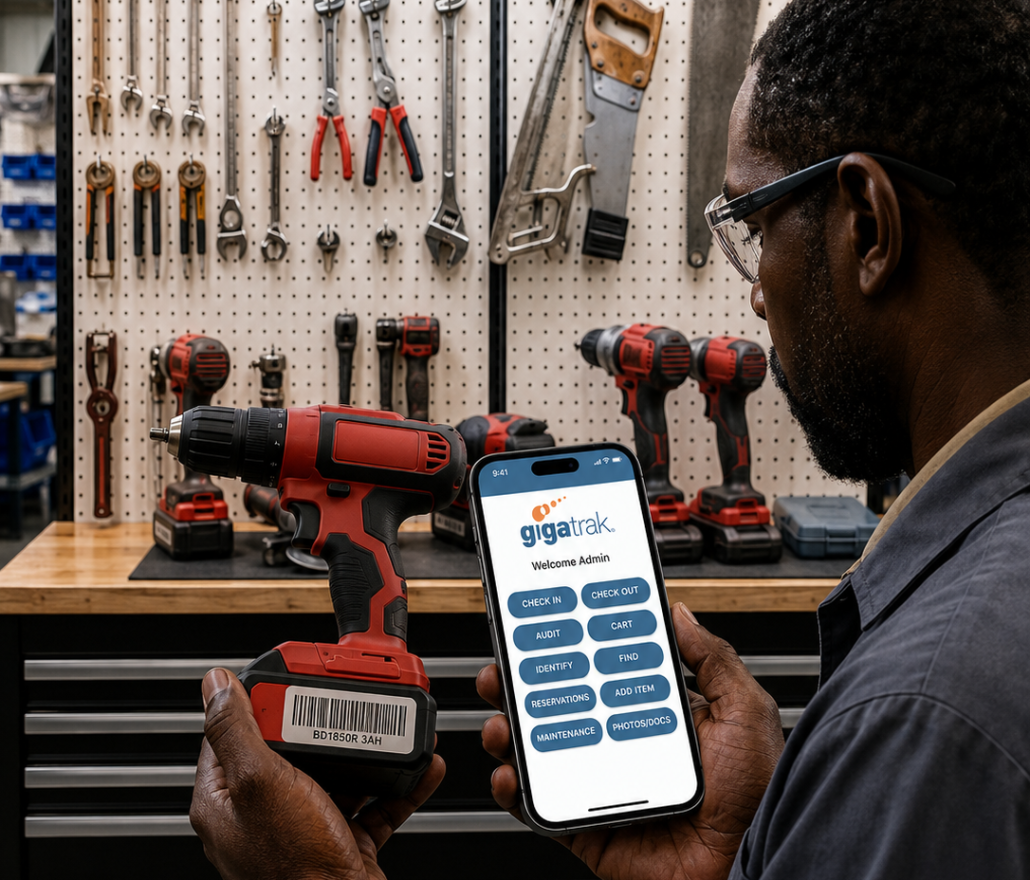
What is Compliance Tracking?| GigaTrak’s Barcode Technology

Struggling with messy inventory spreadsheets before an official inspection? Learn how barcode-powered physical asset compliance tracking software reduces liability risk, ensures audit readiness, and protects your operational budget.
Process & Technology Solutions at GigaTrak • Reading Time: 15 mins
What is Physical Asset Compliance Tracking?
Physical asset compliance tracking is a digital management method that helps organizations monitor their physical inventory against regulatory laws, safety codes, and internal quality frameworks. The system pairs tracking software with barcode technology to replace manual logging sheets.
The software records every tool transaction, safety check, and custody change. This creates a permanent, tamper-proof record of your organization’s physical assets.
Introduction
Many organizations are not aware that the cost of non-compliance is nearly three times the cost of maintaining proper compliance tracking systems. A small oversight in equipment maintenance or a missing inspection record can quickly lead to regulatory violations, project shutdowns, and heavy financial losses.
Can your company afford that operational risk? Probably not.
Failing to adhere to industry safety regulations and inventory standards causes devastating repercussions for commercial enterprises. For instance, federal safety violations and missing equipment documentation can cost companies thousands of dollars per day in active penalties. Implementing dedicated compliance tracking software makes the difference between consistent business growth and sudden operational failure.
This guide outlines how to build an unshakeable system of record using barcode technology.
What is Physical Asset Compliance Tracking?
Physical asset compliance tracking is a digital management method that helps organizations monitor their physical inventory against regulatory laws, safety codes, and internal quality frameworks. The system pairs tracking software with barcode technology to replace manual logging sheets.
The software records every tool transaction, safety check, and custody change. This creates a permanent, tamper-proof record of your organization’s physical assets.
The Core Importance of Asset Compliance Systems
Compliance tracking systems help organizations meet complex legal, insurance, and operational requirements. They find and fix inventory gaps early. This prevents legal penalties, operational disruptions, and long-term damage to your corporate reputation.
If you operate in heavy field services, government sectors, or healthcare logistics, tracking software helps you demonstrate due diligence. It maintains deep trust with your clients, protects your workforce, and keeps your company competitive.
Key Features of Effective Compliance Tracking Systems
To select the best compliance tracking setup, you must evaluate your field needs and your specific regulatory rules. Look for these foundational features when designing your asset management ecosystem.
FOUNDATIONAL COMPLIANCE TRACKING ELEMENTS
Regulatory Mapping –> Aligns inventory controls with safety codes | Barcode Verification –> Forces physical scan, eliminates guessing |
Continuous Ledger–> Generates permanent, digital history logs | Automated Alerts –> Signals upcoming maintenance or deadlines
Regulatory Mapping and Asset Categorization
Your tracking software must align internal asset controls with specific safety codes and corporate standards. The system should group tools by their required inspection intervals. This sorting gives compliance officers an immediate overview of audit readiness across all active equipment pools.
Hardware and Software Integrations
An asset system must sync data across your enterprise network. Connecting your inventory database with your central management software ensures that personnel changes update automatically. It ties asset ownership to active employees, simplifying accountability across separate jobsites.
Continuous Monitoring and Ledger Tracking
Inventory oversight cannot be a single annual event. True compliance tracking requires continuous monitoring to catch safety issues before equipment leaves your warehouse. Continuous scanning keeps your database audit-ready at all times, protecting your operations from surprise inspections.
Automated Alerts and Remediation Scheduling
Automated notifications alert shop managers about expired safety certifications, overdue tools, or upcoming calibration deadlines. Staff can act quickly to pull hazardous gear from service. The software can also lock out unverified assets, preventing workers from checking out non-compliant equipment.
Clear Reporting and Real-Time Dashboards
Dashboards turn raw scan data into actionable operational insights. They show active risk levels, identify missing item trends, and display upcoming service demands. Compliance managers use these reporting tools to generate clean documentation that satisfies rigorous regulatory standards.
Comprehensive Training Resources
Deploying new barcode technology requires clear instructional materials. Look for platforms that offer direct implementation guidance, video tutorials, and clear setup checklists. Proper training shortens your onboarding timeline and helps your field crew adopt the scanning system quickly.
User-Friendly Interface for Field Crews
If your field technicians find the tracking application difficult to use, they will stop scanning items. A simple layout with large buttons ensures consistent daily use. Software with a minimal learning curve reduces data entry errors and saves valuable corporate training hours.
Responsive US-Based Technical Support
Compliance issues require immediate resolution to avoid project delays. Access to responsive, knowledgeable support staff ensures that system issues get fixed fast. Your team can maintain constant uptime, minimizing the risk of documentation gaps during critical audit windows.
Major Strategic Benefits of Barcode Compliance Systems
Transitioning to barcode technology does more than eliminate paper logs. It builds a highly efficient, automated operational workflow. Here are the primary advantages of upgrading your asset controls.
1. Reduced Exposure to Severe Legal Risks
Legal disputes over damaged equipment or jobsite injuries drain corporate resources. Capital spent on legal defense reduces your capacity to expand operations or hire top talent. Digital tracking ensures constant safety compliance, greatly lowering your exposure to liability claims.
2. Maximum Operational Transparency
Centralizing your tracking data gives every manager visibility into asset locations. Digital logs show who took an item, where they stored it, and when they scanned it last. This transparency helps leadership locate inventory bottlenecks and fix issues before they disrupt your clients.
3. Drastic Reduction in Human Effort
Automated barcode scanning eliminates the hours spent typing serial numbers into office spreadsheets. The software handles evidence collection, logs transaction times, and sends automated reminders. Your warehouse staff can focus on high-value tasks, like preventative tool maintenance.
4. Direct Corporate Scalability
Cloud-based platforms allow your compliance tracking workflows to expand alongside your business volume. As you open new regional offices or add vehicles, the database accommodates the increased data flow. Standardized workflows prevent administrative bottlenecks during periods of fast corporate growth.
5. Enhanced Inter-Departmental Collaboration
A shared asset database breaks down communication barriers between your office and your field crews. Separate departments can easily track shared tools, log equipment transfers, and share maintenance documentation. This shared visibility prevents duplicate tool purchases and improves resource allocation.
6. Safer Work Environments for Employees
Productive teams require safe working conditions. Barcode compliance systems protect your crew by keeping unverified or broken gear out of circulation. Digital safety checklists force operators to inspect tools before use, ensuring total adherence to workplace safety mandates.
Detailed Profiles of GigaTrak Compliance Configurations
GigaTrak offers dedicated tracking frameworks designed for enterprise compliance tracking. Rather than offering a single generic application, GigaTrak builds specific deployment variations to match unique organizational environments.
+------------------------------------------------------------------------+
|                      GIGATRAK DEPLOYMENT EDITIONS                      |
+------------------------------------------------------------------------+
|  [Tool Tracking Edition] ------> Manages fluid, high-velocity field gear|
|  [Asset Tracking Edition] -----> Monitors fixed infrastructure & values|
|  [On-Premise Server Edition] --> Total data isolation behind firewalls |
|  [Mobile Application Hub] -----> Handheld scanning for remote off-grid |
+------------------------------------------------------------------------+
1. GigaTrak Tool Tracking Software (Cloud Edition)
This configuration manages high-velocity tool environments where gear moves constantly between workshops, service trucks, and active jobsites.
-
Key Features: Automated check-out and check-in tracking; real-time tool location logs; historical worker custody tracking; automated text alerts for overdue tools.
-
Standout Benefit: It forces absolute personal accountability. Because every tool transaction links to a specific employee badge scan, item loss drops significantly.
-
Deployment Pricing: Customized pricing tailored to your corporate database size and concurrent user requirements.
2. GigaTrak Asset Tracking Software (Cloud Edition)
This edition tracks fixed infrastructure items, IT equipment pools, and high-value corporate investments that remain at specific geographic installations.
-
Key Features: Fixed asset location histories; depreciation schedule calculators; maintenance log attachments; audit reconciliation reporting.
-
Standout Benefit: It wipes out expensive ghost assets from your accounting ledgers. This optimization prevents companies from overpaying on corporate property taxes and asset insurance premiums.
-
Deployment Pricing: Customized enterprise licensing based on total tracked inventory volume.
3. GigaTrak Corporate Asset Tracking (On-Premise Server Edition)
This secure deployment model installs directly onto your company’s physical internal servers, bypassing external cloud infrastructure entirely.
-
Key Features: Local SQL database hosting; full internal network data isolation; customized database configuration options; active directory employee syncing.
-
Standout Benefit: It provides total data isolation. This architecture matches the security rules of defense contractors, government agencies, and installations that must run entirely behind a secure corporate firewall.
-
Deployment Pricing: One-time corporate server software license fee with optional annual maintenance support contracts.
4. GigaTrak Mobile Scanning Terminal Solutions
This option combines GigaTrak’s specialized mobile software apps with rugged handheld hardware terminals or smartphone devices to track inventory in remote field settings.
-
Key Features: Local offline data caching; camera-based barcode scanning; durable hardware builds; automatic background database synchronization.
-
Standout Benefit: It solves the off-grid tracking challenge. Field technicians can log equipment status, record inspections, and change item locations without internet access. The device stores the scans locally and syncs with the central database once network access returns.
-
Deployment Pricing: Per-device software licensing paired with selected hardware procurement configurations.
All of GigaTrak’s barcode technology solutions are available in both the Cloud-Hosted and Self-Hosted architectures.
Technical Architecture: Why Barcodes Defeat Manual Entry
A reliable system of record requires data accuracy. Software that allows operators to manually type in serial numbers introduces data corruption risks. Workers misread letters, drop digits, or copy rows incorrectly.
Barcode technology requires physical verification. An employee must walk up to the equipment and aim the scanner directly at the tag. The laser or camera reads the encoded data instantly.
This action removes typos, prevents staff from falsifying records from an office desk, and confirms the asset physically exists at that location.
Four Steps to Transition from Spreadsheets to Barcode Software
Replacing outdated tracking files does not require stopping your daily business operations. Following a structured implementation strategy ensures a smooth transition.
  [Step 1: Clean Data]    --> Fix typos and clear duplicate spreadsheet rows
           │
           ▼
  [Step 2: Tag Material]  --> Apply anodized metal tags to field machinery
           │
           ▼
  [Step 3: Group Rules]   --> Restrict system deletion rights to managers
           │
           ▼
  [Step 4: Phased Launch] --> Test the scanning workflow in one shop first
Step One: Reconcile and Clean Your Inventory Data
Do not import disorganized data into your new database. Review your current inventory spreadsheets to remove duplicate entries. Fix obvious typos in serial numbers. Organize your assets into clear categories based on tool type, physical location, and maintenance needs.
Step Two: Select and Apply Durable Barcode Tags
Your barcodes must survive the environments where your tools operate. Standard paper labels work well for office laptops and indoor files.
However, outdoor construction equipment requires heavy-duty tags. Choose anodized aluminum asset tags or thermal-transfer polyester labels. These materials resist damage from abrasion, chemicals, moisture, and extreme temperatures.
Step Three: Establish Group Permissions and User Access
Configure your tracking software to restrict system privileges based on employee roles.
Allow your field crews to check items out or report broken gear from their mobile devices. Restrict higher-level system functions, such as deleting history logs or altering regulatory compliance schedules, to authorized compliance officers.
Step Four: Execute a Phased Departmental Rollout
Do not try to change your entire enterprise inventory tracking system in a single day. Select one department, tool room, or jobsite to serve as your testing location.
Tag the assets at this location, train the local operators, and test your offline data syncing processes. Once you refine the workflow, expand the tracking software across your remaining facilities.
Financial Analysis: The Clear ROI of Active Tracking Controls
Implementing dedicated compliance tracking software protects your organization’s financial bottom line. It changes asset management from an administrative expense into an operational savings driver.
Reclaiming Billable Labor Hours
Manually searching for misplaced equipment before an audit drains employee productivity. Technicians waste hours walking through warehouses looking for missing assets.
With a barcode system of record, your team knows exactly who last scanned the item and where it resides. This visibility speeds up inventory audits, letting your workers focus on billable client projects.
Lowering Capital Replacement Costs
Tools that receive regular, documented maintenance last longer. Automated asset software tracks usage metrics and sends proactive alerts before components fail.
Preventing major mechanical breakdowns reduces emergency tool rental fees. It also helps your operations team avoid buying premature equipment replacements.
Compliance Tracking
FAQ
Why are manual spreadsheets considered an unacceptable risk by regulatory auditors?
Manual spreadsheets lack automated data controls, historical logging, and system version tracking. They allow users to accidentally delete rows, alter entry dates, or overwrite inspection histories without detection.
When an inspector demands verified proof of equipment testing, an easily editable spreadsheet fails to provide the secure, tamper-proof chain of custody required by regulatory agencies.
How does specialized tool tracking software lower corporate insurance premiums?
Insurance underwriting firms evaluate corporate risk based on your internal operational controls. Utilizing an asset tracking system proves that your management actively monitors equipment loss, tracks tool locations, and enforces strict safety inspection schedules.
Providing your insurance carrier with detailed compliance logs demonstrates reduced liability risk. This documentation frequently qualifies your organization for lower annual premium rates.
Can field employees use their own mobile devices to scan barcodes?
Yes. Modern software compliance architectures support mobile device deployment. Your field technicians can use specialized mobile apps to turn their smartphones or tablets into handheld scanning terminals.
Workers use the device camera to scan asset barcodes directly in the field. This capability lets them update tool locations, record safety inspections, and log item conditions without returning to a central office.
What is the process for migrating existing data into GigaTrak software?
Migrating your legacy tracking information is direct. GigaTrak’s software features built-in data import tools. You can export your current inventory lists into standard CSV or Excel formats.
The system guides you through mapping your data columns to the new database fields. This utility populates your new asset tracking environment quickly, saving your staff from performing manual data entry.
What is the difference between compliance tracking and general GRC tools?
Compliance tracking software focuses on monitoring physical controls, tool safety histories, asset conditions, and daily operational deadlines.
Governance, Risk, and Compliance (GRC) platforms take a broader corporate view. They focus on abstract corporate policies, legal regulations, cybersecurity risks, and financial reporting compliance across the entire enterprise.
Build an Unshakeable System of Record with GigaTrak
Building a secure, audit-ready enterprise requires moving past unorganized spreadsheet files and manual field workflows. Reliable operational accountability demands a tracking framework engineered to turn physical asset visibility into an unshakeable system of record.
GigaTrak delivers this level of control. For three decades, our team has built tracking systems designed for industries facing strict regulatory pressures.
We help your organization replace manual chaos with clear operational visibility. Our tracking software runs on the exact deployment model your IT infrastructure requires, backed by reliable, US-based technical support.
Do not let manual data errors or outdated spreadsheets leave your organization vulnerable to failed audits and financial penalties. GigaTrak provides the visibility and control you need to satisfy strict regulatory requirements.
Request a Demo to speak with our application specialists today, or call our offices directly at 262-657-5500 to learn how we can secure your operational compliance.