
Tag Archive for: tool tracking for construction

Asset Tracking for Construction: Contractor’s Guide
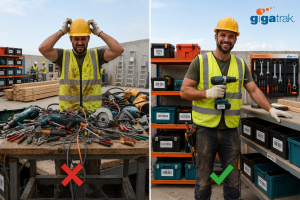
With GigaTrak’s asset tracking for contractors, your valuable inventory stays secure and fully accounted for across every work truck. Construction Asset Management Software. GigaTrak

Asset Tracking for Construction: The Contractor’s Guide to Jobsite Tool Control

Managing tools and heavy equipment across multiple jobsites costs contractors thousands of dollars every year in lost gear and wasted labor. When high-value power tools go missing, project schedules stall and direct replacement expenses destroy profit margins.

For 30 years, GigaTrak has provided barcode tool tracking systems to organizations like FDNY, Lockheed Martin, and the US Army. Implementing a dedicated strategy for asset tracking for construction replaces daily guesswork with absolute tool accountability.

This complete guide covers how commercial contractors eliminate tool loss, improve asset utilization, speed up field inventory audits, and keep projects moving on schedule.

The True Cost of Unmanaged Jobsite Assets

Tool loss is rarely limited to the price tag of replacing a stolen generator or missing rotary hammer. Unmanaged physical assets drain financial resources across your entire business operations.

  • Wasted Labor Hours: Field crews waste up to 30 minutes every shift searching gang boxes, work trucks, and job trailers for misplaced gear.
  • Redundant Purchases: Project managers buy or rent duplicate tools because no central system confirms existing equipment availability.
  • Project Delays and Penalties: Work stops completely when specialized equipment is missing, leading to missed milestones and contract penalties.
  • Subcontractor Equipment Hoarding: Workers stash critical items in personal vehicles or remote gang boxes, hiding active inventory from other crews.
  • Unscheduled Machinery Breakdown: Without maintenance tracking, unserviced equipment breaks down unexpectedly on active jobs.

What Is Asset Tracking for Construction?

Asset tracking for construction is the continuous management process of tagging physical tools, monitoring inventory movement, and assigning item responsibility to specific workers or jobsites. It relies on durable barcode tags, handheld barcode scanners, mobile devices, and central tracking software. Contractors use these tool tracking systems to verify asset location, maintenance history, and transfer records in real time.

Categorizing Construction Inventory for Total Control

Not every item on a jobsite requires the same level of tracking detail. Organizing inventory into three distinct asset tiers ensures proper field oversight without unnecessary paperwork.

1. Heavy Equipment and Vehicle Fleets

Excavators, skid steers, work trucks, and large trailers represent high capital costs. These high-value assets are tracked individually using active GPS hardware alongside periodic physical scans during site transfers.

2. High-Value Power Tools and Equipment

Rotary hammers, crimpers, laser levels, generators, and pipe benders move frequently between trucks and workers. Each item receives a unique asset tag and serial number record to track individual responsibility during every check-out.

3. Bulk Consumables and Hand Tools

Safety gear, drill bits, extensions, and hand tools are managed by total quantity counts rather than unique serial numbers. Tool crib software monitors bulk minimum stock levels to trigger restock orders automatically.

4 Steps to Implement Construction Asset Tracking

Moving from paper tracking sheets or simple spreadsheets to a digital asset tracking solution requires a systematic setup.

Step 1: Standardize Identification with Durable Barcode Tags

Ditch manual text entry. Affix durable, jobsite-ready barcode labels to every piece of equipment. Industrial barcode tags withstand extreme weather, grease, mud, and heavy physical abuse. Scanners read these labels instantly in warehouse yards or active job trailers.

Step 2: Establish Tool Crib Management Rules

What is tool crib management? Tool crib management is the operational practice of controlling, issuing, and tracking equipment from a central tool room, warehouse, or jobsite trailer. Assigning a dedicated crib manager or using mobile check-in and check-out workflows ensures no tool leaves storage without a digital transfer record.

Step 3: Mandate Digital Sign-Out Accountability

Tools rarely disappear on their own. They get lost when no single individual is accountable. Requiring workers to verify tool check-outs using handheld barcode scanners creates an indisputable audit trail. Everyone knows exactly who took the item, when it left the yard, and where it is supposed to be.

Step 4: Deploy Dedicated Construction Tool Tracking Software

Generic spreadsheets fail as soon as equipment spreads across multiple active locations. Specialized software centralizes item records, tracks maintenance schedules, logs transfer histories, and monitors overall asset utilization rates.

Explore GigaTrak Tool Tracking Systems to see how barcode workflows eliminate inventory confusion across your fleet.

How Construction Asset Tracking Improves Your Bottom Line

Digital tool management impacts far more than loss prevention. Controlling your inventory directly improves operational efficiency across four key areas:

  • Accurate Job Costing: Assign tool usage expenses directly to specific job codes or project cost centers for precise client billing.
  • Preventative Maintenance Tracking: Schedule service alerts based on usage hours or calendar intervals to protect asset lifespan and avoid costly breakdowns.
  • Faster Inventory Audits: Conduct complete job site audits in minutes using handheld barcode terminals instead of spending days counting items by hand.
  • Higher Asset Utilization: Identify idle tools sitting in tool rooms and redeploy them to active sites instead of purchasing new equipment.

Selecting Deployment Options: Cloud vs. On-Premise

Every construction business operates under different IT requirements and security mandates. When selecting tracking software, evaluate which deployment model fits your operational setup:

  • Cloud-Based Software: Access real-time tool inventory data from any internet-connected device or smartphone. Best for field operations requiring instant updates across multiple job sites.
  • On-Premise Deployment: Install software directly on local company servers. Essential for contractors operating under strict data security regulations or high-security government facilities.

Core Features Every Construction Tracking System Needs

Select software designed specifically for tough jobsite conditions rather than standard corporate offices.

Feature Field Requirement Business Impact
Mobile Barcode Scanning Scans and transfers tools using rugged handheld terminals or mobile apps. Eliminates paperwork and speeds up check-in/check-out cycles.
Offline Data Syncing Stores barcode scan data locally when cellular signal drops on remote sites. Prevents work interruptions and syncs records once back online.
Maintenance Tracking Logs service intervals, engine hours, and safety inspection dates. Extends asset lifecycle and prevents unexpected equipment failures.
Audit & Loss Reporting Generates reports showing loss rates, tool usage, and missing assets by site. Identifies missing items immediately to hold teams accountable.

Frequently Asked Questions

What is the best way to track tools on a construction site?

The most reliable method is attaching durable barcode tags to every tool and scanning them through dedicated tracking software during check-in and check-out. This builds a permanent digital history of item location and worker responsibility.

Why use barcode tags instead of manual spreadsheets?

Manual spreadsheets rely on human memory and manual typing, which cause frequent errors. Barcode scanning logs transfers in seconds, eliminates data entry errors, and updates master inventory records automatically.

Can barcode tracking software work on jobsites without internet service?

Yes. Barcode tracking software built with offline scanning capabilities stores transaction data directly on mobile handheld devices. The system updates your central database as soon as the terminal connects to Wi-Fi or cellular service.

What is the difference between active GPS and barcode asset tracking?

Active GPS tracking relies on battery-powered transmitters to provide real-time location mapping for heavy machinery and vehicles. Barcode asset tracking uses durable physical tags and scanners to track smaller power tools, equipment, and hand tools at a fraction of the cost per item.

Stop Missing Tools from Eating Your Profits

Effective asset tracking for construction keeps projects moving on schedule, lowers tool replacement costs, and holds field crews accountable. GigaTrak delivers simple barcode tracking hardware and software backed by 100% US-based customer support.

Ready to eliminate lost tool expenses and secure your inventory? Request a Consultation with a GigaTrak specialist today.

Contacting GigaTrak:

Request a Free Consultation and Demo.

Visit our Contact Page.

Construction Asset Management Software: Field Tool Guide

blank

Construction Asset Management Software: A Field Guide to Tools and Equipment

Every morning across active job sites, contractors lose billable hours to missing equipment. A three-person crew stands waiting because nobody knows who took the core drill from the job trailer. A supervisor orders a second generator because the shop cannot find the one purchased three months ago. A truck leaves for a project site without the right crimper, turning a quick repair into a three-hour delay.

Unmanaged tools cause project delays, inflated purchasing budgets, and lost profits. For growing contractors, asset tracking for construction solves these field bottlenecks. Establishing clear chain of custody turns tool room inventory into a predictable asset control system.

GigaTrak has provided barcode tool tracking systems for construction firms, facilities, and government agencies since 1995. Organizations like FDNY, Lockheed Martin, and the US Army rely on GigaTrak software to manage physical inventory. Whether your team needs cloud software or an on-premise installation, tracking equipment across sites protects your bottom line.

Definition: Asset tracking for construction is an operational process that uses barcode tags, mobile scanners, and central software to monitor tool locations, track equipment usage, assign individual employee accountability, and schedule preventive maintenance across active job sites.

The Financial Impact of Unmanaged Equipment

Tool loss is not an inevitable expense. When you calculate the direct hardware replacements and indirect labor losses, missing equipment drains project profits.

1. Ghost Assets on the Balance Sheet

Ghost assets are tools listed in your ledger that are broken, lost, or stolen. Project managers plan jobs assuming those tools exist in the warehouse. When crews discover the missing gear on workdays, schedules stall immediately.

2. Duplicate Purchases and Short-Term Rentals

Field teams default to buying or renting new items when they cannot locate gear. A firm might buy three identical transit lasers over two years simply because the central shop lost track of existing inventory across job trailers.

3. Idle Labor and Lost Billable Hours

When workers spend 30 minutes looking through gang boxes or driving across town to find gear, that labor gets billed directly to your project budget. Multiply those missing minutes across five crews over a full year, and labor inefficiency scales rapidly.

4. Premature Wear and Sudden Tool Breakdowns

Tools run until failure when teams lack maintenance tracking. Unmaintained tools pose safety risks and cost far more to replace than to service routinely.

Grouping Construction Inventory for Control

Different types of job site equipment require specific tracking approaches. Categorize your inventory into clear tiers to simplify field management.

Inventory Category Typical Equipment Primary Goal Recommended Tracking Method
Heavy Fleet & Machinery Excavators, skid steers, service trucks Monitor hours, location, and service intervals GPS combined with barcode tags
Capital Power Tools Rotary hammers, fusion welders, generators Track employee custody and job site assignment Anodized aluminum barcode tags
Containers & Vans Job trailers, gang boxes, utility trucks Group multiple tools for fast site transfers Container barcoding and mobile app
Consumables & Hardware Drill bits, safety gear, fasteners, blades Maintain stock thresholds and reorder points Min/max inventory counts

Capital Assets and Machinery

High-cost assets require full lifecycle records. You need to record original purchase prices, serial numbers, warranty dates, depreciation schedules, and engine service intervals alongside physical location data.

High-Value Power Tools

Small power tools represent the majority of job site theft and field loss. They move constantly between service vans, workers, and storage containers. Effective tracking focuses on worker accountability. The system must log who checked out the item, when it left, and which job cost code pays for it.

Containers, Gang Boxes, and Mobile Units

Instead of scanning fifty hand tools individually every morning, modern software lets you link items to a master container. Assign tools to a specific job trailer or service van. Moving the trailer to a new job site updates the location of all enclosed tools automatically in a single scan.

Consumables and Expendable Items

Fasteners, safety glasses, and saw blades get used up on site. Tracking software monitors minimum stock limits, alerting shop staff to reorder supplies before crews run out during a critical build phase.

Comparing Tool and Asset Tracking Methods: Paper vs. Barcodes vs. GPS

Selecting the correct inventory management framework requires balancing your hardware budget, environment durability, and daily operational speed.

Paper Logs and Spreadsheets

Paper sign-out sheets and manual spreadsheets require zero initial software investment. However, paper records suffer from high human error rates, lack real-time updates, and offer no worker accountability. Manual logs quickly become outdated and fail to control loss on busy sites.

Barcode Scanning Systems

Barcode scanning represents the practical industry standard for construction tools. These barcode asset tags cost very little per unit and provide accurate scanning speed. Workers scan tags using industrial handheld readers or mobile smartphones. This method provides unambiguous serial number verification and clear worker custody records at an affordable cost.

Active GPS Units

GPS devices deliver continuous satellite location data without manual scans. However, active GPS tags require internal batteries or external power connections, carry high monthly cellular subscription fees, and cost significantly more per unit. Use GPS selectively for heavy machinery, fleet trucks, and high-value mobile generators.

Essential Features for Tool & Asset Tracking for Construction

Commercial job sites require rugged tracking software designed specifically for field conditions. Avoid office inventory software that lacks site-transfer workflows.

WORKFLOW STAGES

1. Check-Out to Employee
2. Site or Trailer Transfer
3. Inspection & Repair Flag
4. Return to Central Shop

Rapid Barcode Check-In and Check-Out

Checking out equipment must take seconds. Warehouse managers should be able to scan a worker badge, scan three tool tags, select a job number, and finish the transfer immediately.

Flexible Assignment Options

Your tracking system should support multi-level assignments:

  • Assign gear to an employee for individual accountability.
  • Assign gear to a job site number for accurate cost accounting.
  • Assign gear to a job trailer or utility van for grouped transport.

Mobile App with Camera Scanning

Field foremen need mobile access on standard mobile devices. A native mobile app transforms iOS and Android smartphones into barcode scanners. Supervisors can conduct trailer audits, view tool histories, and process field transfers directly on site.

Preventive Maintenance and Safety Locks

Unplanned equipment failures halt project timelines. Software should track maintenance schedules, store service receipts, log repair costs, and lock out safety-restricted tools automatically until inspections occur.

Offline Data Collection

Remote job sites often lack cellular coverage or network access. Modern tracking applications save offline transactions to local device storage, uploading data automatically when the device reconnects to a cellular or network signal.

Step-by-Step Implementation Guide

Transitioning your operations from inventory chaos to structured tool control requires a methodical step-by-step approach.

Step 1: Conduct a Complete Tool Audit

Collect all company tools from shop bays, utility trucks, gang boxes, and active job sites. Record every piece of equipment in a central database:

  • Make, model, and physical serial number
  • Original purchase price and condition
  • Current physical location and assigned user

Step 2: Apply Industrial Barcode Tags

Standard paper labels fail on construction sites. Use durable anodized aluminum asset tags or heavy-duty poly-blend labels with industrial adhesive. Place barcode tags in consistent, low-abrasion areas on each tool body to make scanning simple.

Step 3: Establish Clear Operational Rules

Software relies on disciplined field habits. Enforce standard operational protocols across all project teams:

  • No tool leaves the warehouse without a digital checkout scan.
  • Field-to-field tool transfers must be logged in the mobile app immediately by the foremen involved.
  • Broken or unsafe gear must be checked in under a repair hold tag to prevent redeployment.

Step 4: Train Tool Crib Operators and Field Staff

Hold short training sessions for warehouse staff, field superintendents, and site foremen. Frame asset tracking as a supportive system that ensures workers have operational tools available when needed.

Step 5: Perform Periodic Field Audits

Conduct regular spot-checks using mobile scanning devices. Compare physical trailer contents against digital software records to catch missing items early and maintain operational accountability.

Frequently Asked Questions About Asset Tracking for Construction

What is asset tracking for construction?

Asset tracking for construction is the practice of using barcode tags, mobile scanners, and software to monitor tool locations, manage check-outs, track maintenance schedules, and control physical equipment loss across job sites.

How does barcode tracking work on job sites without internet?

Modern mobile tracking applications feature offline data storage. Field staff perform scans, transfers, and audits without cell service. The application stores transactions locally and syncs updates automatically once the device reconnects to a network.

What type of asset tag works best on heavy power tools?

Anodized aluminum barcode tags backed with high-tack industrial adhesive work best. Metallic tags resist heat, chemical exposure, abrasion, and harsh weather conditions on commercial construction sites.

How fast do contractors see a return on investment?

Most contracting firms recover their full software and hardware investment within 90 days. Eliminating duplicate tool buys, cutting short-term rental costs, and reducing idle labor hours provides immediate financial returns.

Can software track equipment maintenance alongside location?

Yes. Purpose-built tracking software logs usage hours, records preventive maintenance schedules, tracks repair costs, and locks out faulty tools from checkout until technicians complete required safety inspections.

Typical Operational Results After Implementation

Contractors who replace manual tracking with digital barcode systems achieve measurable performance improvements:

  • Reduces unaccounted-for tool loss by 80 to 90 percent.
  • Cuts annual tool replacement spending by 20 to 30 percent.
  • Eliminates wasted crew hours spent searching for missing items.
  • Delivers complete software investment payback within 90 days.

Stopping inventory loss keeps job bids competitive and keeps field projects running on schedule.

Stop Tool Loss on Your Job Sites Today

Unmanaged tools and equipment drain contractor margins. Combining durable barcode tags, mobile smartphone scanning, and clear chain of custody protocols eliminates tool loss and protects project schedules.

GigaTrak brings 30 years of field-tested inventory experience to your business. Our team provides turnkey tracking systems, complete with software, industrial barcode labels, mobile hardware, and US-based customer support.

Ready to improve job site tool control and protect your bottom line? Request a Consultation with a GigaTrak tracking specialist today!

Request a Consultation

Contacting GigaTrak

Request Information

Tool Tracking Software vs. Spreadsheets: Hidden Costs Revealed

Spreadsheets are now ineffective. This image shows how GigaTrak's tool tracking software is replacing spreadsheets and reducing labor and costs of equipment replacements.

Tool Tracking Software vs. Spreadsheets: What’s Really Costing You?

A crew arrives at a jobsite at 7:00 AM. They open the truck bed to start work, but the pipe threader is missing. The foreman calls the main shop, checks three other drivers, and searches through last week’s paper logs. Two hours later, four technicians are still sitting idle while someone drives to buy a duplicate tool.

If you manage operations, fleets, or jobsites, this scenario happens weekly. Most companies try to track physical gear using Excel or Google Sheets. What seems like a free solution quickly becomes a major operating expense.

Tool tracking software is a barcode-based system that monitors physical equipment across jobsites, warehouses, and service vehicles in real time.

Switching from static spreadsheets to dedicated software plugs silent financial leaks. You will know where every tool is before your crew leaves the yard.

The Hidden Financial Costs of Spreadsheet Tool Tracking

Spreadsheets work well for static accounting data. They fail when managing physical equipment moving between crews, trucks, and job sites.

Wasted Labor and Paid Downtime

Field technicians spend an average of 30 minutes every day searching for lost gear or calling other crews to locate assets.

Across a team of 10 field technicians, that equals 1,300 hours lost per year in pure downtime. You pay high-cost labor hours for employees to dig through truck beds and drive back and forth across town.

Human Error and Ghost Inventory

Research shows 88% of manually updated spreadsheets contain human errors. A missed row or a simple typo creates ghost inventory. These are tools that exist on your balance sheet but are nowhere to be found when a project kicks off.

Your team ends up panic-buying expensive duplicate tools or renting last-minute equipment just to stay on schedule.

Zero Real-Time Visibility

Spreadsheets rely on manual updates at the end of the day or week. By the time a manager opens the file on Tuesday morning, the data is useless.

Without instant updates, you lose control the moment an asset leaves your central crib or warehouse.

Equipment Loss and Shrinkage Metrics

Missing equipment directly erodes profit margins. Construction and field service operations lose 5% to 10% of their portable tool inventory every year to theft and misplacement.

Financial Impact Category Spreadsheet Tracking Performance
Annual Equipment Loss 5% to 10% total inventory loss per year
Tool Recovery Rates Under 7% without systematic barcode checkouts
Duplicate Tool Buys $3,000+ per 50 workers spent on unnecessary replacements

Without an automated system linking equipment directly to individual workers, recovery rates remain low. Most businesses absorb these replacement costs out of pocket.

4 Crucial Features Missing from Spreadsheets

Why do spreadsheets fail to stop equipment loss? They lack four built-in capabilities that dedicated tracking systems provide.

1. Fast Barcode and QR Code Scanning

Instead of typing serial numbers into a tiny cell, staff use durable barcode scanners or mobile devices to scan tags. A check-out process that used to take three minutes now takes two seconds.

2. Digital Chain of Custody

When high-value gear changes hands, the software records an exact digital paper trail. Employees sign for tools directly on screen, establishing immediate personal accountability.

3. Automated Maintenance Alerts

Tools require periodic calibration, safety checks, and routine servicing. Spreadsheets do not alert you when a saw needs maintenance. Tracking software sends automatic alerts to fleet managers before faulty gear causes a jobsite injury.

4. Location Tagging and GPS Mapping

When an asset is scanned, the system records the location coordinates. Managers get a clear view of where tools were last checked out, making it easy to identify which truck or crew has the item.

Tool Tracking Software vs. Spreadsheets: Side-by-Side Comparison

Feature Excel / Google Sheets Dedicated Tool Tracking Software
Data Entry Manual typing with high typo risk Instant barcode and QR code scanning
Real-Time Sync Requires manual saves and updates Instant cloud or local server sync
Accountability Relies on memory and paper logs Digital signatures and audit histories
Maintenance Forgotten dates and missed service Automated alerts for inspections
Deployment Basic file hosting only Cloud hosting or secure on-premise install

Built for High-Security and Complex Operations

Generic office software cannot handle complex security requirements. GigaTrak has provided barcode tool tracking solutions for over 30 years.

Clients like FDNY, Lockheed Martin, the US Army, and Virginia Public Schools rely on GigaTrak to keep their physical assets organized.

Unlike vendors that force you into a one-size-fits-all cloud system, GigaTrak offers both cloud and secure on-premise deployments. If your facility operates without an internet connection or requires self-hosted security, on-premise software keeps your data within your internal network. All support is based directly in the United States.

Calculating Your ROI

Upgrading to dedicated software pays for itself quickly. Calculate your potential savings using three operational numbers:

  • Labor Hours Lost: Multiply your average technician pay rate by 0.5 hours per day. Multiply that number by your total crew size and working days per year.

  • Annual Tool Loss: Sum up what you spent over the last 12 months replacing lost, stolen, or unreturned gear.

  • Preventable Rentals: Add up the expense of last-minute tool rentals ordered because nobody knew where company-owned items were located.

Most mid-sized operations recoup their investment within 3 to 6 months by eliminating duplicate buys and recovering lost labor hours.

How to Transition Off Spreadsheets

Moving off manual spreadsheets does not need to disrupt daily work:

  1. Audit High-Value Inventory: Start with power tools, testing gear, and specialized equipment. Do not worry about tagging small hand tools on day one.

  2. Apply Durable Barcode Tags: Attach heavy-duty, weather-resistant barcode or QR tags to your assets.

  3. Establish a Checkout Rule: Make scanning mandatory before gear leaves the crib. Because scanning takes seconds, field adoption happens quickly.

Frequently Asked Questions

What is tool tracking software?

Tool tracking software is a specialized application that uses barcodes, QR tags, or RFID to record who has an asset, where it is located, and when it is due back. It replaces manual logs and spreadsheets.

Can tool tracking software run on-premise without an internet connection?

Yes. GigaTrak provides on-premise installations that run entirely on your local network. This setup is ideal for government agencies, military bases, and high-security contractors.

How does barcode scanning improve inventory accuracy?

Barcode scanning eliminates manual typing errors. Scanning a barcode instantly updates the database, changes asset ownership, and logs precise timestamps in under two seconds.

Is US-based technical support available?

Yes. GigaTrak provides dedicated, US-based support to help set up hardware, configure databases, and train your staff.

Stop Letting Spreadsheets Drain Your Profits

Spreadsheets are fine for accounting. They are the wrong tool for managing moving physical equipment across jobsites and service vans.

Take control of your inventory, improve accountability, and keep your crews working.

Request a Consultation with GigaTrak today to speak with our US-based team and find the right cloud or on-premise setup for your operation.

Contacting GigaTrak:

  • 262-657-5500
  • sales@gigatrak.com

Request a Free Demo.

Contact Page.

Stop Wasting Labor Hours: Asset Tracking for Contractors

GigaTrak tool tracking software gives you visibility of all your tools. GigaTrak has unlimited tracking no matter the plan. GigaTrak is the leader in tracking with barcode technology.

Stop Wasting Labor Hours: Asset Tracking for Contractors

Process & Technology Solutions at GigaTrak • Reading Time: 12 mins

A contractor’s crew sits idle on a jobsite because a critical rotary hammer is missing. The foreman calls the warehouse, but nobody knows who had it last. Meanwhile, your billable hours slip away.

For many electrical, plumbing, and mechanical contractors, this scenario happens daily. The average construction worker loses over 30 minutes per day simply searching for tools and equipment. When scaled across a crew of twenty, that is over 2,500 lost labor hours every year.

You can stop this drain on your payroll. The answer lies in establishing a structured workflow using modern asset tracking for contractors.

The True Cost of Manual Inventory Management

Many construction firms still rely on whiteboards, spreadsheets, or paper logs. These manual methods fail because they depend on busy people remembering to write down what they took. Without dedicated asset tracking for contractors, your valuable physical inventory easily disappears into the back of employee work vans and trucks.

When equipment goes missing, three major issues destroy your labor efficiency:

  • Idle Labor: Workers stand around, waiting for a replacement item to arrive at the job site.

  • Double Purchasing: Purchasing managers buy duplicate tools because they cannot locate the original, wasting valuable capital.

  • Administrative Chasing: Warehouse managers spend hours calling foremen, trying to locate missing items.

Since 1995, GigaTrak has helped businesses replace chaotic manual systems with simple, barcode-based tool tracking for contractors. Our clients include the FDNY, Lockheed Martin, the US Army, and Virginia Public Schools. We build professional tracking platforms that keep crews working and hold employees accountable. Implementing a proven asset tracking for contractors strategy is the fastest way to protect your equipment investments.

Why Alternative Solutions Fall Short on the Jobsite

To solve the headache of missing assets, many construction companies try generic Bluetooth tags, manufacturer-specific apps, or simple peer-to-peer sharing tools. These systems often fail because they do not match the harsh realities of field construction.

The Limits of Bluetooth and Manufacturer-Locked Systems

Some firms adopt manufacturer-specific applications using built-in Bluetooth chips or external tags. They work fine if your entire physical inventory comes from a single brand. However, most trade contractors manage a mixed fleet.

Buying external Bluetooth tags for other brands is expensive, requires constant battery replacements, and tags can easily knock off during rough use on a busy jobsite.

Furthermore, Bluetooth tracking suffers from major technical drawbacks:

  • Limited Range: Bluetooth signals only broadcast between 100 and 400 feet.

  • Network Dependence: Location data only updates if a phone with that specific manufacturer’s app is nearby.

  • No Security Value: If gear is stolen, the system will not help you find it unless the thief walks near someone running that exact app.

The Failures of Peer-to-Peer Mobile Sharing Apps

Other mobile solutions focus on peer-to-peer tool sharing in the field, letting workers transfer items directly using mobile phones. While convenient, this removes central authority from your inventory pipeline.

If a worker forgets to scan a transfer, the chain of custody breaks immediately, and the office loses all visibility. Effective tool tracking for contractors requires centralized control—not self-reporting from busy crews on a jobsite.

The Complexity of Office Asset Managers

Some companies try using corporate IT software built to track office furniture, corporate laptops, and software licenses. While highly customizable, these platforms present field workers with dozens of confusing data fields.

Your crew wants to get their gear and get to work—they will not fill out complex digital forms on a jobsite. These platforms also require a constant internet connection, which fails in basements, concrete structures, and rural jobsites.

Why GigaTrak’s Barcode Solution Works

GigaTrak bypasses short-range Bluetooth or worker self-reporting by using a centralized, barcode-based check-out/check-in architecture. This enforces immediate accountability and physical discipline, making it the most reliable system for asset tracking for contractors.

 Warehouse Manager Scans ID Badge  ➔  Scans Equipment Barcode  ➔  3-Second Audit-Proof Assignment 

Direct Accountability at the Point of Exit

With GigaTrak, an item cannot leave your warehouse without being assigned to a specific person or jobsite. The warehouse manager scans the item barcode, then scans the employee’s barcoded ID badge. The transfer records in under three seconds. Because employees know the system holds them personally responsible, equipment is treated with care and returned on time.

Built for Mixed-Brand Inventories

A barcode label does not care who manufactured the equipment. You can apply our durable, weather-resistant barcode tags to any brand of drill, saw, generator, or safety harness. You can even place barcodes on bins of consumable items, keeping your entire physical inventory under a single, unified system.

Flexible Security & Deployment Options

Unlike cloud-only competitors, GigaTrak supports both cloud-hosted databases and local, on-premise installations. This flexibility is vital for contractors working on secure military facilities, utility plants, or government projects where IT protocols forbid storing operational data on public cloud servers.

Offline Reliability for Remote Crews

Our mobile applications do not require a constant cellular signal. Field crews can scan barcodes and complete transfers while working deep underground or in remote areas. The application stores transactional data locally and automatically syncs back to your main database once reconnected to Wi-Fi or cellular service.

The mobile app operates offline, allowing crews to track tools anywhere. Source: GigaTrak

4 Steps to Eliminate Lost Labor Hours

  1. Catalog Your Physical Inventory: Gather all hand tools, power tools, and heavy equipment. Enter their serial numbers, purchase dates, and values into your master catalog.

  2. Apply Durable Barcode Labels: Affix rugged, weather-resistant barcode tags to each item. For small tools or bulk items, barcode the container holding them.

  3. Establish a Scan-Out Workflow: Scan the employee’s ID badge, then scan the tool’s barcode before it leaves the warehouse. This takes seconds and establishes an indisputable chain of custody.

  4. Perform Periodic Warehouse Audits: Use a mobile scanner to scan everything in your tool crib. The software will instantly flag any items that are missing, overdue, or due for safety inspections.

Key Capabilities Tailored for Harsh Environments

Feature Generic Spreadsheets GigaTrak Asset Tracking
Data Verification Manual entry (error-prone) Instant barcode scan
Offline Functionality Requires active connection Built-in offline syncing
Hardware Requirements Computer required iOS / Android smartphones & rugged scanners
Chain of Custody Unverified / Missing Time-stamped & badge-linked
  • Works With Your Existing Hardware: Your crew can use their existing iOS or Android smartphones to scan barcodes in the field, keeping implementation costs low.

  • Dedicated US-Based Support: GigaTrak provides direct, expert support from our US-based team to assist with database setup, label selection, and staff onboarding.

Frequently Asked Questions

What is asset tracking for contractors?

Asset tracking for contractors is an inventory system that uses barcodes, handheld scanners, and dedicated software to monitor the location, usage history, maintenance schedules, and custody of jobsite tools and heavy equipment.

What are the main benefits of tool tracking for contractors?

Implementing a structured system reduces tool replacement costs by up to 40%. It eliminates idle labor hours, improves employee accountability, prevents double purchasing, and automates safety calibration schedules.

Can field crews track equipment without an active internet connection?

Yes. GigaTrak’s mobile app allows users to check assets in and out while completely offline. The application stores transactional data locally and syncs with the main database once the device reconnects to Wi-Fi or cellular service.

How long does it take to deploy this system?

Most contractors install GigaTrak and begin tracking their first batch of equipment on the very same day.

Does GigaTrak offer on-premise installation?

Yes. We offer both cloud-hosted database subscriptions and local, on-premise database licenses so you can match your company’s IT and security requirements.

Take Control of Your Inventory Today

Every day you wait to organize your equipment is another day of wasted payroll and missing gear. Stop chasing down tools and let your team focus on profitable work.

Are you ready to build a more accountable, profitable business with reliable asset tracking for contractors?

Get Full Visibility Over Your Equipment

Contact GigaTrak’s US-based team (with over 30 years of industry experience) to schedule your tailored walk-through.

  • Phone: 262-657-5500

  • Email: sales@gigatrak.com

  • Website: gigatrak.com

Request a Free Demo Today

Why Barcode Hardware is The Backbone of Tool Tracking

Picture shows GigaTrak's barcode hardware and tool tracking software being used to track the assets of a school. Barcode hardware is essential for reliable tracking. GigaTrak’s integrated software is the most reliable way to protect your physical assets.

Why Barcode Hardware is The Backbone of Tool Tracking

Reading Time: 15 Minutes

Every morning at 6:45 AM, contracting and field service companies across the country lose money to a single, frustrating question:

“Who has the rotary hammer?”

While employees search through truck beds, call coworkers who are still asleep, or make unplanned trips to local supply stores to buy duplicates, jobsites sit idle. If you run an operation in construction, mechanical contracting, utilities, or warehousing, tracking physical inventory is an ongoing struggle. You fight against human error, chaotic field environments, and rapid equipment turnover every day.

In response, many organizations look for digital solutions. They search online for terms like barcode hardware and tool tracking software. They immediately meet slick software platforms promising that a simple mobile app and basic QR code stickers can eliminate tool loss entirely.

However, in industrial environments, software-only tracking systems fail.

A software-based tracking application is only as reliable as the physical data entered into it. In the real world, the true point of failure is not the cloud database. It is the physical interaction between the worker, the tool, and the reading device.

GigaTrak has spent over 30 years helping organizations solve this exact problem. Since 1995, high-profile clients like the FDNY, Lockheed Martin, the US Army, and Virginia Public Schools have trusted us to secure their physical assets. This guide explains why physical barcode hardware is essential for reliable tracking, evaluates how major competitors stack up, and details why GigaTrak’s integrated software, high-durability labels, and professional barcode scanning hardware provide the most reliable tracking system for your business.

The Critical Link: Why Rugged Barcode Hardware is the True Backbone of Asset Management

To understand why tool tracking programs fail, we must look at where data capture actually happens. Field personnel work in demanding environments. They handle tools in dust, mud, rain, and snow. They wear heavy gloves, rush to meet deadlines, and focus on physical labor rather than digital data entry.

When a tracking system relies entirely on consumer-grade smartphones, several physical limitations emerge.

Camera and Lens Vulnerability

Smartphone camera lenses scratch easily. In environments with fine drywall dust, concrete particulate, or metal filings, micro-scratches quickly cover the camera lens. This prevents the camera from focusing on a barcode or QR code, which renders mobile scanning useless.

Environmental Obstacles

Standard smartphone capacitive touchscreens do not function properly in heavy rain or sub-zero temperatures. In cold weather, lithium-ion phone batteries drain rapidly. This often leaves workers without a functional device mid-shift.

High-Friction Workflows

Using a personal phone requires a worker to pull out their device, unlock it, open an app, wait for the camera to focus on the code, and manually click a button to confirm. If a worker must check out 15 separate items every morning, this multi-step process creates friction. When processes are slow, field compliance drops, data becomes inaccurate, and tool tracking fails.

To overcome these challenges, a reliable asset system requires dedicated, industrial-grade barcode hardware designed for abuse. Dedicated barcode scanners and rugged mobile terminals feature integrated scan engines that utilize high-speed imagers or lasers. These devices read barcodes in milliseconds, even through layers of grease, dirt, plastic wrap, or physical damage.

By turning data capture into a single physical button click, dedicated hardware eliminates workflow friction. This ensures high employee compliance and clean data.

The Paper Label Trap: Why App-Only Competitors Fail in the Field

A popular segment of the tracking market includes software-only apps like Sortly and ShareMyToolbox. These platforms provide clean user interfaces, subscription-based pricing, and the ability to print basic QR codes from any office printer.

While these platforms work well in stationary, climate-controlled spaces like offices or retail storage, they struggle in active field operations.

The Problem of the Personal Work Van Black Hole

In construction and field service, the vast majority of tool loss does not happen inside a secure warehouse or central tool crib. Instead, items disappear from personal work vans and trucks. Tools move from one service truck to another on-site, get left in cabs, or end up buried beneath heavy materials in truck beds.

Under a software-only system, tracking these field transfers relies entirely on manual compliance. If a supervisor wants to audit 50 tools rolling around in a work van, they must climb into the van, pull out every tool, and use a smartphone camera to scan each individual QR sticker one by one. Because this process is tedious and time-consuming, audits get skipped. Work vans become digital black holes, and accountability disappears.

The Rapid Degradation of Print-Your-Own Labels

Software-only competitors often instruct users to print QR codes on standard desktop printers or purchase cheap adhesive stickers.

Within days of being dragged across concrete, exposed to motor oil, or tossed into metal gang boxes, these standard paper or light plastic labels smudge, tear, or peel off. Once a barcode is unreadable, the digital tracking chain breaks. Workers will not manually type a 12-digit serial number in the field. Instead, they bypass the system entirely, leading to untracked inventory and lost assets.

Over-Engineered or Over-Priced: The Flaws of Alternative Hardware Competitors

Recognizing the limits of software-only applications, some providers offer hardware compatibility. However, these solutions feature significant drawbacks. These include proprietary hardware lock-in, restrictive subscription pricing, or overly complex enterprise software.

1. Proprietary, Brand-Locked Tool Ecosystems

Many major tool manufacturers offer proprietary Bluetooth and smart tracking hardware built directly into their high-end tools, such as Milwaukee ONE-KEY or Hilti ON! Track.

  • The Issue of Brand Lock-In: While these tools work well within their own brand, they limit your purchasing options. A business rarely utilizes a single brand.

  • Asset Disconnect: If your fleet includes Milwaukee drills, Bosch rotary hammers, DeWalt saws, and Honda generators, tracking them on a brand-locked platform is difficult. You must buy expensive specialty adapters or manage multiple disjointed tracking systems, which defeats the purpose of unified inventory management.

2. High Subscription Costs and Scale Penalties

Several asset tracking companies, like GoCodes or Asset Panda, provide physical tracking materials such as metal tags with pre-printed QR codes. However, their software business models penalize organizational growth.

  • Tiered Asset Limits: These platforms utilize tiered pricing plans capped at a specific number of tracked assets, such as up to 500 or 1,000 items.

  • The Scale Penalty: As soon as you begin tracking smaller accessories, safety equipment, consumables, or extension cords, you quickly exceed your limit. You must upgrade to more expensive tiers, resulting in higher annual software costs simply because you are tracking your gear more thoroughly.

3. Legacy Enterprise Systems

On the other end of the spectrum are legacy enterprise platforms like ToolWatch or ToolHound. These systems are capable but carry significant operational burdens.

  • Complex Implementations: These programs target massive, multinational corporations. They require expensive upfront consulting, weeks of specialized staff training, and complex configurations that are difficult for average users to navigate.

  • High Cost of Entry: Between setup fees, mandatory support contracts, and proprietary hardware replacement costs, legacy systems are financially out of reach for small to mid-sized businesses.

The GigaTrak Advantage: Complete Software Control and Physical Durability

GigaTrak takes a practical, highly rugged approach. Instead of choosing between a fragile mobile app and an expensive legacy system, businesses get a professional software platform paired with battle-tested barcode scanning and printing hardware. We support our clients with a dedicated, US-based support team.

Flexible Hosting Options: Cloud vs. Self-Hosted

Unlike platforms that force you into a perpetual subscription model, GigaTrak offers two distinct structures.

  1. The Cloud Option: A secure, annual subscription hosted on GigaTrak’s cloud infrastructure. This option allows your office, warehouse, and field teams to access real-time tool data from any internet-connected device or mobile application.

  2. The Self-Hosted Option: A one-time software purchase that you host locally on your company’s own server or network. This model eliminates recurring monthly or annual software fees, allowing you to own your tracking system outright.

Track Unlimited Assets Without Extra Fees

GigaTrak does not charge a penalty fee for scaling your business. Regardless of the version you choose, GigaTrak allows you to track an unlimited number of assets, tools, consumables, and materials without raising your base software cost. You can track high-value machinery and cheap consumables side-by-side in the same database.

Professional-Grade Industrial Labels and Tags

To ensure your barcodes survive under real-world conditions, GigaTrak provides high-durability labeling options that perform better than standard print-at-home stickers.

  • Polypropylene Labels: Flexible, water-resistant synthetic labels designed for indoor storage and light-duty field assets.

  • Premium Polyester Labels: High-strength, chemical-resistant labels that withstand heavy abrasion, UV exposure, and extreme jobsite temperatures.

  • Aluminum Foil Tags: Heavy-duty metallic tags that mold directly to irregular surfaces. These tags utilize high-tack adhesives that chemically cure to metal or plastic tools, making them virtually impossible to tear or peel off.

Picture shows GigaTrak's barcode hardware and tool tracking software being used to track equipment, tools, and assets. Barcode hardware is essential for reliable tracking. GigaTrak’s integrated software is the most reliable way to protect your physical assets.

Battle-Tested Barcode Hardware: Supported GigaTrak Scanner and Printer Models

GigaTrak does not rely on third-party hardware workarounds. We source, test, and support industrial scanners, mobile terminals, and thermal printers designed to work with our software platforms.

Our clients choose from several specialized hardware models tailored to their operating environments.

Handheld Mobile Computers for Field and Warehouse Audits

These rugged handhelds combine the processing power of an Android device with a physical, dedicated laser scan engine. They allow users to check tools in and out, perform cycle counts, and audit inventory in the field without relying on personal smartphones.

  • Datalogic Memor 11: A versatile, rugged mobile computer built with an Android operating system and a high-performance 2D scan engine. It features strong wireless connectivity, making it ideal for real-time data entry in large warehouses or active job sites.

  • Honeywell CT45: An ultra-rugged mobile computer designed for extreme environments. Built on a durable architecture, it features superior drop resistance, long battery life, and an advanced scan engine capable of reading damaged or dirty barcodes from varying distances.

  • Zebra ET40: A rugged enterprise tablet perfect for field supervisors who need a larger display screen for viewing complex inventory lists, blueprints, or asset histories, while retaining industrial-grade durability and scanning capabilities.

Desktop and USB Barcode Scanners

For central tool cribs, office check-out stations, or warehouse intake desks, wired and wireless USB scanners provide rapid, reliable scanning.

  • Datalogic QD2590: A highly durable, corded 2D area imager. It is built to handle constant, high-volume scanning at warehouse desks. It reads barcodes instantly regardless of orientation.

  • Zebra DS2278: A cordless, Bluetooth-enabled 2D scanner. It is never tethered by a cable, which gives warehouse workers the freedom to move around their workstations to scan bulky, heavy equipment.

  • Unitech MS912: An ultra-compact, pocket-sized wireless scanner. This device easily pairs with mobile phones or tablets via Bluetooth, giving field workers a lightweight scanning option that is much faster and more accurate than a smartphone camera.

Industrial Barcode Label Printers

Instead of relying on standard desktop office printers, GigaTrak supports specialized thermal transfer printers designed to output high-resolution, long-lasting asset labels.

  • GoDEX GE300: A compact, cost-effective desktop thermal transfer printer. It is perfect for light- to medium-volume printing of polypropylene and polyester asset labels.

  • Zebra ZD220: A reliable, industry-standard desktop thermal printer. It features a simple design and durable construction, and it is built to deliver sharp, smear-proof barcodes day after day.

Calculating the True ROI of Barcode Tool Tracking

To understand the financial benefits of deploying a unified tracking system, let us look at a practical ROI model based on a mid-sized electrical or mechanical contractor.

The Standard Scenario: 15 Field Service Vans (Before GigaTrak)

Consider a contractor running 15 active service vans with a total inventory of 600 tracked assets, such as press tools, rotary hammers, pipe benders, and expensive test kits.

  • Average Annual Tool Loss: Without a secure check-out or audit system, each van averages a loss of 5 tools per year. These are left on job sites, misplaced, or stolen.

  • Average Cost per Asset: Let us assume an average replacement cost of $350 per tool.

  • Direct Replacement Cost:

15 vans  X  5 tools lost/year  X  $350 average cost = $26,250 lost annually
  • Indirect Labor Waste: When a tool is missing, work stops. Crew members spend an average of 45 minutes searching for the tool, calling coworkers, or driving to a local distributor to purchase a replacement. At a burdened labor rate of $50/hour across multiple delayed workers, this downtime costs an additional $15,000 per year in lost productivity.
  • Total Annual Loss: Over $41,250 in unnecessary overhead waste.

The Impact of GigaTrak Barcode Hardware Implementation

By equipping your tool crib with a GigaTrak system, including GigaTrak Contractor Edition software, a Zebra ZD220 printer, durable polyester labels, and rugged Honeywell CT45 handhelds, you establish control.

  • Absolute Accountability: You assign every tool directly to an employee or a specific service truck before it leaves the warehouse.

  • Rapid, High-Frequency Audits: Truck audits that previously took 45 minutes of manual sorting are reduced to a rapid-fire scan with a rugged, dedicated mobile computer.

  • 90% Loss Reduction: Establishing immediate, clear accountability and regular field audits typically reduces tool loss by 90% or more.

The Financial Recovery

Direct Tool Replacement Savings: $26,250  X  90% = $23,625

Productivity & Downtime Savings: $15,000  X  80% = $12,000 saved

Total Annual Savings: $35,625

Because GigaTrak offers a Self-Hosted option alongside highly competitive hardware pricing, the entire system typically pays for itself within the first 3 to 6 months. Following that initial payback period, those operational savings go directly back to your company’s bottom-line profitability.

Frequently Asked Questions About Tool Tracking Hardware

What is the difference between a smartphone scanner and dedicated barcode hardware?

Smartphone cameras use software to process images, which is slow and fails in low light or dusty conditions. Dedicated barcode hardware uses physical laser or imaging engines to read codes instantly, even if the label is dirty, greased, or damaged.

Can I use my existing tools with GigaTrak barcode hardware?

Yes. Unlike brand-locked systems that require you to buy specific smart tools, GigaTrak works with any brand. You simply apply our high-durability labels to your existing fleet of tools, from drills to generators, and scan them into the system.

Do I need an active internet connection to scan tools in the field?

No. GigaTrak offers self-hosted and offline-compatible options. Rugged mobile terminals can store scan data locally in the field and sync the records back to the database once the device connects to Wi-Fi or a cellular network.

Secure Your Operations with GigaTrak

A tool and asset tracking system is only as reliable as the physical hardware used to capture the data. Software-only applications are built on manual input, fragile mobile phone cameras, and low-durability labels that degrade quickly on actual job sites.

GigaTrak solves this operational gap by pairing database software with rugged, physical barcode scanning and printing hardware designed to handle industrial work environments. With a cost-effective barcode labeling setup and a mobile computer network, GigaTrak provides the visibility, durability, and hosting flexibility your business needs to protect its investments.

Stop wasting valuable labor hours searching for lost equipment and paying to replace tools you have already purchased multiple times. Take control of your inventory, secure your physical assets, and keep your field crews working efficiently.

Ready to protect your inventory?

Contact the GigaTrak team at 262-657-5500 today to speak with an experienced specialist, or sign up for a 15-day risk-free trial of our complete Tool Tracking Solution!

Purchasing barcode hardware: https://www.gigatrak.com/hardware/