
Tag Archive for: Construction Asset Management Software

Asset Tracking for Construction: Contractor’s Guide
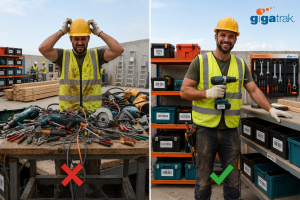
With GigaTrak’s asset tracking for contractors, your valuable inventory stays secure and fully accounted for across every work truck. Construction Asset Management Software. GigaTrak

Asset Tracking for Construction: The Contractor’s Guide to Jobsite Tool Control

Managing tools and heavy equipment across multiple jobsites costs contractors thousands of dollars every year in lost gear and wasted labor. When high-value power tools go missing, project schedules stall and direct replacement expenses destroy profit margins.

For 30 years, GigaTrak has provided barcode tool tracking systems to organizations like FDNY, Lockheed Martin, and the US Army. Implementing a dedicated strategy for asset tracking for construction replaces daily guesswork with absolute tool accountability.

This complete guide covers how commercial contractors eliminate tool loss, improve asset utilization, speed up field inventory audits, and keep projects moving on schedule.

The True Cost of Unmanaged Jobsite Assets

Tool loss is rarely limited to the price tag of replacing a stolen generator or missing rotary hammer. Unmanaged physical assets drain financial resources across your entire business operations.

  • Wasted Labor Hours: Field crews waste up to 30 minutes every shift searching gang boxes, work trucks, and job trailers for misplaced gear.
  • Redundant Purchases: Project managers buy or rent duplicate tools because no central system confirms existing equipment availability.
  • Project Delays and Penalties: Work stops completely when specialized equipment is missing, leading to missed milestones and contract penalties.
  • Subcontractor Equipment Hoarding: Workers stash critical items in personal vehicles or remote gang boxes, hiding active inventory from other crews.
  • Unscheduled Machinery Breakdown: Without maintenance tracking, unserviced equipment breaks down unexpectedly on active jobs.

What Is Asset Tracking for Construction?

Asset tracking for construction is the continuous management process of tagging physical tools, monitoring inventory movement, and assigning item responsibility to specific workers or jobsites. It relies on durable barcode tags, handheld barcode scanners, mobile devices, and central tracking software. Contractors use these tool tracking systems to verify asset location, maintenance history, and transfer records in real time.

Categorizing Construction Inventory for Total Control

Not every item on a jobsite requires the same level of tracking detail. Organizing inventory into three distinct asset tiers ensures proper field oversight without unnecessary paperwork.

1. Heavy Equipment and Vehicle Fleets

Excavators, skid steers, work trucks, and large trailers represent high capital costs. These high-value assets are tracked individually using active GPS hardware alongside periodic physical scans during site transfers.

2. High-Value Power Tools and Equipment

Rotary hammers, crimpers, laser levels, generators, and pipe benders move frequently between trucks and workers. Each item receives a unique asset tag and serial number record to track individual responsibility during every check-out.

3. Bulk Consumables and Hand Tools

Safety gear, drill bits, extensions, and hand tools are managed by total quantity counts rather than unique serial numbers. Tool crib software monitors bulk minimum stock levels to trigger restock orders automatically.

4 Steps to Implement Construction Asset Tracking

Moving from paper tracking sheets or simple spreadsheets to a digital asset tracking solution requires a systematic setup.

Step 1: Standardize Identification with Durable Barcode Tags

Ditch manual text entry. Affix durable, jobsite-ready barcode labels to every piece of equipment. Industrial barcode tags withstand extreme weather, grease, mud, and heavy physical abuse. Scanners read these labels instantly in warehouse yards or active job trailers.

Step 2: Establish Tool Crib Management Rules

What is tool crib management? Tool crib management is the operational practice of controlling, issuing, and tracking equipment from a central tool room, warehouse, or jobsite trailer. Assigning a dedicated crib manager or using mobile check-in and check-out workflows ensures no tool leaves storage without a digital transfer record.

Step 3: Mandate Digital Sign-Out Accountability

Tools rarely disappear on their own. They get lost when no single individual is accountable. Requiring workers to verify tool check-outs using handheld barcode scanners creates an indisputable audit trail. Everyone knows exactly who took the item, when it left the yard, and where it is supposed to be.

Step 4: Deploy Dedicated Construction Tool Tracking Software

Generic spreadsheets fail as soon as equipment spreads across multiple active locations. Specialized software centralizes item records, tracks maintenance schedules, logs transfer histories, and monitors overall asset utilization rates.

Explore GigaTrak Tool Tracking Systems to see how barcode workflows eliminate inventory confusion across your fleet.

How Construction Asset Tracking Improves Your Bottom Line

Digital tool management impacts far more than loss prevention. Controlling your inventory directly improves operational efficiency across four key areas:

  • Accurate Job Costing: Assign tool usage expenses directly to specific job codes or project cost centers for precise client billing.
  • Preventative Maintenance Tracking: Schedule service alerts based on usage hours or calendar intervals to protect asset lifespan and avoid costly breakdowns.
  • Faster Inventory Audits: Conduct complete job site audits in minutes using handheld barcode terminals instead of spending days counting items by hand.
  • Higher Asset Utilization: Identify idle tools sitting in tool rooms and redeploy them to active sites instead of purchasing new equipment.

Selecting Deployment Options: Cloud vs. On-Premise

Every construction business operates under different IT requirements and security mandates. When selecting tracking software, evaluate which deployment model fits your operational setup:

  • Cloud-Based Software: Access real-time tool inventory data from any internet-connected device or smartphone. Best for field operations requiring instant updates across multiple job sites.
  • On-Premise Deployment: Install software directly on local company servers. Essential for contractors operating under strict data security regulations or high-security government facilities.

Core Features Every Construction Tracking System Needs

Select software designed specifically for tough jobsite conditions rather than standard corporate offices.

Feature Field Requirement Business Impact
Mobile Barcode Scanning Scans and transfers tools using rugged handheld terminals or mobile apps. Eliminates paperwork and speeds up check-in/check-out cycles.
Offline Data Syncing Stores barcode scan data locally when cellular signal drops on remote sites. Prevents work interruptions and syncs records once back online.
Maintenance Tracking Logs service intervals, engine hours, and safety inspection dates. Extends asset lifecycle and prevents unexpected equipment failures.
Audit & Loss Reporting Generates reports showing loss rates, tool usage, and missing assets by site. Identifies missing items immediately to hold teams accountable.

Frequently Asked Questions

What is the best way to track tools on a construction site?

The most reliable method is attaching durable barcode tags to every tool and scanning them through dedicated tracking software during check-in and check-out. This builds a permanent digital history of item location and worker responsibility.

Why use barcode tags instead of manual spreadsheets?

Manual spreadsheets rely on human memory and manual typing, which cause frequent errors. Barcode scanning logs transfers in seconds, eliminates data entry errors, and updates master inventory records automatically.

Can barcode tracking software work on jobsites without internet service?

Yes. Barcode tracking software built with offline scanning capabilities stores transaction data directly on mobile handheld devices. The system updates your central database as soon as the terminal connects to Wi-Fi or cellular service.

What is the difference between active GPS and barcode asset tracking?

Active GPS tracking relies on battery-powered transmitters to provide real-time location mapping for heavy machinery and vehicles. Barcode asset tracking uses durable physical tags and scanners to track smaller power tools, equipment, and hand tools at a fraction of the cost per item.

Stop Missing Tools from Eating Your Profits

Effective asset tracking for construction keeps projects moving on schedule, lowers tool replacement costs, and holds field crews accountable. GigaTrak delivers simple barcode tracking hardware and software backed by 100% US-based customer support.

Ready to eliminate lost tool expenses and secure your inventory? Request a Consultation with a GigaTrak specialist today.

Contacting GigaTrak:

Request a Free Consultation and Demo.

Visit our Contact Page.

Construction Asset Management Software: Field Tool Guide

blank

Construction Asset Management Software: A Field Guide to Tools and Equipment

Every morning across active job sites, contractors lose billable hours to missing equipment. A three-person crew stands waiting because nobody knows who took the core drill from the job trailer. A supervisor orders a second generator because the shop cannot find the one purchased three months ago. A truck leaves for a project site without the right crimper, turning a quick repair into a three-hour delay.

Unmanaged tools cause project delays, inflated purchasing budgets, and lost profits. For growing contractors, asset tracking for construction solves these field bottlenecks. Establishing clear chain of custody turns tool room inventory into a predictable asset control system.

GigaTrak has provided barcode tool tracking systems for construction firms, facilities, and government agencies since 1995. Organizations like FDNY, Lockheed Martin, and the US Army rely on GigaTrak software to manage physical inventory. Whether your team needs cloud software or an on-premise installation, tracking equipment across sites protects your bottom line.

Definition: Asset tracking for construction is an operational process that uses barcode tags, mobile scanners, and central software to monitor tool locations, track equipment usage, assign individual employee accountability, and schedule preventive maintenance across active job sites.

The Financial Impact of Unmanaged Equipment

Tool loss is not an inevitable expense. When you calculate the direct hardware replacements and indirect labor losses, missing equipment drains project profits.

1. Ghost Assets on the Balance Sheet

Ghost assets are tools listed in your ledger that are broken, lost, or stolen. Project managers plan jobs assuming those tools exist in the warehouse. When crews discover the missing gear on workdays, schedules stall immediately.

2. Duplicate Purchases and Short-Term Rentals

Field teams default to buying or renting new items when they cannot locate gear. A firm might buy three identical transit lasers over two years simply because the central shop lost track of existing inventory across job trailers.

3. Idle Labor and Lost Billable Hours

When workers spend 30 minutes looking through gang boxes or driving across town to find gear, that labor gets billed directly to your project budget. Multiply those missing minutes across five crews over a full year, and labor inefficiency scales rapidly.

4. Premature Wear and Sudden Tool Breakdowns

Tools run until failure when teams lack maintenance tracking. Unmaintained tools pose safety risks and cost far more to replace than to service routinely.

Grouping Construction Inventory for Control

Different types of job site equipment require specific tracking approaches. Categorize your inventory into clear tiers to simplify field management.

Inventory Category Typical Equipment Primary Goal Recommended Tracking Method
Heavy Fleet & Machinery Excavators, skid steers, service trucks Monitor hours, location, and service intervals GPS combined with barcode tags
Capital Power Tools Rotary hammers, fusion welders, generators Track employee custody and job site assignment Anodized aluminum barcode tags
Containers & Vans Job trailers, gang boxes, utility trucks Group multiple tools for fast site transfers Container barcoding and mobile app
Consumables & Hardware Drill bits, safety gear, fasteners, blades Maintain stock thresholds and reorder points Min/max inventory counts

Capital Assets and Machinery

High-cost assets require full lifecycle records. You need to record original purchase prices, serial numbers, warranty dates, depreciation schedules, and engine service intervals alongside physical location data.

High-Value Power Tools

Small power tools represent the majority of job site theft and field loss. They move constantly between service vans, workers, and storage containers. Effective tracking focuses on worker accountability. The system must log who checked out the item, when it left, and which job cost code pays for it.

Containers, Gang Boxes, and Mobile Units

Instead of scanning fifty hand tools individually every morning, modern software lets you link items to a master container. Assign tools to a specific job trailer or service van. Moving the trailer to a new job site updates the location of all enclosed tools automatically in a single scan.

Consumables and Expendable Items

Fasteners, safety glasses, and saw blades get used up on site. Tracking software monitors minimum stock limits, alerting shop staff to reorder supplies before crews run out during a critical build phase.

Comparing Tool and Asset Tracking Methods: Paper vs. Barcodes vs. GPS

Selecting the correct inventory management framework requires balancing your hardware budget, environment durability, and daily operational speed.

Paper Logs and Spreadsheets

Paper sign-out sheets and manual spreadsheets require zero initial software investment. However, paper records suffer from high human error rates, lack real-time updates, and offer no worker accountability. Manual logs quickly become outdated and fail to control loss on busy sites.

Barcode Scanning Systems

Barcode scanning represents the practical industry standard for construction tools. These barcode asset tags cost very little per unit and provide accurate scanning speed. Workers scan tags using industrial handheld readers or mobile smartphones. This method provides unambiguous serial number verification and clear worker custody records at an affordable cost.

Active GPS Units

GPS devices deliver continuous satellite location data without manual scans. However, active GPS tags require internal batteries or external power connections, carry high monthly cellular subscription fees, and cost significantly more per unit. Use GPS selectively for heavy machinery, fleet trucks, and high-value mobile generators.

Essential Features for Tool & Asset Tracking for Construction

Commercial job sites require rugged tracking software designed specifically for field conditions. Avoid office inventory software that lacks site-transfer workflows.

WORKFLOW STAGES

1. Check-Out to Employee
2. Site or Trailer Transfer
3. Inspection & Repair Flag
4. Return to Central Shop

Rapid Barcode Check-In and Check-Out

Checking out equipment must take seconds. Warehouse managers should be able to scan a worker badge, scan three tool tags, select a job number, and finish the transfer immediately.

Flexible Assignment Options

Your tracking system should support multi-level assignments:

  • Assign gear to an employee for individual accountability.
  • Assign gear to a job site number for accurate cost accounting.
  • Assign gear to a job trailer or utility van for grouped transport.

Mobile App with Camera Scanning

Field foremen need mobile access on standard mobile devices. A native mobile app transforms iOS and Android smartphones into barcode scanners. Supervisors can conduct trailer audits, view tool histories, and process field transfers directly on site.

Preventive Maintenance and Safety Locks

Unplanned equipment failures halt project timelines. Software should track maintenance schedules, store service receipts, log repair costs, and lock out safety-restricted tools automatically until inspections occur.

Offline Data Collection

Remote job sites often lack cellular coverage or network access. Modern tracking applications save offline transactions to local device storage, uploading data automatically when the device reconnects to a cellular or network signal.

Step-by-Step Implementation Guide

Transitioning your operations from inventory chaos to structured tool control requires a methodical step-by-step approach.

Step 1: Conduct a Complete Tool Audit

Collect all company tools from shop bays, utility trucks, gang boxes, and active job sites. Record every piece of equipment in a central database:

  • Make, model, and physical serial number
  • Original purchase price and condition
  • Current physical location and assigned user

Step 2: Apply Industrial Barcode Tags

Standard paper labels fail on construction sites. Use durable anodized aluminum asset tags or heavy-duty poly-blend labels with industrial adhesive. Place barcode tags in consistent, low-abrasion areas on each tool body to make scanning simple.

Step 3: Establish Clear Operational Rules

Software relies on disciplined field habits. Enforce standard operational protocols across all project teams:

  • No tool leaves the warehouse without a digital checkout scan.
  • Field-to-field tool transfers must be logged in the mobile app immediately by the foremen involved.
  • Broken or unsafe gear must be checked in under a repair hold tag to prevent redeployment.

Step 4: Train Tool Crib Operators and Field Staff

Hold short training sessions for warehouse staff, field superintendents, and site foremen. Frame asset tracking as a supportive system that ensures workers have operational tools available when needed.

Step 5: Perform Periodic Field Audits

Conduct regular spot-checks using mobile scanning devices. Compare physical trailer contents against digital software records to catch missing items early and maintain operational accountability.

Frequently Asked Questions About Asset Tracking for Construction

What is asset tracking for construction?

Asset tracking for construction is the practice of using barcode tags, mobile scanners, and software to monitor tool locations, manage check-outs, track maintenance schedules, and control physical equipment loss across job sites.

How does barcode tracking work on job sites without internet?

Modern mobile tracking applications feature offline data storage. Field staff perform scans, transfers, and audits without cell service. The application stores transactions locally and syncs updates automatically once the device reconnects to a network.

What type of asset tag works best on heavy power tools?

Anodized aluminum barcode tags backed with high-tack industrial adhesive work best. Metallic tags resist heat, chemical exposure, abrasion, and harsh weather conditions on commercial construction sites.

How fast do contractors see a return on investment?

Most contracting firms recover their full software and hardware investment within 90 days. Eliminating duplicate tool buys, cutting short-term rental costs, and reducing idle labor hours provides immediate financial returns.

Can software track equipment maintenance alongside location?

Yes. Purpose-built tracking software logs usage hours, records preventive maintenance schedules, tracks repair costs, and locks out faulty tools from checkout until technicians complete required safety inspections.

Typical Operational Results After Implementation

Contractors who replace manual tracking with digital barcode systems achieve measurable performance improvements:

  • Reduces unaccounted-for tool loss by 80 to 90 percent.
  • Cuts annual tool replacement spending by 20 to 30 percent.
  • Eliminates wasted crew hours spent searching for missing items.
  • Delivers complete software investment payback within 90 days.

Stopping inventory loss keeps job bids competitive and keeps field projects running on schedule.

Stop Tool Loss on Your Job Sites Today

Unmanaged tools and equipment drain contractor margins. Combining durable barcode tags, mobile smartphone scanning, and clear chain of custody protocols eliminates tool loss and protects project schedules.

GigaTrak brings 30 years of field-tested inventory experience to your business. Our team provides turnkey tracking systems, complete with software, industrial barcode labels, mobile hardware, and US-based customer support.

Ready to improve job site tool control and protect your bottom line? Request a Consultation with a GigaTrak tracking specialist today!

Request a Consultation

Contacting GigaTrak

Request Information