
Fixed Asset Tracking Software vs General Asset: What’s the Difference?
Comparing General Asset vs. Fixed Asset Tracking Software: Which Does Your Business Need?
Published: July 2026 | Category: Operations & Asset Strategy | By: GigaTrak Team
Table of Contents
Failing a corporate tax audit due to unverified physical assets costs thousands in penalties. Arriving at a remote job site without required power equipment costs valuable billable hours. While both problems stem from physical asset mismanagement, solving them requires distinct operational tools.
Organizations often group all physical items under a single tracking label. That oversight leads to misplaced equipment, inaccurate accounting registers, ghost assets, and bloated software budgets.
Since 1995, GigaTrak has equipped organizations—including the US Army, Lockheed Martin, FDNY, and Virginia Public Schools—with specialized inventory controls. Understanding when to implement specialized accounting solutions versus broader field tracking keeps operations seamless and financial ledgers precise.
What is Fixed Asset Tracking?
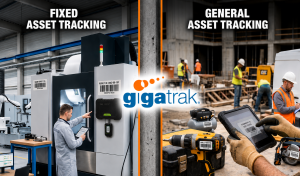
Fixed assets are long-term physical items utilized to generate income and sustain business operations. Unlike retail inventory or consumable materials, they are not intended for immediate resale or frequent employee transfers. Instead, they represent significant capital investments on your corporate balance sheet and remain active for longer than a single fiscal year.
Common Examples of Fixed Assets:
- Manufacturing machinery and automated CNC equipment
- Commercial fleet vehicles and transport trucks
- Facility HVAC infrastructure and backup power generators
- Enterprise IT servers, mainframes, and network racks
- Specialized medical, testing, and laboratory instruments
For more detailed application examples, explore our dedicated asset tracking system breakdown.
How Fixed Asset Systems Protect Your Balance Sheet
Tracking a capital asset extends beyond confirming its physical room number—it actively manages valuation and Total Cost of Ownership (TCO) across the equipment lifecycle. Dedicated software connects field personnel directly to accounting ledgers.
- Automates Tax Depreciation: Calculates straight-line, MACRS, declining balance, and custom schedules to maintain exact book value across financial periods.
- Ensures Audit & GAAP Compliance: Produces permanent audit trails required for IRS reporting, GAAP standards, and insurance claim verifications.
- Eliminates Ghost Assets: Identifies unverified equipment during annual barcode reconciliation, preventing property tax and insurance overpayments on missing items.
- Centralizes Service Logs: Records preventative maintenance records and work orders to preserve equipment warranties and extend functional lifespans.
Strategic Takeaway: Valuation vs. Velocity
Fixed asset systems focus on financial accuracy, regulatory compliance, and valuation over months and years. Operational asset systems focus on chain of custody, scan speed, and loss prevention on a daily basis.
What is General Asset Tracking?
General asset tracking targets high-velocity operational tools. These portable items circulate continuously among jobsites, service vans, facilities, and staff members. While they may not be capitalized as long-term balance sheet assets, losing them immediately disrupts daily operations.
Common Examples of General Operational Assets:
- Power drills, rotary hammers, and field tools
- Shared laptops, tablets, and rugged barcode handhelds
- Ladders, staging gear, and safety testing units
- Specialized technician toolkits and maintenance sets
How Asset Tracking Software Stops Tool Loss
General asset tracking software prioritizes check-out speed and immediate accountability rather than long-term tax schedules.
- Rapid Check-In / Check-Out: Assigns tools to specific technicians, crews, or jobsites in seconds using barcode or QR scans.
- Real-Time Chain of Custody: Logs movement across job sites, warehouse rooms, and mobile service units to maintain clear ownership records.
- Employee Accountability: Identifies the last assigned user for any missing gear, reducing tool loss and shrinkage by up to 40%.
- Safety & Inspection Flags: Alerts managers when circulating equipment requires safety inspections, recalibration, or retirement.
Key Differences at a Glance
Comparison: Fixed Asset Tracking vs. General Asset Tracking Software
| Feature / Capability | Fixed Asset Tracking Software | General Asset Tracking Software |
|---|---|---|
| Primary Objective | Tax compliance, balance sheet accuracy, & audit trails | Tool loss prevention, worker accountability, & jobsite efficiency |
| Target Items | High-value, stationary capital equipment | Portable tools, shared electronics, & circulating gear |
| Movement Frequency | Infrequent or static location | High-velocity daily/weekly movement |
| Tax Depreciation | Built-in (Straight-line, MACRS, Declining) | Not tracked |
| Core Users | Finance teams, CPAs, & facility directors | Operations leads, shop managers, & field supervisors |
| Key Scanning Action | Annual physical verification barcode audits | Daily check-in / check-out barcode scanning |
Which System Fits Your Operations?
Many scaling enterprises require both tracking workflows operating in tandem.
Accounting-first applications lack fast mobile check-out features needed for field crews. Conversely, jobsite tool trackers cannot generate formal tax depreciation schedules required by finance teams.
Ask three essential evaluation questions:
- Do you need to satisfy tax regulations and track equipment values? Choose a dedicated fixed asset tracking software platform to automate book values and maintain audit-ready records.
- Are tools frequently missing from service trucks and jobsites? Implement an operational asset workflow featuring barcode check-out steps to enforce crew accountability.
- Does your IT infrastructure require self-hosted security? Verify that your software vendor offers both cloud-hosted (SaaS) and secure on-premise installation models.
Frequently Asked Questions
What is the difference between fixed asset tracking and inventory management?
Fixed asset tracking manages long-term capital assets that a company owns and utilizes internally. Inventory management monitors consumable supplies, raw materials, or finished goods intended for customer sale.
Can fixed asset tracking solutions run on-premise?
Yes. While many modern vendors force cloud-only subscription models, GigaTrak provides both cloud hosting and secure on-premise installations to accommodate strict enterprise IT security standards.
How does barcode tracking prevent ghost assets?
Staff scan physical barcode or RFID tags during routine physical audits. The software reconciles scanned tags against general ledger records, instantly spotting missing or unverified items prior to financial reporting.
Simplify Your Asset Operations with GigaTrak
Bridging the gap between accounting precision and field productivity doesn’t require multi-platform complexity. GigaTrak delivers proven barcode solutions backed by 30 years of industry leadership and 100% US-based support.
- GigaTrak Fixed Asset System: Gives finance and facility leaders full control over locations, maintenance logs, and depreciation schedules.
- GigaTrak Tool & Asset Tracking: Delivers ultra-fast barcode check-in/out workflows to eliminate tool loss across jobsites.
Direct Contact: Call 262-657-5500 | Email sales@gigatrak.com | Visit gigatrak.com
